
What 'Local Prices' Really Means - and How Dual Pricing Affects Visitors

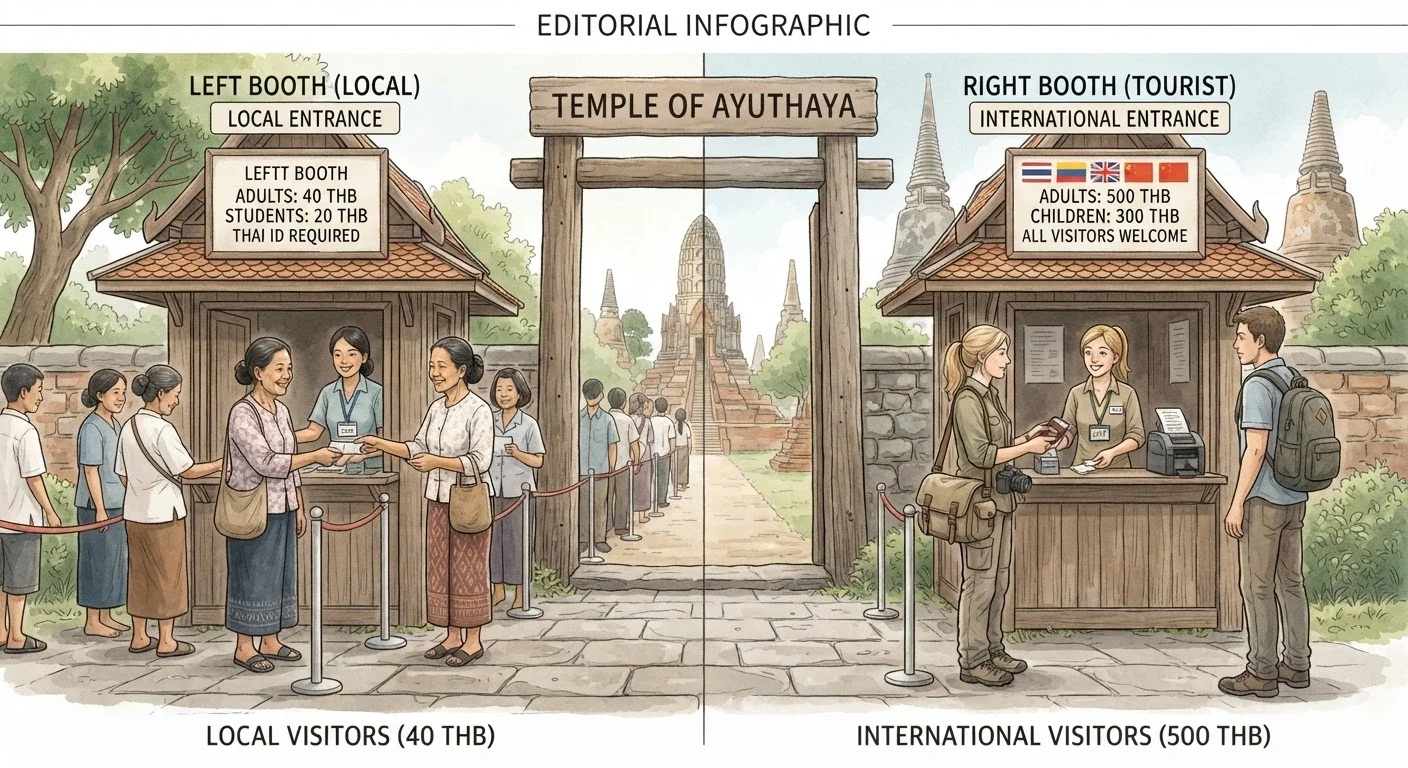
Photo: InsightsVault.com | Interesting Daily Reads editorial
Key Takeaways
- Dual pricing charges tourists more than locals for the same experience - often by a significant margin.
- The practice is legal in most countries and sometimes set by government policy at state-run sites.
- Informal dual pricing at markets and small vendors is common but negotiable in many cultures.
- Knowing where dual pricing exists helps you budget realistically before you arrive.
- Some forms of tourist surcharges fund conservation or infrastructure - not all are exploitative.
How Dual Pricing Actually Works
Dual pricing takes two broad forms. The first is formal, policy-driven pricing - set by a government or institution and posted officially. India's Archaeological Survey of India, for example, publishes separate entry fees for Indian nationals and foreign visitors at many protected monuments. The same structure exists at national parks across parts of Africa and Southeast Asia. You'll see it printed on signage, no ambiguity involved.
The second form is informal vendor-level pricing, where a market seller, taxi driver, or small restaurant quotes a foreigner a higher starting price than they'd give a neighbor. This isn't always bad faith - in cultures where bargaining is normal, that opening quote is an invitation to negotiate, not the final word. Understanding which context you're in matters enormously.
Both forms often coexist in the same destination, which can make budgeting feel complicated. The key is recognizing that these are different problems requiring different responses.
Dual Pricing vs. Dynamic Pricing
Where You're Most Likely to Encounter It
Formal dual pricing is most prevalent in South Asia, Southeast Asia, parts of sub-Saharan Africa, and some Latin American countries - particularly at heritage sites, national parks, and museums that attract heavy international tourism. Entry fees for foreign visitors at a major archaeological site can run $15-$25 USD while local residents pay the equivalent of cents.
Informal pricing is geographically broader and harder to map. Touristy markets in cities across Europe, Asia, the Middle East, and Latin America all see vendors quoting foreign-looking customers higher prices. The more identifiably tourist-adjacent a shopping area is, the more likely this applies. See how to identify inflated tourist pricing before you get to a new destination - it's worth the prep time.
10-25x
Foreign-to-local price ratio at some heritage sites
At several major archaeological and historical monuments in South Asia, published foreign-visitor fees are 10 to 25 times the local resident rate, according to publicly available fee schedules.
~40%
Of global tourism revenue from heritage sites
UNESCO estimates that cultural heritage tourism represents a substantial share of the global tourism economy, underscoring why tiered pricing at such sites is financially significant for host countries.
What It Means for Your Travel Budget
The practical budget impact depends on your itinerary. A trip built around outdoor hiking and free beaches may see almost no dual-pricing exposure. A trip focused on historical sites and cultural attractions in a country with formal tiered pricing can add $10-$40 or more per day, per person, depending on how many sites you visit.
Before you finalize a destination budget, spend 20 minutes checking entry fees on official attraction websites or recent travel forums. Accommodation costs also shift predictably by timing - seasonal pricing patterns in accommodation interact with your overall daily spend, so think about both together when planning. If your destination has a concentration of formally priced heritage sites, add a realistic line item for tourist-rate fees rather than discovering the gap on arrival.
For informal market pricing, the counter-strategy is simpler: research typical local prices before you shop, stay calm, and be willing to walk away. Many vendors will meet you at a reasonable figure once they see you're not going to overpay reflexively.
Is Dual Pricing Exploitative - or Something Else?
This question generates genuine disagreement among travelers and economists. The critical context is income disparity. A heritage site in a country where average monthly wages are a fraction of US earnings can't charge locals the same as international visitors without pricing residents out entirely. Tiered pricing in that context is a deliberate choice to keep cultural access affordable domestically while using tourist revenue to fund upkeep and conservation.
That said, dual pricing can also reflect straightforward opportunism - vendors charging what the market will bear from visitors who don't know local norms. The same pricing practice can serve legitimate social purposes in one setting and function as a transparent markup in another. Travelers benefit from making that distinction rather than reacting uniformly to every price differential they encounter.
“Tiered pricing at cultural sites isn't inherently exploitative - in many cases, it's the mechanism that keeps a country's own citizens connected to their heritage while funding preservation for future generations. The question travelers should ask is whether the fee is proportionate, not just whether it exists.”
— Tourism Economics Researcher, Academic specialist in heritage site financing and visitor management
The bottom line: knowing what you'll pay, why, and whether it's negotiable is more useful than resenting the structure. Dual pricing is a feature of international travel, not a bug you can opt out of - but it's one you can budget and plan around.
Frequently Asked Questions
The content provided on our blog site traverses numerous categories, offering readers valuable and practical information. Readers can use the editorial team’s research and data to gain more insights into their topics of interest. However, they are requested not to treat the articles as conclusive. The website team cannot be held responsible for differences in data or inaccuracies found across other platforms. Please also note that the site might also miss out on various schemes and offers available that the readers may find more beneficial than the ones we cover.