
Building Your First Monthly Budget From Scratch

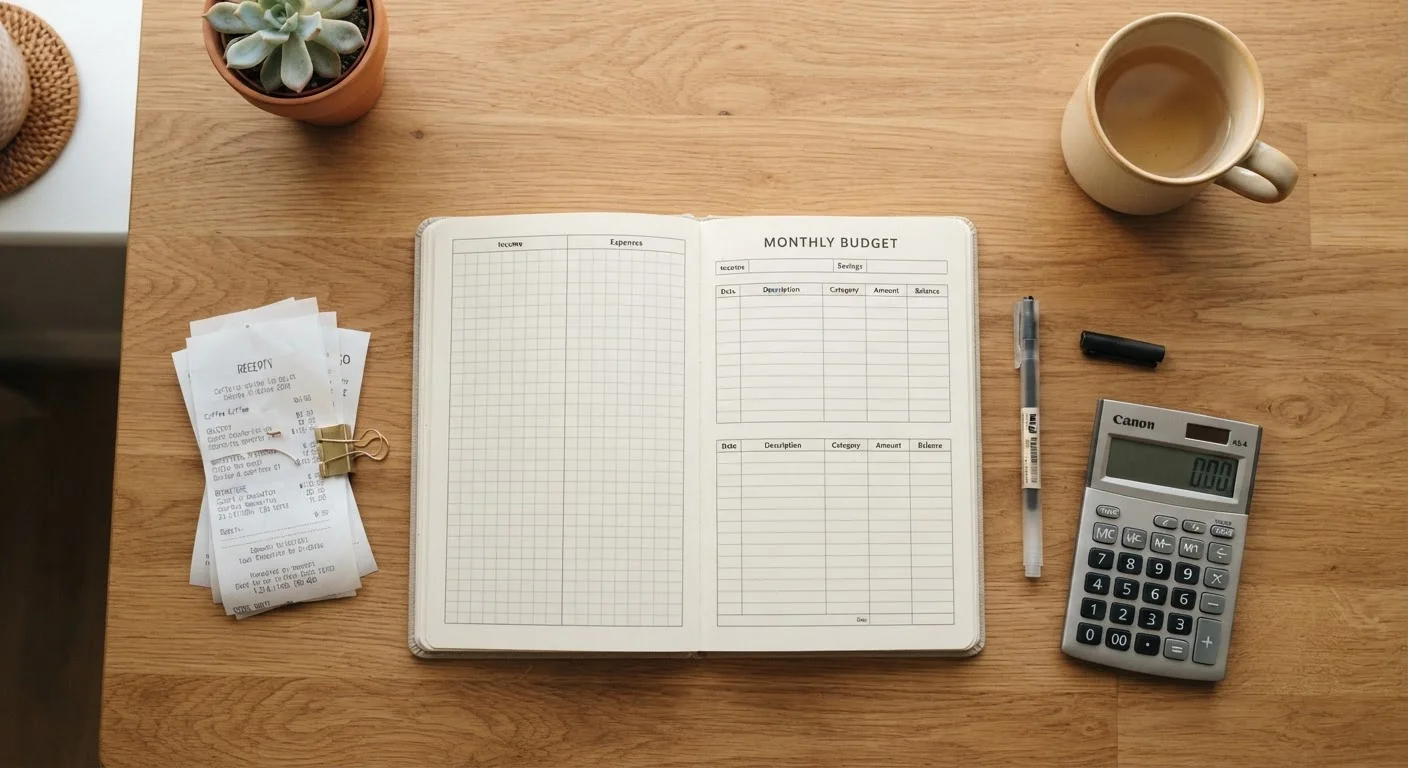
Photo: InsightsVault.com | Interesting Daily Reads editorial
Key Takeaways
- Start with your actual take-home pay - not your gross salary - to build a realistic budget.
- Separate fixed expenses from variable ones so you know exactly where flexibility exists.
- A simple framework like 50/30/20 gives your spending categories structure without overcomplication.
- Irregular expenses like car registration or medical bills must be estimated and included monthly.
- Reviewing and adjusting your budget each month is what makes it sustainable long-term.
- A working budget is a living document, not a one-time task.
Why a Written Budget Changes Your Financial Life
Most people have a rough mental sense of what they earn and spend each month. A written budget replaces that rough sense with clear, verifiable numbers - and that shift alone can reveal patterns that are genuinely surprising. Research on household financial behavior consistently shows that people tend to underestimate their variable spending, especially on food, transportation, and small recurring purchases.
A first budget doesn't need to be perfect. It needs to be honest. The goal at this stage is awareness: seeing your income and expenses side by side so you can make deliberate choices instead of reactive ones. If your spending has felt out of control, a budget is the first tool to change that - not because it restricts you, but because it gives you a plan to follow.
This guide walks you through building that plan from scratch, one step at a time. If you've never formally budgeted before, you're in the right place. And once you've built the foundation here, you'll want to explore practical ways to trim everyday costs once the numbers are visible.
Net income
The amount of money you actually receive after taxes and other deductions are taken out of your paycheck - the real figure available for spending and saving.
Fixed expense
A cost that stays the same every month, such as rent or a car loan payment, making it easy to plan for in advance.
Variable expense
A cost that changes from month to month, such as groceries or gas, giving you more flexibility to adjust your spending.
Sinking fund
Money set aside gradually each month to cover a predictable future expense - like a car registration or holiday gifts - so it doesn't feel like a surprise when it arrives.
Zero-based budgeting
A budgeting method where every dollar of income is assigned a specific purpose, so that your income minus all planned spending and saving equals zero.
Step 1: Calculate Your Real Monthly Income
Begin with your net income - the amount actually deposited into your account after taxes, insurance deductions, and any other withholdings. This is the only number that matters for budgeting purposes, because it's the only money available to spend or save.
- Salaried workers: Divide your annual net salary by 12.
- Hourly workers: Multiply your average weekly hours by your hourly take-home rate, then multiply by 4.3 (the average number of weeks in a month).
- Multiple income sources: Add all regular net amounts together - a part-time job, freelance work, child support, or any other predictable income.
If your income varies month to month, use your lowest typical month as the baseline. Budgeting conservatively on income prevents overspending when a higher-earning month feels like a windfall. For a deeper look at managing unpredictable paychecks, see strategies for budgeting on irregular income.
Step 2: List Every Monthly Expense
This step catches most people off guard. Pull up two to three months of bank and credit card statements and write down every category of spending you see. Group them into two types:
- Fixed expenses
- Costs that are the same every month: rent or mortgage, loan payments, insurance premiums, and subscription services with set prices.
- Variable expenses
- Costs that fluctuate: groceries, gas, dining out, utilities, clothing, and household supplies.
Don't forget irregular expenses - things that don't arrive monthly but are predictable. Car registration, annual subscriptions, medical copays, and holiday gifts all count. Estimate each one's annual total, divide by 12, and include that amount as a monthly budget line. For vehicle-related costs specifically, calculating your true monthly car costs is a useful companion exercise.
Review Three Months, Not Just One
Step 3: Choose a Budget Framework That Fits Your Life
Once you have your income and expense list, you need a structure for organizing them. Several frameworks work well for beginners:
- 50/30/20: Allocate 50% of net income to needs, 30% to wants, and 20% to savings and debt repayment. This is flexible enough to adapt if your income is tight. See the full breakdown in the 50/30/20 rule explained.
- Zero-based budgeting: Every dollar of income is assigned a specific purpose so that income minus all allocations equals zero. This approach requires more tracking but leaves no money unaccounted for.
- Pay-yourself-first: Transfer a set savings amount immediately when your paycheck arrives, then budget from what remains. This method prioritizes saving over spending by design.
There's no universally correct choice. Pick the approach that feels manageable and matches how you naturally think about money. A framework you'll actually use is far more valuable than a theoretically optimal one you abandon by week two.
Step 4: Balance the Numbers and Build In Flexibility
Subtract your total planned expenses from your net income. The result tells you where you stand:
- Positive balance: You have room to increase savings contributions or build a small buffer - often called a sinking fund for irregular expenses.
- Negative balance: Your planned spending exceeds your income. Identify which variable expenses can be reduced first. Needs - housing, utilities, food, transportation - should be protected. Wants are the first place to adjust.
Build a small buffer of $50-$100 into your monthly plan if possible. Real life rarely matches a plan exactly, and a small cushion prevents a single unexpected cost from throwing off everything else. For a structured way to handle this, look into building your first financial cushion on a tight income.
Don't Cut Too Aggressively at First
Keeping Your Budget Working Month After Month
A budget built once and never revisited tends to fail. Life changes - income shifts, expenses appear, priorities evolve. Make a habit of checking in monthly: compare what you planned against what you actually spent, then adjust your category targets accordingly.
The monthly budget reset checklist is a practical tool for this recurring review. And if your budget has been derailing despite your best efforts, understanding why budgets fall apart early can help you identify the specific patterns to fix.
Over time, consistent monthly budgeting builds a clearer picture of your financial habits - which makes it progressively easier to find room for savings goals, manage irregular expenses, and feel genuinely confident about where your money goes. Once your budget is stable, saving fundamentals is the natural next step.
This article is for general informational and educational purposes only and does not constitute personalized financial advice. Individual circumstances vary. Consider consulting a qualified financial professional for guidance specific to your situation.
Frequently Asked Questions
The content provided on our blog site traverses numerous categories, offering readers valuable and practical information. Readers can use the editorial team’s research and data to gain more insights into their topics of interest. However, they are requested not to treat the articles as conclusive. The website team cannot be held responsible for differences in data or inaccuracies found across other platforms. Please also note that the site might also miss out on various schemes and offers available that the readers may find more beneficial than the ones we cover.