
Why Your Budget Falls Apart by Week Two

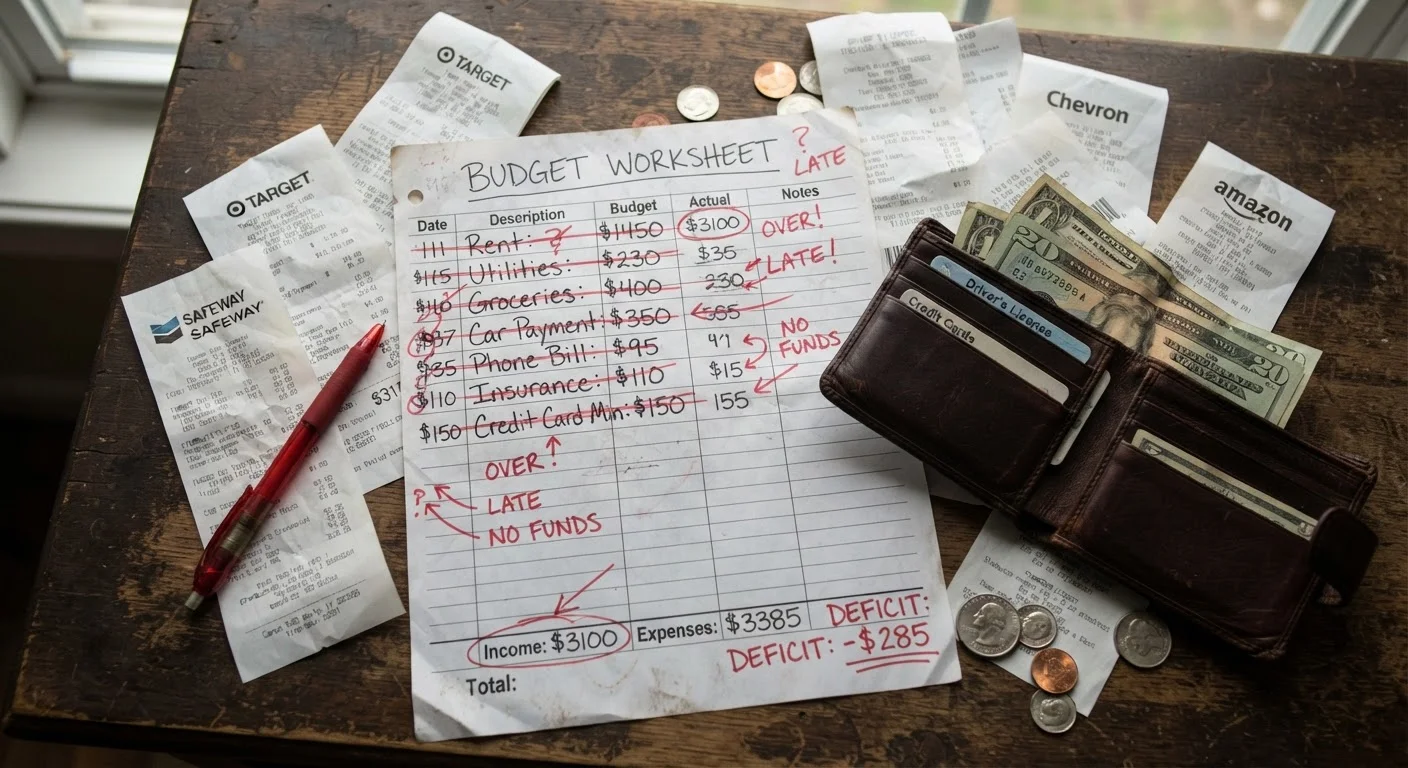
Photo: InsightsVault.com | Interesting Daily Reads editorial
Key Takeaways
- Most budgets collapse in week two due to a few specific, correctable habits - not willpower failures.
- Forgetting irregular expenses like annual fees or quarterly bills is one of the most common budget-breakers.
- Tracking spending in real time - not from memory at month's end - dramatically improves budget accuracy.
- A budget that has no flexibility category will break the moment an unplanned expense appears.
- Aligning your budget reset with your actual pay schedule prevents cash-flow confusion mid-month.
The Real Reason Your Budget Breaks Early
Starting a budget feels motivating - you've set categories, assigned dollar amounts, and committed to the plan. Then around day ten or eleven, something goes sideways: an unexpected charge, a forgotten subscription, a dinner out. By day fourteen, the budget is functionally abandoned for the rest of the month.
This pattern is so common it has its own nickname in personal finance circles: the "week-two wall." The good news is that it's rarely caused by poor discipline. It's almost always caused by a handful of structural mistakes made when the budget was set up - or during the first few days of spending. Identifying those mistakes is the first step toward building a plan that actually holds. If you haven't yet created a formal budget, our step-by-step guide for first-time budgeters walks through the basics before you start categorizing.
Building the budget around ideal spending rather than actual spending history.
Forgetting irregular expenses that don't appear every month.
Spending freely in week one with the assumption that week two and beyond will balance out.
Treating the budget as a set-and-forget document rather than a living plan.
Leaving no buffer for unexpected but normal expenses.
Misaligning the budget period with your actual pay schedule.
Building a Budget That Survives Contact With Real Life
Avoiding these mistakes isn't about perfection - it's about designing your budget to expect imperfection. A few practical shifts make the difference between a budget that collapses week two and one that holds through the month.
Track in real time. Use a simple notes app, a spreadsheet, or a notebook to log spending as it happens, not at the end of the week. Even a rough running tally prevents the "I think I have room" miscalculation that sinks so many budgets.
Build a buffer category. Label it whatever feels right - "flex," "miscellaneous," "buffer" - but reserve a small portion of your budget for expenses that don't fit neatly elsewhere. Even a modest buffer can absorb the small surprises that otherwise blow up the plan.
Audit for irregular expenses before the month starts. Scan your bank or credit card statements from the past three months and look for charges that don't appear every month. Annual subscriptions, quarterly fees, car registration - add these to your budget calendar so they're never a surprise.
Shared Budgets Add Another Layer of Risk
Every month is a learning opportunity. A monthly reset checklist can help you review what broke down and recalibrate before the next month begins - turning this month's mistake into next month's improvement. And if spending habits are part of the challenge, consistent daily shopping habits often do more work than any single budgeting rule.
This article is for general informational purposes only and does not constitute personalized financial advice. Consider consulting a qualified financial professional for guidance specific to your situation.
The content provided on our blog site traverses numerous categories, offering readers valuable and practical information. Readers can use the editorial team’s research and data to gain more insights into their topics of interest. However, they are requested not to treat the articles as conclusive. The website team cannot be held responsible for differences in data or inaccuracies found across other platforms. Please also note that the site might also miss out on various schemes and offers available that the readers may find more beneficial than the ones we cover.