
Cash Envelopes vs. Digital Spending Trackers

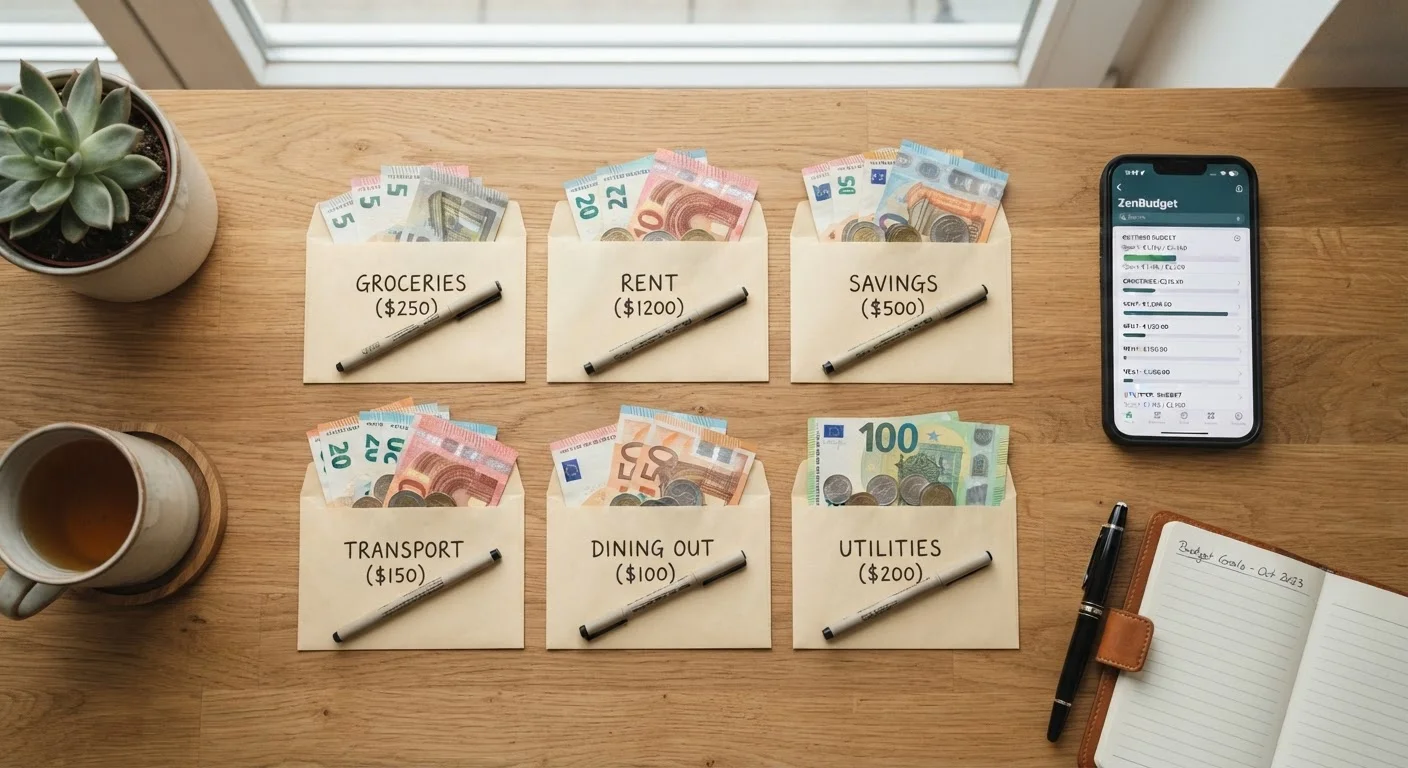
Photo: InsightsVault.com | Interesting Daily Reads editorial
Key Takeaways
- Cash envelopes create a hard spending limit - when the envelope is empty, spending stops automatically.
- Digital trackers offer real-time visibility across multiple accounts and payment methods in one place.
- Research generally suggests people spend more carefully with physical cash than with cards or apps.
- Digital tools reduce friction for tracking but require consistent review habits to be effective.
- Your lifestyle, payment preferences, and self-discipline style should drive which system you choose.
- Hybrid approaches - using envelopes for problem categories and apps for everything else - are a valid middle ground.
How Each System Actually Works
The cash envelope method is straightforward: at the start of each budget period, you withdraw physical cash and divide it into labeled envelopes - one for groceries, one for gas, one for dining out, and so on. You spend only from the designated envelope for each category. Once an envelope is empty, that category is done until next pay period.
Digital spending trackers work differently. Most connect to your bank accounts and credit cards via secure read-only links, automatically importing and categorizing transactions. You set budget limits within the app, and the tool alerts you as you approach or exceed them. Some trackers require manual entry instead, which adds a layer of intentionality similar to a written log.
Both systems share the same core goal: making your spending visible so you stay within limits. The key difference is whether that accountability is physical or data-driven. For more on how tracking methods compare in practice, see practical daily tracking methods that work for busy people.
| Criterion | Cash Envelopes | Digital Spending Trackers |
|---|---|---|
| Spending limit enforcement | Hard stop - cash runs out | Alert-based - requires self-enforcement |
| Setup effort | Low tech, quick to start | Moderate initial setup; account linking required |
| Coverage of payment types | Cash-only transactions | All card, bank, and digital payments |
| Ongoing time required | ATM trip each pay period | Minimal if auto-synced; more if manual entry |
| Spending data and reports | None built-in | Automatic categorisation and trend reports |
| Security risk | Lost cash is unrecoverable | Data privacy depends on app security |
| Psychological friction | High - paying with physical cash feels tangible | Low - digital payments feel less immediate |
| Flexibility mid-period | Deliberate - requires physically moving cash | Instant category reallocation in-app |
The Psychology Behind Each Approach
One of the most cited arguments for cash envelopes is the psychological friction of spending physical money. Behavioural research generally suggests that parting with tangible bills feels more significant than swiping a card or tapping a phone - a concept sometimes called the "pain of paying." This friction can slow discretionary spending in ways that digital payments do not. For a deeper look at what the research shows, payment method research and spending behaviour explores the topic in more detail.
Digital trackers operate on a different psychological lever: awareness through data. Seeing a bar chart show your dining budget at 80% by mid-month can be a powerful prompt to adjust behaviour - but only if you check it. The risk with any digital tool is notification fatigue or avoidance; an app you stop opening offers no accountability at all.
The System Only Works If You Use It
Neither system changes spending habits automatically. The envelope method works because cash is finite and visible. Digital trackers work because they surface information quickly. In both cases, the habit of engaging with the system regularly is what produces results.
Practical Trade-Offs to Consider
Security and convenience: Carrying significant cash creates a real risk - lose the envelope, lose the money. Digital trackers carry their own risks, including data privacy considerations, though reputable tools use bank-level encryption. Neither is without trade-offs.
Coverage: Cash envelopes only cover spending you can pay for in cash. Online bills, subscriptions, and card-only merchants fall outside the system unless you track them separately. Digital trackers, by contrast, can capture almost every transaction type automatically.
Setup time: Envelopes require a trip to the ATM and physical cash allocation each pay period - time-consuming but low-tech. Apps often take longer to set up initially (linking accounts, creating categories) but run more passively after that.
Adaptability: If you underspend in one envelope category, transferring that money to another requires a deliberate decision - which some budgeters see as a useful speed bump. Digital trackers make reallocation instant, which can be either flexible or too easy depending on your habits. Building consistent spending habits alongside either system matters - the habits that prevent overspending article outlines patterns worth pairing with any budget tool.
~$227
Average American monthly discretionary overspend
A widely cited estimate from consumer finance surveys suggests many US households spend meaningfully more than planned each month on discretionary categories.
83%
US adults who use digital payment methods regularly
Federal Reserve payment study data consistently shows the large majority of Americans rely on cards or digital payments for most purchases, limiting cash-only systems.
Choosing the Right System - or Combining Both
There is no universally superior method. The right choice depends on where your spending discipline breaks down. If you consistently overspend in a handful of categories - dining, entertainment, personal care - cash envelopes for those specific areas can provide a hard guardrail that no app notification can match.
If your financial life involves multiple accounts, automatic bill payments, or frequent card use, a digital tracker provides comprehensive visibility that physical envelopes cannot replicate.
Many budget-conscious households use a hybrid: cash envelopes for two or three high-risk categories, and a digital tracker to manage the broader picture. This approach captures the psychological benefits of physical cash where it matters most while maintaining the convenience of automatic tracking for fixed expenses and bills.
If you're weighing broader budgeting frameworks beyond just the tracking tool, zero-based budgeting vs. the envelope method offers a useful comparison of the underlying systems these tools often support.
This article is for general informational and educational purposes only and does not constitute personalised financial advice. Readers should consider their own circumstances and consult a qualified financial professional for guidance specific to their situation.
The content provided on our blog site traverses numerous categories, offering readers valuable and practical information. Readers can use the editorial team’s research and data to gain more insights into their topics of interest. However, they are requested not to treat the articles as conclusive. The website team cannot be held responsible for differences in data or inaccuracies found across other platforms. Please also note that the site might also miss out on various schemes and offers available that the readers may find more beneficial than the ones we cover.