
Cash, Debit, or Credit for Daily Purchases: Spending Behaviour and What Research Suggests

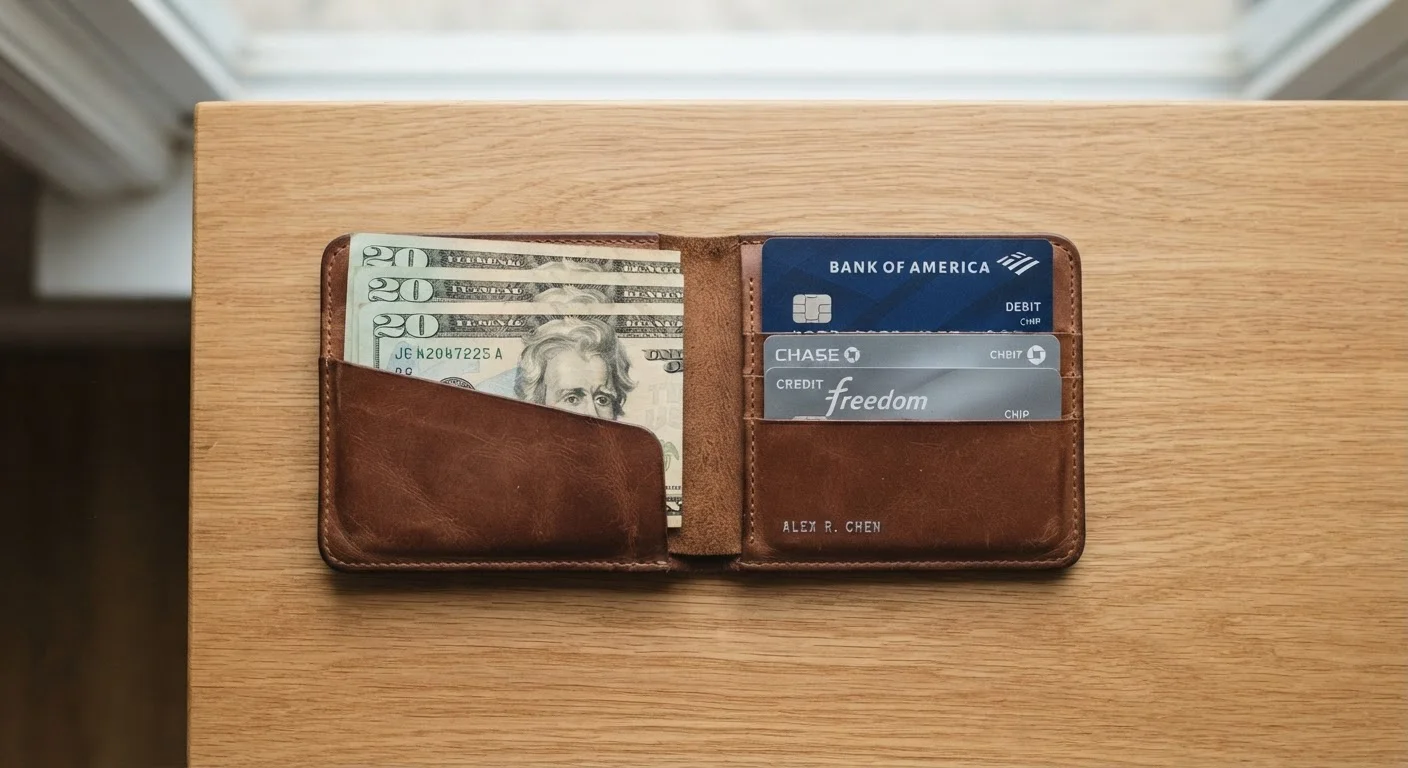
Photo: InsightsVault.com | Interesting Daily Reads editorial
Key Takeaways
- Behavioural research generally finds that paying with cash creates more spending awareness than card-based methods.
- Debit cards offer real-time account limits but lack the friction of handling physical money.
- Credit cards can enable rewards accumulation but are associated with higher average spend per transaction.
- No single payment method is universally better - the right choice depends on your spending habits and self-awareness.
- Small, consistent choices about how you pay can contribute meaningfully to annual savings over time.
Why Your Payment Method May Matter More Than You Think
Most people focus on what they buy when trying to manage spending. Fewer consider how they pay - and that distinction may matter more than it first appears. A body of behavioural economics research suggests that the payment method itself influences the psychological weight we assign to a purchase, which in turn affects how freely we spend.
The core concept researchers point to is called payment coupling - the degree to which a buyer feels the cost of a purchase at the moment of making it. Physical cash creates the strongest coupling; abstract digital transactions create the weakest. Understanding where each payment method falls on that spectrum can help you make more deliberate decisions about when to use which one. For a broader look at how spending psychology shapes behaviour, see how mental triggers drive unplanned purchases.
| Cash | Debit Card | Credit Card | |
|---|---|---|---|
| Spending awareness | High - physical exchange creates friction | Moderate - account-linked but low friction | Low - deferred payment reduces immediacy |
| Fraud protection | None - lost cash is gone | Moderate - federal protections apply | Strong - robust federal protections |
| Debt risk | None - spend only what you carry | Minimal - limited by account balance | High if balance is not paid in full |
| Convenience | Low - requires withdrawal planning | High - widely accepted | High - widely accepted online and in-store |
| Rewards potential | None | Limited or none | Yes - cash-back or points programs |
| Best use case | Impulse-prone spending categories | Everyday routine purchases | Planned purchases paid off monthly |
Cash: High Friction, High Awareness
Paying with physical bills involves a tangible, visible exchange. You hand over something finite and watch your wallet thin out. Studies in behavioural economics - including research published in academic journals focused on consumer behaviour - have generally found that people spend less, on average, when using cash versus cards for the same types of purchases.
This isn't about willpower. It's about feedback. Cash provides an immediate, sensory signal that money is leaving. That moment of hesitation is useful when you're managing a grocery budget or eating out more than planned.
The practical limits of cash are real, though: it's inconvenient for online purchases, carries no fraud protection, and requires intentional withdrawal habits. If you're exploring cash-based budgeting more formally, the cash envelope method vs. digital trackers lays out the real trade-offs in detail.
Debit Cards: Familiar Convenience With Built-In Limits
Debit cards draw directly from your checking account, which means you're still spending money you actually have. That account-linked ceiling is their most useful budget feature - in theory, you cannot spend beyond your balance (overdraft protection aside).
Where debit falls short compared to cash is psychological distance. Tapping a card or completing a contactless payment requires almost no effort and produces little sensory feedback. Research generally groups debit with credit when measuring reduced spending mindfulness, though the account-limit constraint does provide a structural guard rail that credit does not.
Use Account Alerts as a Debit Safety Net
Debit cards are widely accepted, easy to replace, and don't involve interest charges - making them a solid default for consumers who want the convenience of a card without accumulating debt.
Credit Cards: Rewards Potential and Real Risks
Credit cards are the most abstract form of everyday payment. You're not moving money at the point of sale - you're deferring it. Researchers have documented a phenomenon sometimes called the credit card premium: people are often willing to pay more for the same item when using a credit card than when using cash.
That said, credit cards offer real benefits for financially stable users: purchase protections, fraud liability limits, and rewards or cash-back programs. The critical variable is whether the balance is paid in full each month. Carrying a balance erases most financial benefits through interest charges.
For budget-focused consumers, the question isn't whether credit cards are inherently good or bad - it's whether your current habits make the abstract nature of credit a risk. If you regularly track your spending, tracking every dollar you spend can help you stay accountable regardless of which payment method you use.
Building a Practical Payment Strategy
Most households benefit from a deliberate, hybrid approach rather than a single rigid rule. Consider auditing your last two or three months of transactions to identify the spending categories where you most often exceed your intended budget. Those are precisely the categories where introducing higher-friction payment - like cash - tends to have the most impact.
Categories that are more predictable and routine (utility auto-pay, subscriptions, transport) are natural candidates for card-based payment, where convenience outweighs the spending-awareness benefit of cash.
The habits that keep spending on track over time tend to be small, consistent, and matched to how you actually behave - not how you think you should behave. Habits that keep budget-conscious shoppers from overspending explores that framework in more depth. Likewise, the Budgeting Basics hub offers tools to help you build a system that works month to month.
This article is for general informational and educational purposes only. It does not constitute personalised financial advice. For decisions specific to your financial situation, consider consulting a qualified financial professional.
The content provided on our blog site traverses numerous categories, offering readers valuable and practical information. Readers can use the editorial team’s research and data to gain more insights into their topics of interest. However, they are requested not to treat the articles as conclusive. The website team cannot be held responsible for differences in data or inaccuracies found across other platforms. Please also note that the site might also miss out on various schemes and offers available that the readers may find more beneficial than the ones we cover.