
Zero-Based Budgeting vs. the Envelope Method: Which Fits Your Life?

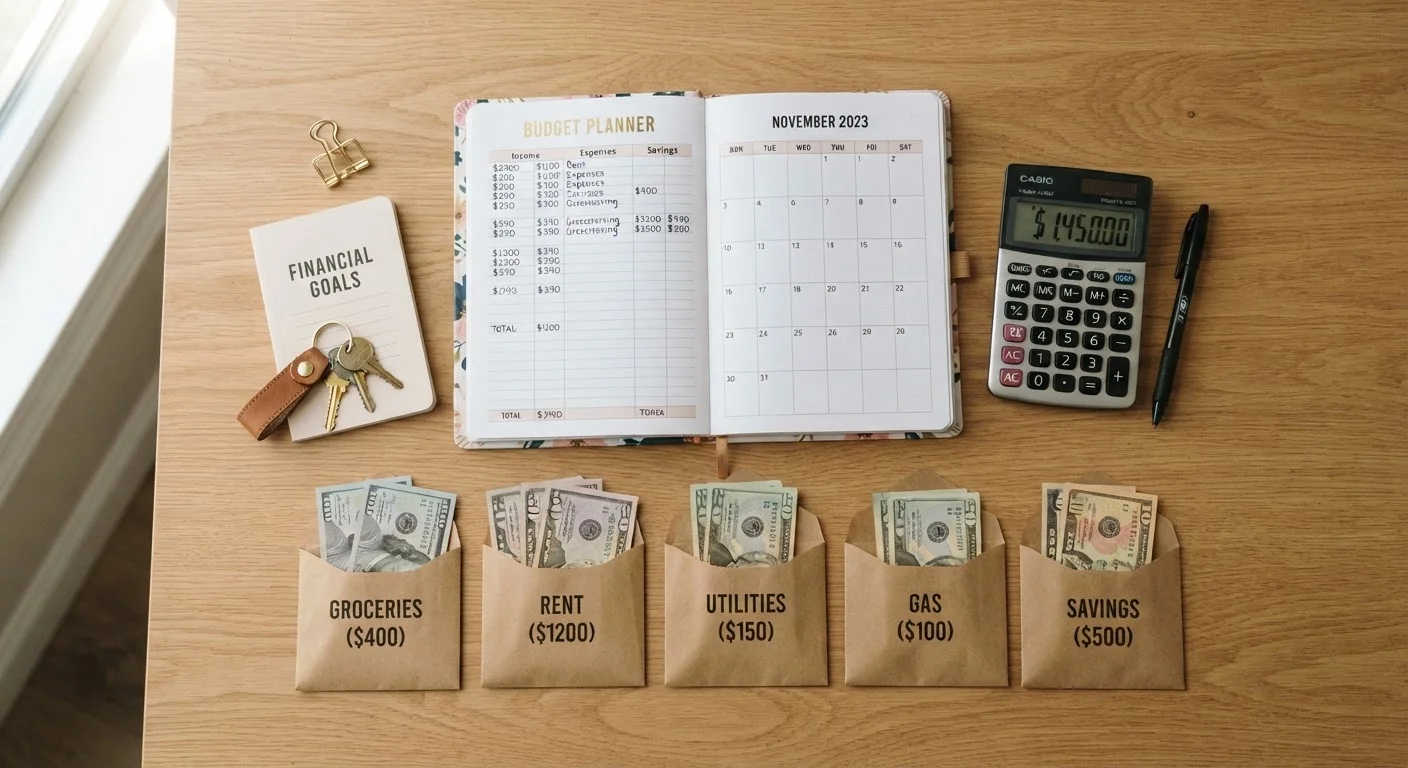
Photo: InsightsVault.com | Interesting Daily Reads editorial
Key Takeaways
- Zero-based budgeting assigns every dollar of income to a category so your budget balances to zero.
- The envelope method uses physical (or virtual) cash envelopes to cap spending in each category.
- Zero-based budgeting works well digitally; the envelope method builds awareness through physical friction.
- Both systems require tracking - the difference is how and when that tracking happens.
- Your income type, spending habits, and comfort with detail determine which system fits best.
How Each System Works
Both zero-based budgeting and the envelope method are structured spending plans - meaning they go beyond vague intentions and put actual rules around where your money goes. But they achieve that structure differently.
Zero-based budgeting (ZBB) starts with your total monthly income and requires you to allocate every dollar to a category - housing, groceries, savings, debt payments, entertainment - until you reach zero dollars unassigned. The word "zero" refers to the math, not your bank balance: income minus all allocations equals zero. Nothing floats. If your income changes month to month, you rebuild the budget each cycle from scratch.
The envelope method works by dividing your spending money into physical envelopes, each labeled with a category. You load each envelope with the cash budgeted for that category at the start of the pay period. When the grocery envelope runs out, grocery spending stops until the next refill - no exceptions. Some people use digital equivalents (separate sub-accounts or app-based envelopes), but the core logic is the same: a hard cap per category, made visible and tangible.
If you're newer to structured budgeting, our guide to building your first monthly budget covers the foundational steps that apply to both methods.
| Criterion | Zero-Based Budgeting | The Envelope Method |
|---|---|---|
| Core mechanic | Assign every dollar a job | Separate cash into labeled envelopes |
| Tracking style | Digital or spreadsheet ledger | Physical cash or virtual envelopes |
| Setup time | Moderate - full monthly rebuild | Low - load envelopes each pay period |
| Works with variable income | Yes - rebuild each month | Partially - requires adjusting amounts |
| Best for overspending | Broad, whole-budget overspending | Specific category overspending |
| Digital-friendly | Very - apps and spreadsheets align well | Less so - works best with cash |
| Learning curve | Moderate - requires detail orientation | Low - intuitive and tangible |
Where Each Method Shines - and Struggles
Zero-based budgeting is powerful for people who want a complete financial picture in one place. Because every dollar is named - including savings contributions and debt payments - nothing gets accidentally spent. It pairs well with spreadsheets and budgeting apps. The challenge: it takes consistent time investment to set up and update each month, and it can feel overwhelming if you're not naturally detail-oriented.
The envelope method's strength is behavioral. Spending physical cash triggers a psychological awareness that swiping a card does not. Research in behavioral economics consistently finds that people spend less when transactions feel real and immediate. The method's weakness is practicality: many modern expenses (utilities, subscriptions, online purchases) don't lend themselves to cash payments, so the system often requires a hybrid approach. For a deeper look at the cash-versus-digital trade-off, see our comparison of cash envelopes vs. digital spending trackers.
A Note on Digital Envelope Apps
Neither method is inherently superior - the system you'll actually maintain is the one that works for your life. Before committing, it's worth reading about the honest trade-offs of strict budgeting so you go in with realistic expectations.
Choosing the Right Fit
Consider these questions honestly before picking a method:
- Is your income consistent? Salaried workers can set up either system with predictability. Freelancers or hourly workers with variable pay often find ZBB's monthly rebuild more adaptable.
- Where do you leak money? If the problem is one or two categories - restaurants, clothing, impulse shopping - the envelope method targets those directly. If the problem is a general lack of planning, ZBB's whole-budget approach may be more effective.
- How do you prefer to track? If spreadsheets or apps feel natural, ZBB is a good match. If you want less screen time and more physical accountability, envelopes fit that preference.
You can also combine elements of both: use zero-based budgeting as the overall framework while applying cash envelopes to the two or three categories where you historically overspend. This hybrid approach is common and practical. For additional context on how to structure your spending categories, see our article on dividing your budget into spending categories.
65%
Americans living paycheck to paycheck
According to a 2023 LendingClub report, roughly 65% of U.S. consumers reported living paycheck to paycheck, underscoring why a structured spending plan matters.
~$300
Average monthly unplanned spending
A Penny Hoarder consumer survey found that Americans spend an estimated $300 or more per month on unplanned purchases, the exact behavior both systems aim to reduce.
If you're comparing these to percentage-based frameworks, our 50/30/20 rule explainer offers a useful third perspective for households that prefer less granular tracking.
This article is for general informational and educational purposes only and does not constitute personalized financial advice. Consult a qualified financial professional for guidance specific to your situation.
The content provided on our blog site traverses numerous categories, offering readers valuable and practical information. Readers can use the editorial team’s research and data to gain more insights into their topics of interest. However, they are requested not to treat the articles as conclusive. The website team cannot be held responsible for differences in data or inaccuracies found across other platforms. Please also note that the site might also miss out on various schemes and offers available that the readers may find more beneficial than the ones we cover.