
Free and Low-Cost Alternatives to Common Paid Habits

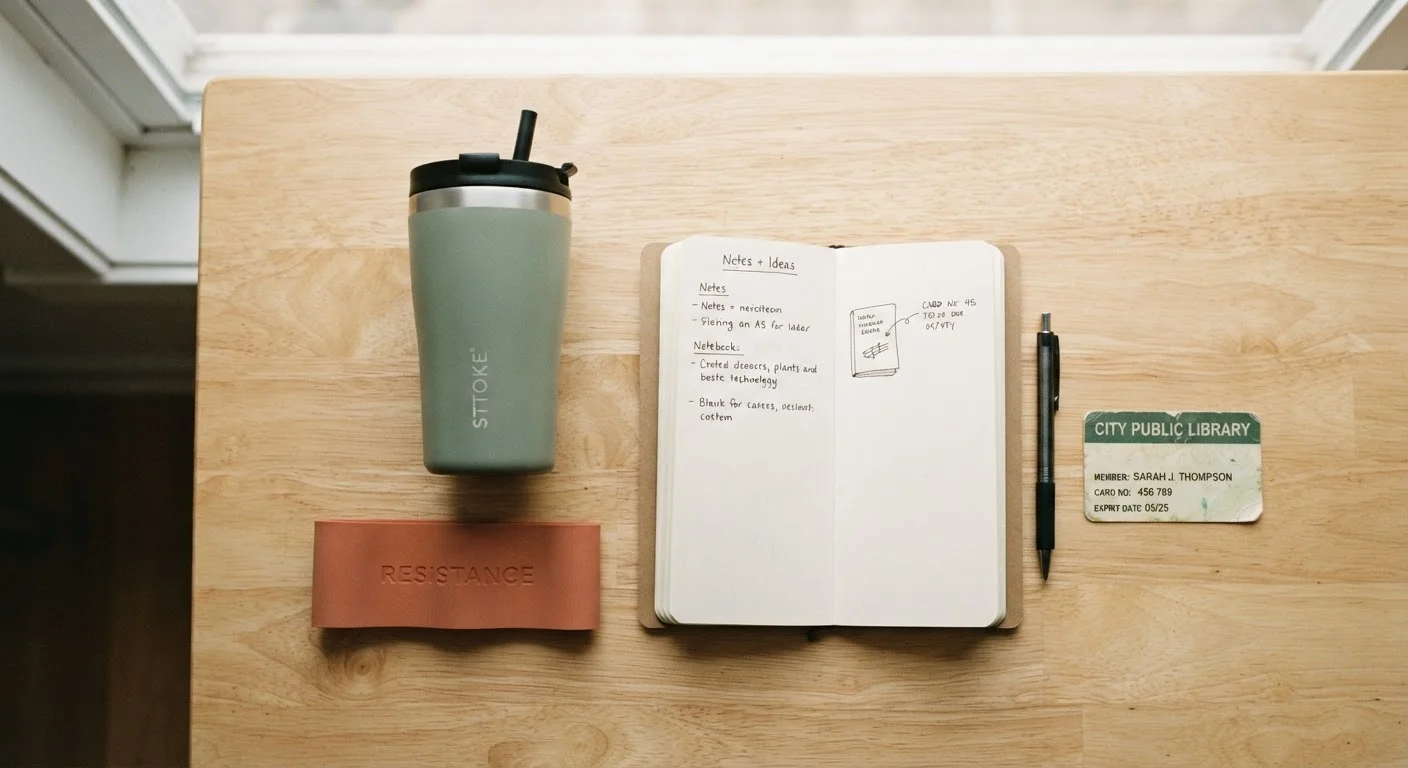
Photo: InsightsVault.com | Interesting Daily Reads editorial
Key Takeaways
- Many paid habits have free or near-free alternatives that deliver comparable value.
- Consistent small swaps - not drastic cuts - tend to produce the most sustainable savings.
- Public libraries, free fitness resources, and home brewing are among the highest-impact substitutes.
- Streaming consolidation and app-based tools can reduce recurring monthly costs significantly.
- Each swap works best when it fits your lifestyle, so trial and adjust rather than overhauling everything at once.
Why Small Swaps Beat Big Sacrifices
The most common reason budgets fail isn't a lack of willpower - it's the feeling of deprivation. When people try to eliminate entire categories of spending overnight, they tend to rebound. A more durable approach is identifying the specific paid habits where a free or lower-cost alternative delivers most of the same value with little friction.
This list focuses on everyday spending patterns - gym memberships, coffee runs, streaming subscriptions, and more - where the gap between paid and free is smaller than most people realise. If you're just getting started, a practical starter framework for reducing daily costs can help you build the right mindset before diving into individual swaps.
None of these changes require a dramatic lifestyle overhaul. The goal is to replace cost without replacing satisfaction.
Swap the Gym Membership for Free Fitness Resources
A mid-tier gym membership in the US commonly runs $40-$60 per month, yet a large share of members visit infrequently. Public parks, community recreation centres, and free online workout programmes can replicate most of what a commercial gym offers - particularly for anyone whose routine centres on cardio, bodyweight training, or basic strength work.
Many public libraries provide free access to fitness apps and streaming workout platforms through their digital services. Community centres often offer drop-in classes at a fraction of private studio prices. For a curated overview, free fitness resources that are actually worth your time covers what's genuinely useful versus what's just noise. More broadly, the low-cost fitness hub offers ongoing guidance for staying active on a budget.
Public parks and free online programmes can replicate most gym routines at zero cost.
Brew Coffee at Home Instead of Daily Café Visits
A daily purchased coffee at $4-$6 per cup adds up to roughly $1,200-$1,800 per year for a five-day-a-week habit. Brewing at home - even with quality beans and a decent pour-over or French press - typically costs less than $0.50 per cup. The upfront investment in equipment pays for itself quickly.
This doesn't mean abandoning cafés entirely. Treating them as an occasional social outing rather than a daily default preserves the enjoyment while dramatically reducing the spend. If you prefer espresso-style drinks, a stovetop moka pot is an affordable alternative to a full espresso machine.
Shifting from a daily café purchase to home brewing can save over $1,000 annually for many people.
Use Your Public Library for Books, Films, and More
Public libraries in the US have quietly expanded well beyond physical books. Most now provide free access to e-books, audiobooks, magazines, and streaming films through platforms such as Libby, Kanopy, and Hoopla - all at no cost with a library card. For households paying separately for audiobook subscriptions, this alone can represent $10-$20 per month in savings.
Libraries also offer free digital courses, language learning tools, and in some cases museum passes. If you haven't revisited what your local library offers recently, it's worth checking - the catalogue has grown substantially.
A library card unlocks free e-books, audiobooks, and streaming films most people are paying for elsewhere.
Consolidate or Rotate Streaming Subscriptions
The average US household subscribes to multiple streaming services simultaneously, with many paying for platforms they rarely open. A straightforward alternative is to maintain one active subscription at a time, rotating quarterly based on what you actually want to watch. Most services allow cancellation without penalty, making this easy to manage.
Free ad-supported streaming platforms have also expanded significantly, offering a wide content library at no cost. Many public libraries additionally provide free access to streaming film services. Reducing from three subscriptions to one - or one plus a free tier - can save $20-$40 per month without meaningfully limiting what you watch.
Rotating one subscription at a time rather than running several simultaneously cuts costs without limiting content.
Replace Paid Apps with Free Equivalents
Productivity, budgeting, meditation, and fitness apps frequently carry monthly fees of $5-$15 each. Before renewing, it's worth checking whether a free alternative exists. Many widely used paid apps have capable free versions, and open-source tools often match premium software for common tasks like budgeting spreadsheets or note-taking.
The key is auditing what you're actually using. Many people accumulate app subscriptions after free trials and forget them. Cancelling dormant subscriptions is an immediate, zero-effort saving - and reviewing your bank or credit card statement monthly is the most reliable way to catch them.
Auditing and cancelling dormant app subscriptions is one of the easiest immediate savings available.
Cook in Bulk Instead of Ordering Takeout
Frequent takeout and food delivery is among the largest discretionary spending categories for many US households, especially when delivery fees and tips are included. Batch cooking - preparing larger quantities of meals on one or two days per week - provides the same convenience of ready-made food at a fraction of the cost.
Simple techniques like cooking grains, proteins, and roasted vegetables in bulk, then assembling different meals throughout the week, reduce both cooking time and per-meal cost substantially. Meal planning also reduces food waste, which compounds the savings. This habit pairs well with broader strategies covered in reducing daily costs without feeling deprived.
Batch cooking delivers the convenience of ready-made meals at a fraction of takeout prices.
Putting It All Together
No single swap below will transform your finances on its own. But stacking several consistently can produce meaningful annual savings - often several hundred dollars or more - without requiring you to give up activities you genuinely enjoy.
Track Your Swaps for One Month
Start by auditing one spending category at a time. Pick the habit where the free alternative sounds most appealing, trial it for a month, and only then move to the next. For more ways to trim what you spend day-to-day, explore how cutting transport costs without giving up convenience can complement the habits covered here.
This article is for general informational purposes only and does not constitute personalised financial advice. Results will vary based on individual circumstances. Consider consulting a qualified financial professional for guidance specific to your situation.
The content provided on our blog site traverses numerous categories, offering readers valuable and practical information. Readers can use the editorial team’s research and data to gain more insights into their topics of interest. However, they are requested not to treat the articles as conclusive. The website team cannot be held responsible for differences in data or inaccuracies found across other platforms. Please also note that the site might also miss out on various schemes and offers available that the readers may find more beneficial than the ones we cover.