
Subscription Creep: Why Your Bills Keep Growing Without You Noticing

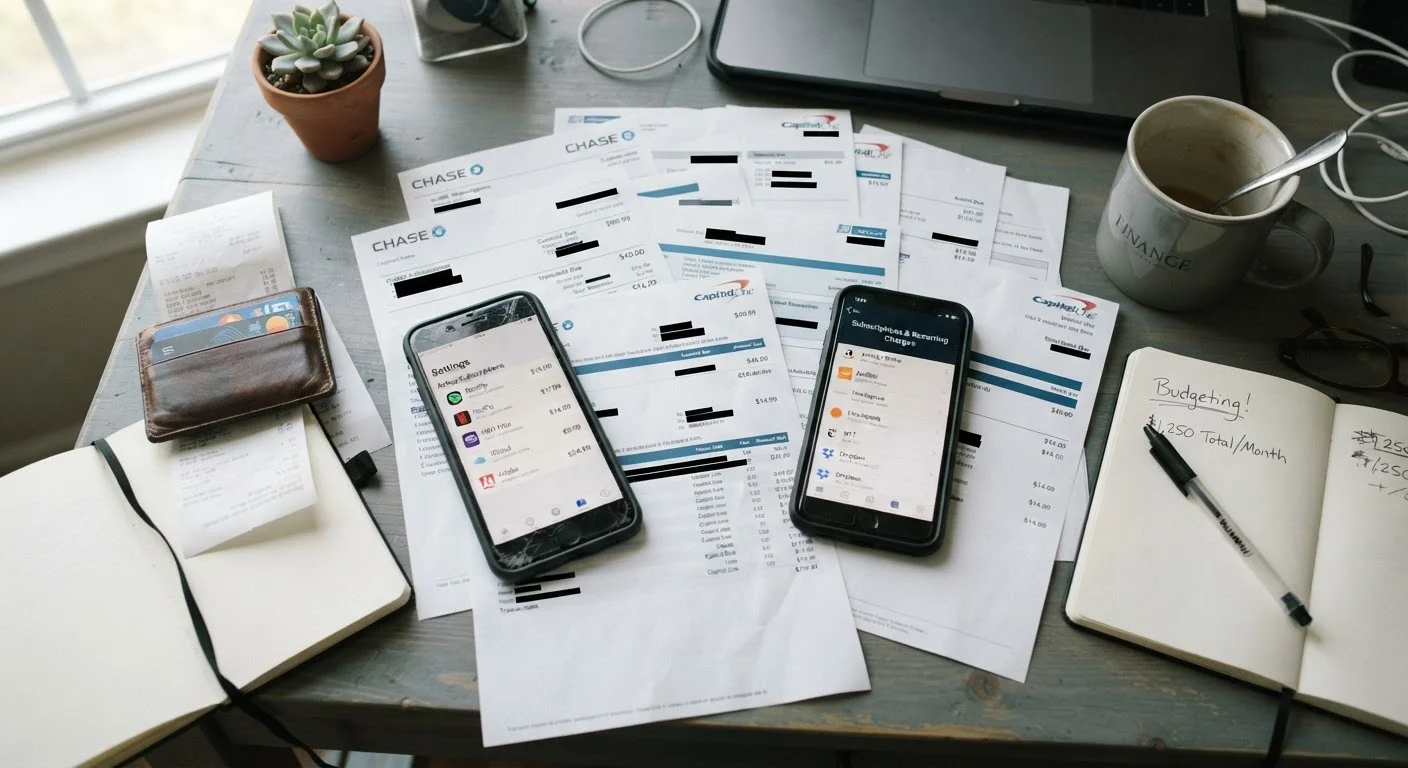
Photo: InsightsVault.com | Interesting Daily Reads editorial
Key Takeaways
- Subscription creep occurs when recurring charges accumulate or increase without the consumer noticing.
- The average U.S. household underestimates its monthly subscription spending by a significant margin.
- Free trials, automatic renewals, and price hikes are the three most common entry points for creep.
- Conducting a regular subscription audit is one of the simplest ways to recover meaningful annual savings.
- Canceling even two or three unused subscriptions can free up hundreds of dollars per year.
How Subscription Creep Quietly Inflates Your Budget
The math behind subscription creep is straightforward, but the psychology behind it is what makes it so effective. When a streaming platform raises its monthly rate by $2, or a news app quietly renews after a discounted introductory period, the individual charge is small enough to slip past casual attention. Multiply that by six, eight, or ten services - each nudging upward on its own schedule - and the cumulative effect on your annual spending can be substantial.
Three mechanisms drive most of the growth:
- Free trial-to-paid conversions: Services offer a no-cost trial period, then automatically bill at the full rate once it ends. Many consumers intend to cancel but forget.
- Incremental price increases: Rather than one large hike, companies raise prices by small amounts - $1 to $3 - at intervals. Each increase individually feels trivial; collectively, they add up.
- Bundle accumulation: Households subscribe to separate services that partially overlap in function (multiple music apps, for example), paying for redundant access they rarely use fully.
The result is a monthly bill that has drifted far from what you remember agreeing to. See also: common traps in subscription bundle deals.
~$219/mo
Average U.S. household subscription spend
A survey by C+R Research found that Americans spend an average of around $219 per month on subscription services - far more than most self-estimate.
2.5x
Gap between estimated and actual subscription costs
The same C+R Research survey found that consumers on average underestimated their monthly subscription spending by roughly 2.5 times when asked to self-report.
$624+
Potential annual savings from canceling unused subs
Canceling just $52 worth of unused monthly subscriptions - roughly four to six forgotten services - would recover over $624 per year for the average household.
Why Our Brains Are Bad at Tracking Recurring Charges
Recurring charges are designed - often deliberately - to fade into the background. A one-time $120 purchase feels significant and demands a conscious decision. That same $10 charged monthly registers as a background detail, even though it amounts to the same annual cost. This is sometimes called the "pain of payment" effect: the discomfort associated with spending is lower when charges are automatic and spread out over time.
Subscription businesses understand this well. Automatic renewal is the default because opt-out rates are far higher than opt-in rates. Billing cycles are staggered so that multiple charges rarely land on the same day, reducing the chance any one statement triggers a full review. Email receipts are sent but quickly buried in inboxes.
“The most dangerous financial leaks are the ones that don't feel like leaks at all - small, automated, and invisible until you actually look.”
— Smart Money Basics Editorial Team, Personal finance educators focused on everyday consumer budgeting
The practical implication: you cannot rely on noticing subscription creep as it happens. It must be caught through deliberate, scheduled review - not passive awareness.
What Subscription Creep Actually Costs Over a Year
Consider a household with what feels like a modest set of subscriptions: a streaming video service, a music platform, a cloud storage plan, a fitness app, a news site, and a household management tool. If each of those services raises its price even once over 12 months, and one or two sit largely unused, the household may be spending $400 to $600 more per year than it realizes - without adding a single new service.
That figure grows when you factor in subscriptions that were signed up for a specific purpose and never canceled: a free trial from a holiday promotion, a one-month subscription tied to a temporary project, or a family plan that no longer reflects the household's actual size.
These aren't luxury purchases - they're forgotten ones. And forgotten spending is among the easiest kind to recover. A structured monthly spending audit is one of the most reliable tools for finding and eliminating this waste. Similar invisible costs can appear in other recurring categories too - for example, grocery habits that quietly drain budgets follow a comparable pattern of small, unnoticed overages.
Building a Simple System to Stay Ahead of Creep
Stopping subscription creep doesn't require aggressive cost-cutting - it requires consistency. A few structured habits create ongoing visibility into where your recurring money goes.
Track every recurring charge in one place
Whether you use a spreadsheet, a notes app, or a budgeting tool, maintain a single list of every active subscription, its monthly cost, and its renewal date. Update it whenever you add or cancel a service. This list is your audit baseline.
Set calendar reminders for trials and renewals
When you sign up for a free trial, immediately add a calendar reminder two days before it ends. This gives you time to decide consciously whether you want to continue - rather than discovering a charge after the fact.
Conduct a quarterly line-item review
Every three months, go through your bank and credit card statements and match every recurring charge to your tracking list. Any charge that doesn't appear on your list is unaccounted-for spending. Any service you haven't used in 30 days is a cancellation candidate.
This is also a useful moment to review other fixed recurring costs - vehicle ownership costs like insurance and fuel are another category where gradual increases deserve periodic attention.
Use a Dedicated Card for Subscriptions
This article is for general informational purposes only and does not constitute financial advice. For guidance specific to your financial situation, consider consulting a qualified financial professional.
Frequently Asked Questions
The content provided on our blog site traverses numerous categories, offering readers valuable and practical information. Readers can use the editorial team’s research and data to gain more insights into their topics of interest. However, they are requested not to treat the articles as conclusive. The website team cannot be held responsible for differences in data or inaccuracies found across other platforms. Please also note that the site might also miss out on various schemes and offers available that the readers may find more beneficial than the ones we cover.