
Shared Dorms vs. Private Rooms in Hostels: Weighing Comfort Against Cost

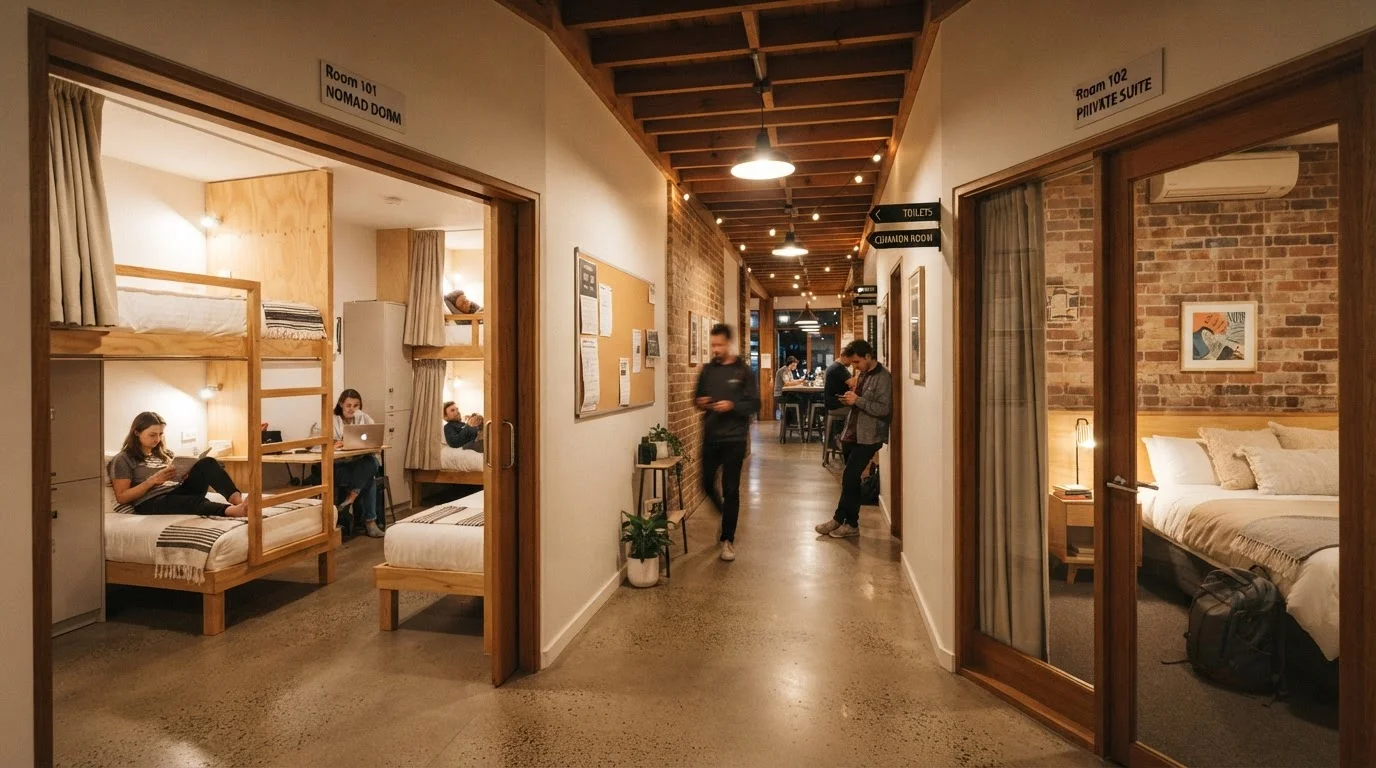
Photo: InsightsVault.com | Interesting Daily Reads editorial
Key Takeaways
- Shared dorms typically cost 40-70% less per night than private hostel rooms in the same property.
- Private hostel rooms often include the same common-area perks - kitchens, lounges, events - as dorm beds.
- Dorm size matters: a 4-bed room sleeps much differently than a 12-bed room.
- Hidden costs like locker rental or linen fees can narrow the price gap between dorms and private rooms.
- Trip length, destination, and travel style should all factor into which option makes financial sense.
The Real Price Gap - And What It Actually Buys You
The sticker price difference between a dorm bed and a private room in the same hostel is usually significant - often 40 to 70 percent lower per night for a dorm. In practical terms, that can mean $15-$25 for a dorm bed versus $50-$90 for a private room in mid-range destinations across Europe, Southeast Asia, or Latin America. But that number only tells part of the story.
What you're paying for in a dorm is access to a bed, shared bathrooms, and common areas. What you're paying for in a private room is the same access - plus four walls and a door. The hostel infrastructure around you (kitchen, lounge, social events, sometimes breakfast) is often identical. So the premium on a private room is almost entirely about privacy and sleep quality, not amenities.
Before booking, check whether the hostel charges separately for lockers, linen, or towels - these add-ons can close the gap. Our guide on calculating the real cost of budget lodging walks through exactly what to look for.
| Criterion | Shared Dorm Room | Private Hostel Room |
|---|---|---|
| Typical nightly cost (solo traveler) | $12-$30 per bed | $45-$100 per room |
| Privacy | None - shared with strangers | Full - door locks, personal space |
| Sleep quality risk | Higher (noise, light, movement) | Lower - controllable environment |
| Access to hostel common areas | Full access included | Full access included |
| Best value for couples | Two beds needed - doubles cost | Split one room - often comparable |
| Bathroom situation | Always shared | Shared or en-suite (varies) |
| Social opportunities | High - organic dorm interaction | Moderate - common areas only |
| Storage security | Locker (sometimes extra cost) | Room-level security, often lockable |
Comfort Variables That Don't Show Up in the Price
Not all dorms are equal. A 4-bed female-only dorm at a well-reviewed boutique hostel is a fundamentally different experience from a 16-bed mixed dorm in a party-focused property. When evaluating comfort, dorm size and hostel culture matter far more than the room type label alone.
Key comfort factors to weigh in dorms: number of beds in the room, bunk vs. pod-style beds (pods offer more enclosure and noise buffering), quality of shared bathrooms, whether guests can charge devices securely, and the hostel's enforcement of quiet hours. Reviews on booking platforms typically surface these details - filter specifically for solo traveler and light-sleeper comments.
Private hostel rooms, meanwhile, vary considerably too. Some are barely more than a converted closet with a double bed; others are well-appointed rooms with en-suite bathrooms. Always check whether a private room includes a private bathroom or shares one - this affects both comfort and effective cost.
4-6 beds
Dorm size linked to better sleep ratings
Hostel review data consistently shows smaller dorms (4-6 beds) receive higher guest satisfaction scores than larger ones with 10+ beds.
~50%
Average dorm-to-private price gap in hostels
Industry booking data suggests dorm beds typically cost around half the price of a private room at the same hostel property, though this varies significantly by region.
For a broader look at how hostel rooms fit into the wider lodging landscape, see our full breakdown of budget accommodation types.
When the Math Favors Each Option
The financial case for dorms is strongest when you're traveling solo, staying just a few nights, or in a destination where the price gap is steep. In cities where dorm beds run $12-$18 a night and private rooms run $60+, the dorm wins decisively for any cost-conscious solo traveler.
The math shifts for private rooms in two scenarios. First, when two people split the cost - a $70 private room becomes $35 per person, often competitive with or cheaper than two separate dorm beds after taxes and fees. Second, on longer stays where sleep quality compounds: poor rest accumulated over a week degrades the whole trip, and the nightly premium for privacy may be worth it.
It's also worth knowing that hostels are genuinely a different product from guesthouses or budget hotels, even when prices overlap. If you're unsure which category of accommodation is right for your trip, understanding what sets each apart is a practical starting point. And if this is your first time booking a hostel of any kind, what to expect and how to prepare covers the logistics that often catch new guests off guard.
Longer Trips: Consider Mixing Both
The content provided on our blog site traverses numerous categories, offering readers valuable and practical information. Readers can use the editorial team’s research and data to gain more insights into their topics of interest. However, they are requested not to treat the articles as conclusive. The website team cannot be held responsible for differences in data or inaccuracies found across other platforms. Please also note that the site might also miss out on various schemes and offers available that the readers may find more beneficial than the ones we cover.