
Comprehensive vs. Third-Party Insurance: Choosing the Right Level of Cover

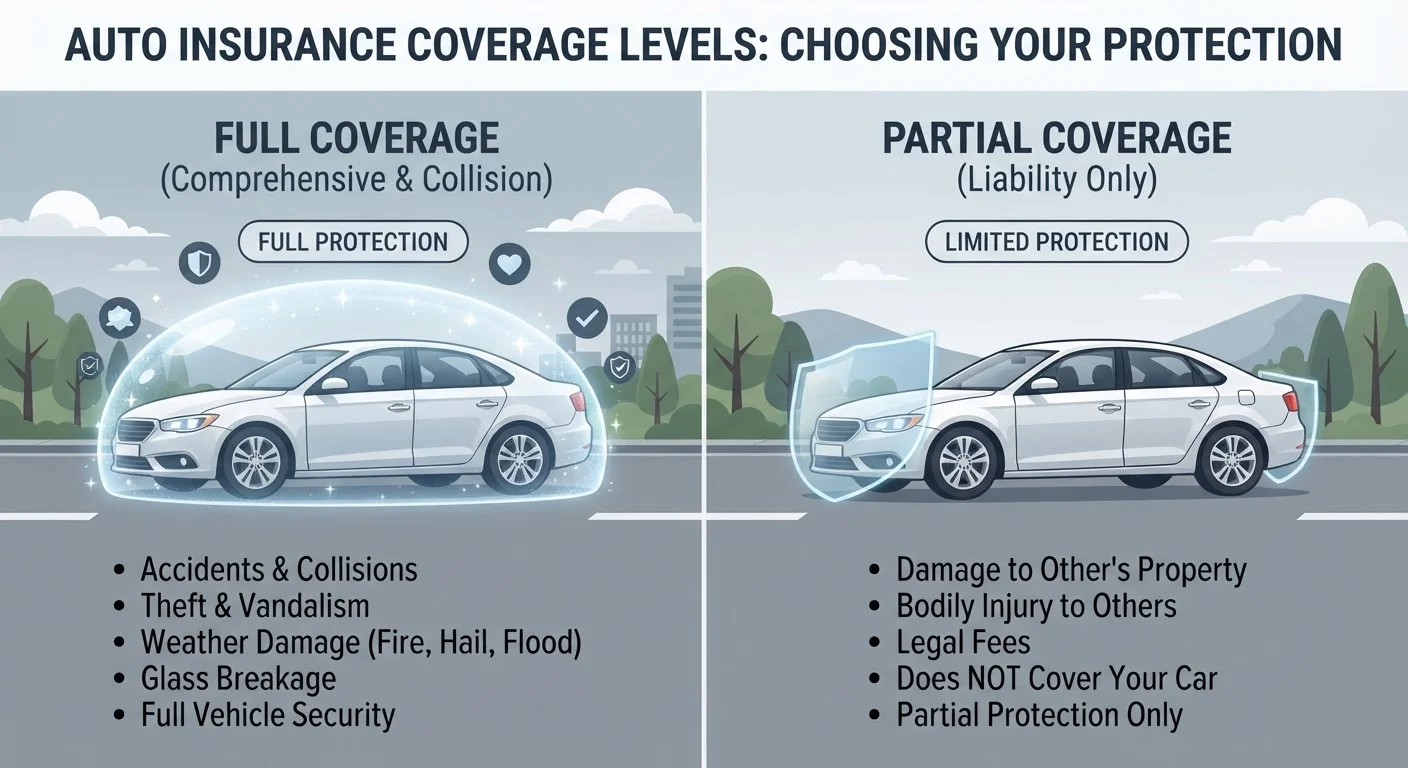
Photo: InsightsVault.com | Interesting Daily Reads editorial
Key Takeaways
- Comprehensive insurance covers damage to your own vehicle plus third-party liability; third-party only covers others.
- Third-party insurance is typically cheaper, but leaves you financially exposed if your car is damaged or stolen.
- The right level of cover depends heavily on your car's market value relative to your annual premium.
- A general rule of thumb: if your annual premium exceeds 10% of your car's value, dropping to third-party may be worth evaluating.
- Neither policy type guarantees a specific payout - terms, exclusions, and deductibles vary by insurer and policy.
What Each Level of Cover Actually Includes
Third-party insurance is the minimum legally required level in most US states and many other jurisdictions. It pays for damage or injury you cause to other people and their property - it does not pay a cent toward repairing or replacing your own vehicle. If you rear-end another driver, their repairs are covered; yours are not.
Comprehensive insurance (sometimes called "full coverage" when bundled with collision cover) expands protection significantly. It covers third-party liability plus damage to your own vehicle from events such as theft, fire, weather, falling objects, and animal strikes. Collision cover - often sold alongside comprehensive - handles damage to your car from traffic accidents, regardless of fault.
It's worth noting that "full coverage" is an informal term, not a defined policy type. What's actually included depends on the insurer and your specific policy documents. Always read the exclusions carefully. For a closer look at how add-ons can fill remaining gaps, see this overview of common policy add-ons.
| Criterion | Comprehensive Insurance | Third-Party Insurance |
|---|---|---|
| Covers damage to others | Yes | Yes |
| Covers your own vehicle damage | Yes (with collision add-on) | No |
| Covers theft of your vehicle | Yes | No |
| Covers weather/fire/animal damage | Yes | No |
| Typical premium cost | Higher | Lower |
| Required for financed vehicles | Usually yes | Typically insufficient |
| Best suited to vehicle value | Higher-value vehicles | Lower-value, older vehicles |
The Financial Logic Behind Choosing a Level
The core question isn't which policy type is better in the abstract - it's which makes financial sense given your specific car and situation.
A widely cited rule of thumb in personal finance: if your annual comprehensive premium costs more than 10% of your vehicle's current market value, the math begins to favor dropping to third-party. For example, if your car is worth $4,000 and comprehensive cover costs $600 per year, you're paying 15% of the car's value annually for protection that can't pay out more than the car is worth.
Factor in your deductible (also called an excess), too. If you carry a $1,000 deductible and your car is worth $3,500, a covered claim nets you at most $2,500 - and only after you've already paid $1,000 out of pocket. Understanding how your deductible works is essential before making this calculation.
~$1,780
Average annual US comprehensive auto premium
According to the National Association of Insurance Commissioners (NAIC), average expenditures on auto insurance have risen steadily, with comprehensive and collision components making up a significant share of total costs.
~12%
US drivers estimated to be uninsured
The Insurance Research Council has estimated that roughly 1 in 8 US drivers carries no insurance at all, underscoring the financial risk third-party and uninsured motorist coverage is designed to address.
Over a lifetime of driving, these decisions compound. Paying for cover you don't need for years adds up. See how insurance costs shift across a driving lifetime to put this in longer-term perspective.
Situations Where Comprehensive Cover Remains Worth It
Even for budget-conscious drivers, there are circumstances where comprehensive cover earns its cost:
- Financed or leased vehicles: Lenders and leasing companies almost always require comprehensive and collision cover as a condition of the loan. Dropping below that level can put you in breach of your financing agreement.
- Limited savings: If an unexpected $5,000 repair bill would genuinely strain your finances, comprehensive cover functions as a financial safety net. The math changes when you don't have reserves to fall back on.
- High-theft or severe-weather regions: Drivers in areas prone to vehicle theft, hail storms, or flooding face elevated risk of exactly the losses comprehensive cover is designed for.
- Relatively new vehicles: A car with significant market value - typically above $10,000 - is usually worth insuring comprehensively, since the potential loss outweighs the premium burden.
Before switching policies, use this insurer-switching checklist to make sure you're comparing coverage levels on equal terms, not just price.
Making the Call: A Practical Framework
There's no universal right answer here - but a straightforward framework helps clarify the decision:
- Find your car's current market value. Government and industry databases publish average used-vehicle valuations you can reference for free.
- Get a like-for-like comprehensive quote. Compare it against your third-party premium to find the actual cost difference.
- Apply the 10% rule. If comprehensive costs more than 10% of your car's value annually, third-party may be financially rational - provided you have adequate savings as a buffer.
- Check your financing agreement. If your car is financed or leased, your hands may already be tied.
- Revisit annually. As your car depreciates, the equation shifts. A policy that made sense two years ago may not today.
Insurance decisions are part of a broader picture of vehicle running costs. Managing fuel and insurance costs across your car's lifetime covers how both of these recurring expenses evolve together over time.
This article is for general informational purposes only and does not constitute personalised insurance or financial advice. Coverage terms, exclusions, and legal requirements vary by insurer, state, and individual circumstances. Always read your policy documents carefully and consult a licensed insurance professional before making coverage decisions.
The content provided on our blog site traverses numerous categories, offering readers valuable and practical information. Readers can use the editorial team’s research and data to gain more insights into their topics of interest. However, they are requested not to treat the articles as conclusive. The website team cannot be held responsible for differences in data or inaccuracies found across other platforms. Please also note that the site might also miss out on various schemes and offers available that the readers may find more beneficial than the ones we cover.