
Grout vs. Caulk: Picking the Right Filler for Every Joint

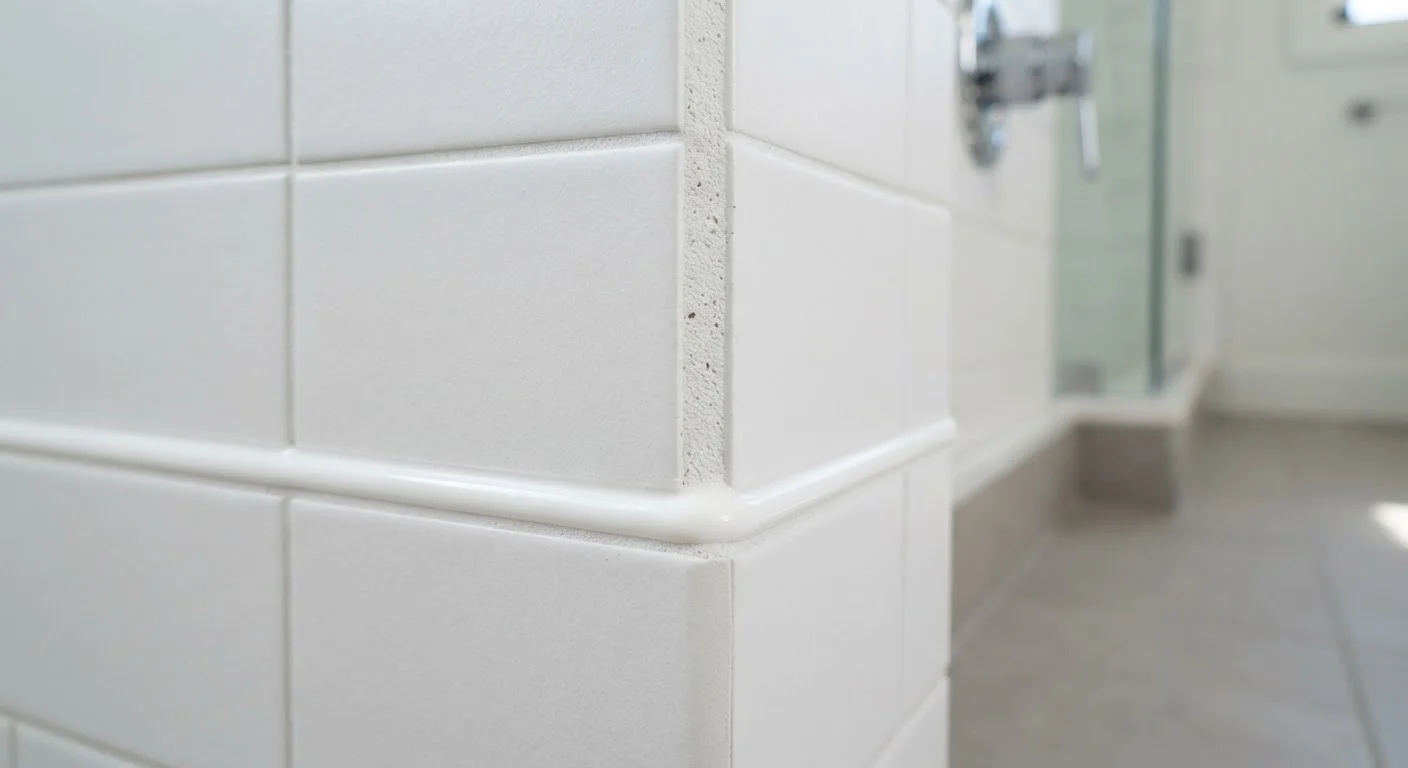
Photo: InsightsVault.com | Interesting Daily Reads editorial
Key Takeaways
- Grout is rigid and belongs between tiles on flat, stable surfaces; it will crack if used where movement occurs.
- Caulk is flexible and should be used at all corners, changes of plane, and where tile meets a different material.
- Using grout in a corner joint is one of the leading causes of cracked tile work that requires expensive re-dos.
- Both materials require a clean, dry surface for proper adhesion and long-term performance.
- The right choice depends on joint location and surface movement, not personal preference or convenience.
What Each Material Actually Does
Grout and caulk are both gap-fillers, but they behave in fundamentally different ways once cured - and that difference is what determines where each one belongs.
Grout is a cement-based (or sometimes epoxy-based) filler that cures hard and rigid. It bonds tile to tile across a flat plane, resists abrasion, and holds up to foot traffic and cleaning. Its rigidity is a feature on stable surfaces, but a liability anywhere the substrate flexes or two surfaces meet at different angles.
Caulk is a flexible polymer sealant - typically silicone, latex, or a siliconized latex hybrid. It stays slightly pliable after curing, which allows it to absorb the micro-movements that happen in every structure: thermal expansion, humidity cycling, building settlement, and vibration from foot traffic. It also creates a watertight seal that grout alone cannot reliably provide in high-moisture zones.
The core rule is straightforward: grout fills joints in a flat plane; caulk seals joints at changes of plane, transitions, and wherever movement occurs.
| Criterion | Grout | Caulk |
|---|---|---|
| Flexibility after cure | Rigid - does not flex | Remains pliable and elastic |
| Best joint type | Flat plane between tiles | Corners, transitions, and perimeter joints |
| Waterproofing | Porous unless sealed | Watertight seal when properly applied |
| Handles movement | No - cracks under movement | Yes - absorbs expansion and vibration |
| Typical lifespan in wet areas | 5-15 years with sealing | 3-10 years; re-apply as needed |
| DIY difficulty | Moderate - mixing and timing matter | Low to moderate - tooling takes practice |
| Approximate material cost | Generally lower per job | Slightly higher for silicone types |
Where to Use Each - The Location Rule
Tile installers follow a simple location-based guideline that saves homeowners from the most common and expensive mistakes.
Use Grout
- Between tiles on a continuous floor or wall field
- On backsplash tiles where the surface is flat and the substrate is solid
- Between tiles on a countertop field (not at the wall junction)
Use Caulk
- At every inside corner - wall-to-wall, wall-to-floor, wall-to-ceiling
- Where tile meets the bathtub deck, shower pan, or sink rim
- At the perimeter of any tiled area where tile meets a non-tile material
- Around fixtures like toilet bases, faucet escutcheons, and shower curbs
- Anywhere an existing grout joint keeps cracking, which signals ongoing movement
Change-of-Plane Joints Need Movement Tolerance
A practical memory aid used by many tile setters: if the joint forms an L shape, use caulk. If it's a straight line between two tiles, use grout.
When it comes to color matching, most grout manufacturers also produce a caulk in coordinating colors, so the finished look stays consistent even when you're switching materials at a corner. This is an important detail for a professional-looking result that budget-conscious DIYers can achieve without extra cost.
Application and Common Mistakes
Even the right material fails if it's applied incorrectly. A few core practices apply to both.
Surface prep is non-negotiable. Both grout and caulk require a clean, dry surface free of old filler, soap scum, dust, and oils. Skipping this step is the single biggest cause of adhesion failure. For caulk removal, a plastic scraper and an appropriate solvent work well for most residue without damaging tile.
Never grout over caulk or caulk over grout. The materials don't bond to each other reliably. Remove the old material fully before re-applying.
Grout mistakes to avoid:
- Mixing grout too wet - it weakens the final cure and causes shrinkage cracks
- Grouting too soon after tile installation - the thinset adhesive needs to fully cure first (check the manufacturer's guidelines, commonly 24 hours minimum)
- Skipping sealer on unsanded or sanded grout - an unsealed grout joint will absorb moisture and stain rapidly
Caulk mistakes to avoid:
- Applying caulk to a damp surface, especially in shower corners - the bead won't bond properly and mould can develop underneath
- Cutting the nozzle too large - a small, controlled bead is far easier to tool neatly than an oversized one
- Skipping the painter's tape guide - tape on both edges of the joint and tool the bead before removing the tape for a clean line
If your caulk keeps failing, it's often a symptom of a larger issue. See our guide to why caulk cracks and what to do instead for a detailed breakdown of the root causes and lasting fixes.
$200-$700+
Typical cost to re-tile a shower corner area
Contractor estimates for repairing failed grout at corners, where flexible caulk should have been used initially, typically start in this range depending on scope and region.
3-5 years
Average re-caulk interval in wet areas
Tile and home improvement professionals generally recommend inspecting and refreshing caulk in showers and tubs every three to five years to prevent water intrusion behind tile.
The content provided on our blog site traverses numerous categories, offering readers valuable and practical information. Readers can use the editorial team’s research and data to gain more insights into their topics of interest. However, they are requested not to treat the articles as conclusive. The website team cannot be held responsible for differences in data or inaccuracies found across other platforms. Please also note that the site might also miss out on various schemes and offers available that the readers may find more beneficial than the ones we cover.