
Energy-Saving Habits That Actually Work - and the Ones That Don't

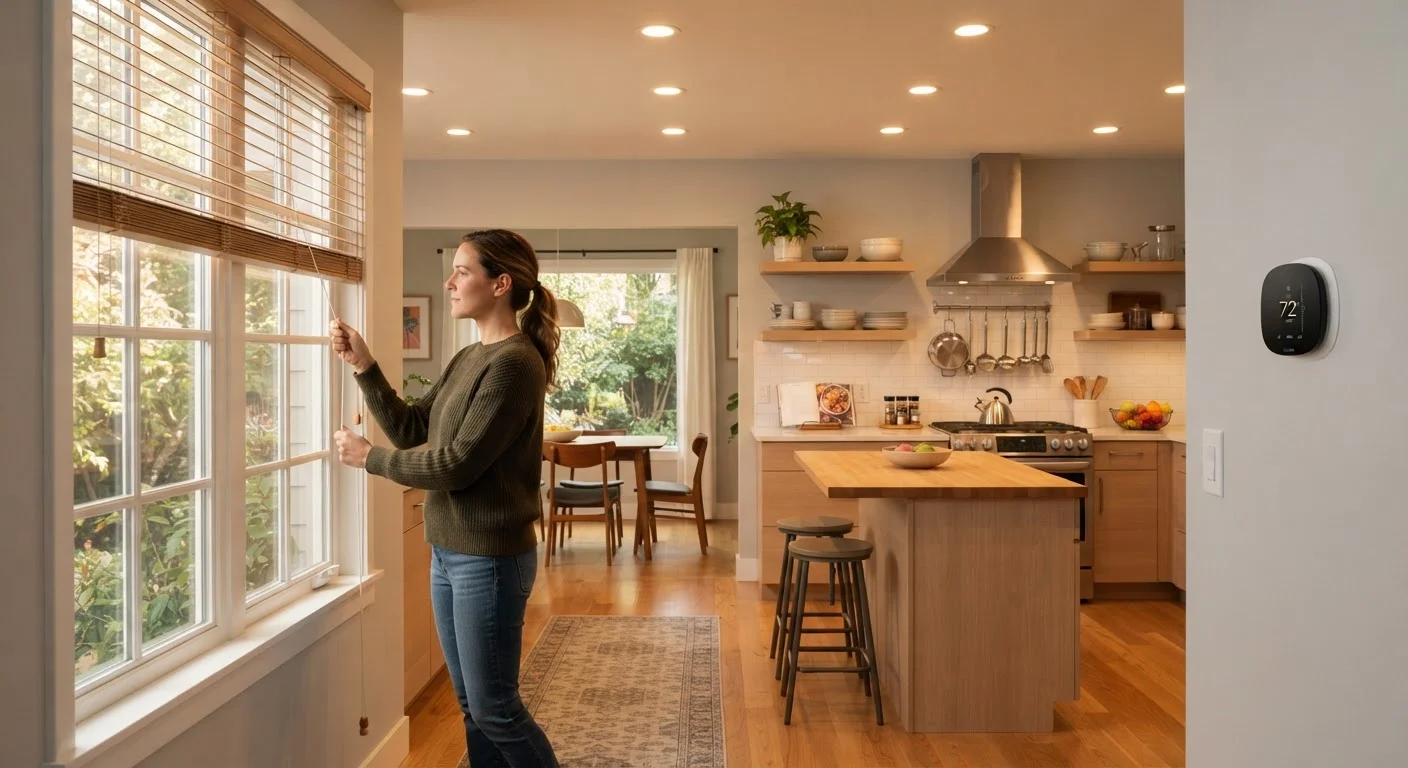
Photo: InsightsVault.com | Interesting Daily Reads editorial
Key Takeaways
- Turning off lights when leaving a room genuinely saves money; standby power is a bigger hidden drain.
- Cranking the thermostat up high does not heat your home faster - it just wastes energy.
- Air-sealing gaps and improving insulation consistently outperforms most behavioral habits for long-term savings.
- Unplugging devices in standby mode can eliminate a meaningful portion of your electricity bill.
- Full dishwasher loads use less energy per dish than hand-washing in hot running water.
Why Some Energy Advice Fails in Practice
Popular energy-saving advice circulates endlessly online, but not all of it holds up when measured against actual utility data. Some habits deliver real, repeatable savings; others make people feel virtuous while barely moving the needle. Understanding the difference helps you focus effort where it counts.
The U.S. Department of Energy estimates that space heating and cooling account for roughly half of a typical household's energy use. That single fact tells you a lot: habits that affect your HVAC system will generally outperform habits focused on small appliances. With that framework in mind, let's work through the myths.
For a broader seasonal strategy, see our complete year-round energy savings roadmap.
Myth
Turning the thermostat up higher heats your home faster, so you get comfortable sooner.
Fact
Furnaces and heat pumps work at a fixed rate regardless of the thermostat setting - cranking it up just means the system overshoots your target and wastes energy.
A furnace doesn't have a higher gear. Setting your thermostat to 80°F when you want 70°F doesn't speed up heating - it simply keeps the system running longer past the point of comfort. The result is an overheated room and a higher bill. Set the thermostat to exactly the temperature you want and let it do its job.
Myth
Leaving a ceiling fan on cools the room, so it saves energy even when no one is in it.
Fact
Fans cool people through the wind-chill effect, not by lowering room temperature. Running a fan in an empty room wastes electricity.
Ceiling fans are effective occupancy-based tools - they make people feel 4°F cooler, which can let you raise the thermostat setting and reduce AC load. But the moment you leave the room, that benefit disappears and the fan motor just generates waste heat. Turn fans off when you leave, and you'll see a direct reduction in electricity use.
Myth
Screensavers save energy on computer monitors.
Fact
Screensavers were designed to prevent phosphor burn-in on old CRT monitors. On modern LCD or LED screens, they provide no energy benefit - sleep mode does.
An animated screensaver keeps the display powered at near-full brightness. Enabling sleep mode or simply turning off the monitor when stepping away can reduce display energy use by 60-80% compared to a running screensaver. Most operating systems allow you to configure automatic sleep after a few minutes of inactivity - this is a five-second setting change with a real payoff.
Myth
Electronics that are switched off use no electricity.
Fact
Most modern electronics draw standby power (sometimes called vampire or phantom load) even when turned off, accounting for roughly 5-10% of a home's electricity use.
Televisions, game consoles, phone chargers, and kitchen appliances with digital displays all consume power in standby mode. The Lawrence Berkeley National Laboratory estimates that standby power can account for around 10% of residential electricity consumption. Using smart power strips or simply unplugging devices you use infrequently is one of the easier wins available - and it costs nothing to implement.
Myth
Hand-washing dishes uses less energy than running the dishwasher.
Fact
A full, modern dishwasher uses less hot water - and therefore less energy - per dish than washing under a continuously running hot tap.
Studies from the University of Bonn and others have found that hand-washing dishes under running hot water typically uses significantly more water and energy than a full dishwasher cycle. The key qualifiers: the dishwasher must be full, and using an air-dry setting rather than heated drying reduces energy use further. Scraping plates instead of pre-rinsing also eliminates a common source of unnecessary hot water use.
Myth
Closing vents in unused rooms saves money by redirecting heated or cooled air.
Fact
Closing vents can actually reduce HVAC efficiency and may cause pressure imbalances that stress ductwork and the system itself.
Central HVAC systems are designed for a specific airflow balance across all vents. Closing vents increases duct pressure, which can cause the blower motor to work harder and push conditioned air into unconditioned spaces through duct leaks. The net result is often higher energy use, not lower. If you genuinely want to condition fewer zones, consult an HVAC professional about zoning systems designed for that purpose.
Where Real Savings Actually Come From
Once you've cleared out the myths, a clearer picture emerges: the highest-impact energy moves tend to be structural or behavioral around heating and cooling, not one-off appliance tweaks.
~50%
Of home energy used by heating and cooling
The U.S. Department of Energy attributes roughly half of a typical household's total energy consumption to space heating and cooling.
Up to 15%
Potential savings from air sealing and insulation
The EPA's ENERGY STAR program estimates that sealing air leaks and improving insulation can reduce total heating and cooling costs by up to 15%.
~10%
Of home electricity from standby devices
Research from Lawrence Berkeley National Laboratory suggests standby power loads account for approximately 5-10% of residential electricity use.
Air sealing and insulation are consistently ranked among the most cost-effective improvements available to homeowners. According to the EPA's ENERGY STAR program, properly sealing air leaks and adding insulation can reduce heating and cooling costs by up to 15%. That's not a behavioral habit - it's a one-time fix that pays dividends for years.
Thermostat management is the highest-impact daily habit. Setting your thermostat back 7-10°F for 8 hours a day (while at work or asleep) can reduce annual heating and cooling costs by around 10%, according to Department of Energy guidance. A programmable or smart thermostat automates this without requiring daily willpower.
Water heating is the second-largest energy expense in most homes. Dropping your water heater to 120°F and insulating the first few feet of hot water pipes are quick, low-cost actions with measurable returns.
For room-by-room specifics, our guide on energy-efficient practices for every room breaks down where consumption is highest and what adjustments deliver the most value. You can also explore low-cost ways to improve home energy efficiency for affordable actions that take under an hour.
HVAC Maintenance Delivers Compounding Returns
This article provides general energy information for educational purposes. Actual savings will vary based on home size, climate, existing equipment, and usage patterns. Consult a qualified energy auditor for advice specific to your home.
The content provided on our blog site traverses numerous categories, offering readers valuable and practical information. Readers can use the editorial team’s research and data to gain more insights into their topics of interest. However, they are requested not to treat the articles as conclusive. The website team cannot be held responsible for differences in data or inaccuracies found across other platforms. Please also note that the site might also miss out on various schemes and offers available that the readers may find more beneficial than the ones we cover.