
Getting Started with Home Energy Efficiency

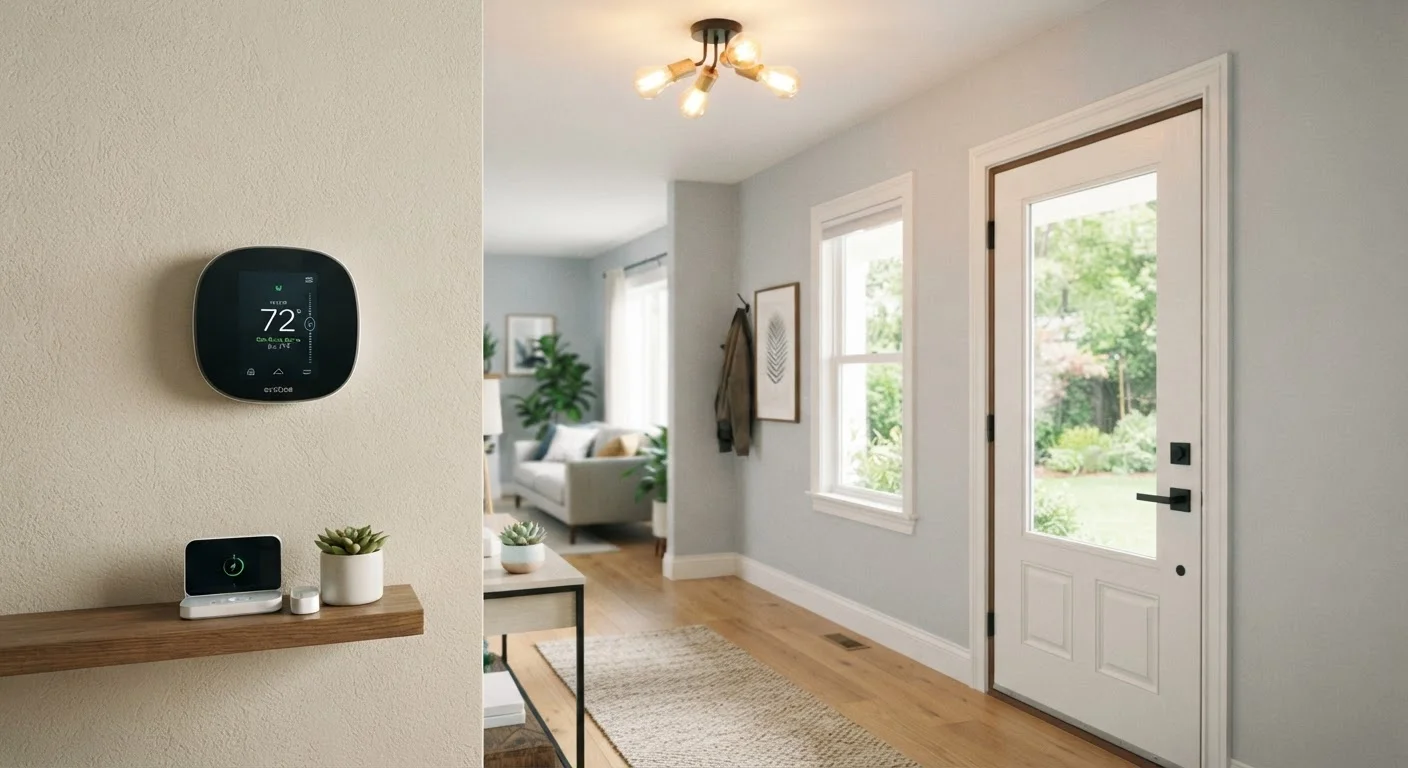
Photo: InsightsVault.com | Interesting Daily Reads editorial
Key Takeaways
- Heating and cooling typically account for nearly half of a home's total energy use.
- Air sealing and insulation improvements often deliver the strongest return for the least upfront cost.
- Behavior changes - like adjusting thermostat schedules - can reduce bills without any spending.
- A home energy audit, free or low-cost through many utilities, helps you prioritize where to start.
- Bigger upgrades like HVAC replacement pay off more over time but require careful financial planning.
Why Home Energy Efficiency Matters
Energy costs are one of the few household expenses you have meaningful control over. The average US household spends over $2,000 per year on energy, according to the U.S. Energy Information Administration - and a significant portion of that is lost to preventable inefficiency.
Home energy efficiency is the practice of getting the same comfort and function from your home while using less energy. That means lower monthly bills, a more consistent indoor temperature, and less wear on your mechanical systems. It also means your home is less affected by seasonal rate spikes.
This guide is designed for homeowners who are just starting out - giving you a clear map of concepts, priorities, and practical first steps rather than an overwhelming list of upgrades. For a broader look at how daily habits factor in, see which household habits consistently move the needle on energy costs.
Understanding Where Your Energy Goes
Before making any changes, it helps to know how energy is actually used in a typical home. According to the U.S. Department of Energy, space heating and cooling account for roughly 43% of home energy use. Water heating adds another 18%, with appliances, lighting, and electronics making up the rest.
Building envelope
The physical barrier between the inside of your home and the outside - including walls, roof, windows, doors, and foundation. A tight, well-insulated envelope keeps conditioned air in and outdoor air out.
Air sealing
The process of closing gaps, cracks, and holes in your home's structure that allow air to leak in or out. It's one of the most cost-effective energy improvements available.
R-value
A measure of how well insulation resists heat flow. A higher R-value means better insulating performance. The right R-value target depends on your climate zone and which part of the home you're insulating.
HVAC
Stands for Heating, Ventilation, and Air Conditioning - the systems that control your home's temperature and air quality. HVAC is typically the largest single energy expense in a home.
Payback period
The amount of time it takes for an upgrade's energy savings to equal its upfront cost. A $400 improvement that saves $80 per year has a five-year payback period.
Energy audit
An assessment of a home's energy use and efficiency. It can range from a simple self-guided walkthrough to a professional inspection using specialized equipment to find hidden air leaks and insulation gaps.
This breakdown matters because it tells you where reductions will have the most impact. Improvements to your heating and cooling system - or to the envelope (walls, roof, windows, and doors) that holds conditioned air inside - will generally outperform swapping out a few light bulbs alone. That said, lighting and appliance upgrades are easier starting points and still contribute to cumulative savings.
Reviewing 12 months of utility bills is a practical first step. Look for seasonal patterns: if your bills spike sharply in winter or summer, that points toward heating/cooling loss. If usage is elevated year-round, appliances or water heating may be the culprit.
Your First Priorities: High-Impact, Low-Cost Actions
Most energy experts point to air sealing as the single best place to start. Gaps around window frames, door thresholds, plumbing penetrations, attic hatches, and electrical outlets allow conditioned air to escape and outside air to infiltrate - running up your HVAC costs continuously.
Start with a Hands-On Draft Inspection
Weatherstripping and caulk are inexpensive and widely available. A careful walkthrough of your home on a windy day - feeling for drafts with your hand or a lit incense stick - can identify problem areas quickly. This is genuinely DIY-friendly work that requires no special tools or skills. The DIY home repairs hub has guidance on tackling these kinds of fixes yourself.
Insulation is the next lever. Many older US homes are under-insulated, particularly in attics. Adding attic insulation is one of the highest-return improvements available and is often manageable as a DIY project. Check your current insulation depth against the DOE's recommended R-values for your climate zone before purchasing materials.
On the habit side, using a programmable or smart thermostat effectively - setting it back 7-10°F for 8 hours a day while away or asleep - can reduce heating and cooling costs noticeably over a full year without any spending beyond the device itself.
When to Think Bigger: Upgrades Worth Considering
Once the low-cost wins are addressed, larger investments become worth evaluating on a cost-vs-savings basis. Common upgrade categories include:
- HVAC systems: If your furnace or central air unit is more than 15 years old, a high-efficiency replacement can reduce heating and cooling energy use substantially. This is a significant expense - typically $5,000-$12,000 or more depending on system type and home size - but federal tax credits and utility rebates may offset part of the cost.
- Windows and doors: Energy-efficient windows reduce both heat gain in summer and heat loss in winter. They're expensive per unit, so prioritize the worst-performing ones rather than replacing all at once.
- Water heater: Heat pump water heaters use roughly 60-70% less electricity than conventional electric resistance models, according to DOE data. They're particularly cost-effective in climates where they can run efficiently year-round.
For a curated list of more affordable intermediate steps, see low-cost ways to improve your home's energy efficiency.
Building a Plan That Works for Your Budget
The most effective approach is sequential: start with no-cost behavior changes, move to low-cost physical improvements, then evaluate larger upgrades based on payback period and available incentives. Trying to do everything at once isn't necessary - and isn't realistic for most budgets.
A home energy audit is a useful tool for prioritizing. Many utility companies offer free or discounted audits. A professional auditor can use diagnostic equipment to pinpoint exactly where your home is losing energy, giving you a prioritized list rather than guesswork.
Track your utility bills monthly after each improvement. This gives you real data on what's working and keeps you motivated. Small, consistent actions compound over time - a home that's been systematically improved over two or three years often ends up meaningfully more efficient than one treated to a single large investment.
For ongoing cost-cutting strategies beyond energy, the Cutting Daily Costs hub covers a wide range of everyday expense reductions worth bookmarking.
Frequently Asked Questions
The content provided on our blog site traverses numerous categories, offering readers valuable and practical information. Readers can use the editorial team’s research and data to gain more insights into their topics of interest. However, they are requested not to treat the articles as conclusive. The website team cannot be held responsible for differences in data or inaccuracies found across other platforms. Please also note that the site might also miss out on various schemes and offers available that the readers may find more beneficial than the ones we cover.