
Phantom Power: The Silent Drain on Your Electricity Bill

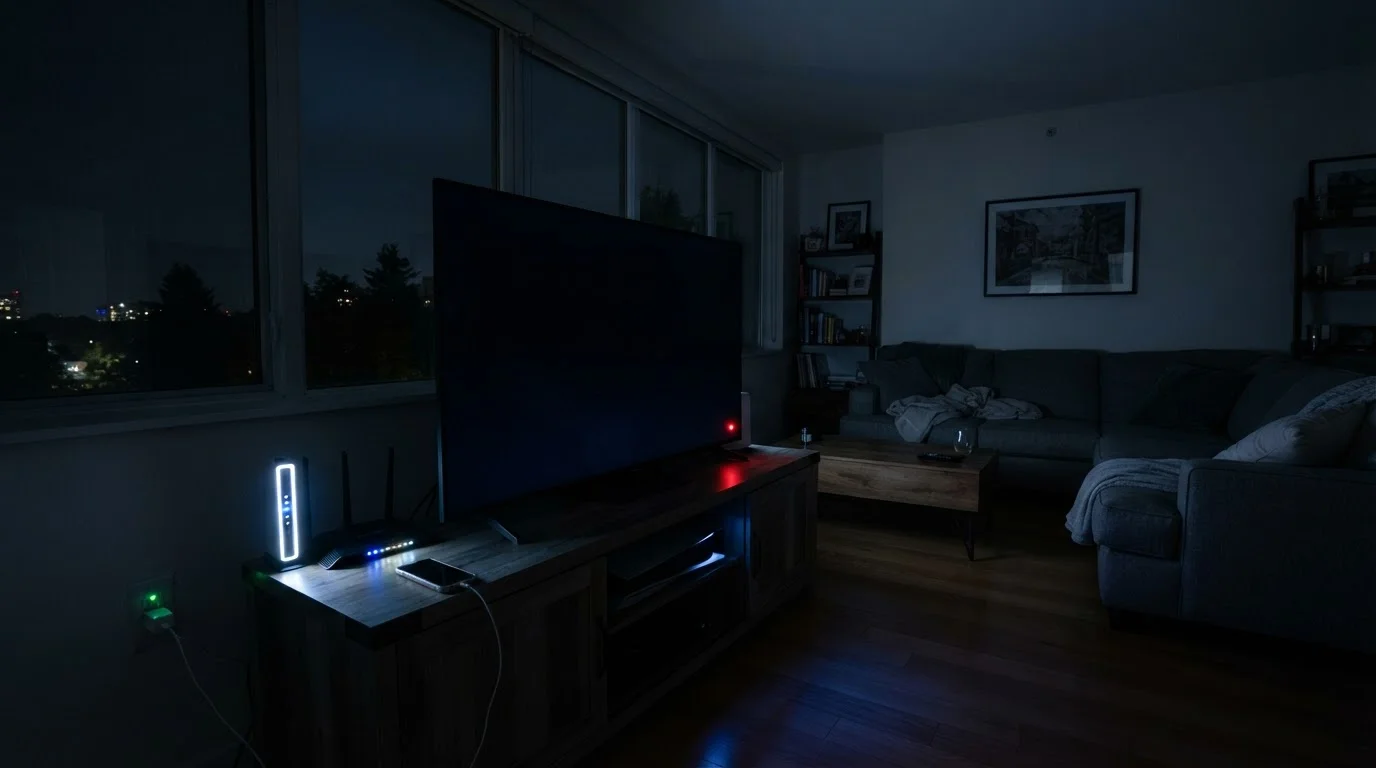
Photo: InsightsVault.com | Interesting Daily Reads editorial
Key Takeaways
- Phantom power can account for roughly 5-10% of a typical US household's electricity use.
- The worst offenders are devices with always-on displays, remote receivers, or network connectivity.
- Smart power strips and outlet timers can eliminate standby draw without changing daily habits much.
- Unplugging high-draw devices when away for extended periods delivers the most immediate savings.
- Measuring actual draw with an energy monitor removes guesswork and prioritizes where to act first.
Why Standby Power Adds Up Faster Than You'd Expect
The math on phantom power surprises most people. A single cable box drawing 15-20 W continuously uses more electricity in a year than some Energy Star refrigerators use in a month. Multiply that across a typical home - two TVs, a gaming console, a desktop PC, a printer, a coffee maker with a clock, a microwave, and several phone chargers - and the cumulative draw becomes significant.
What makes standby power particularly frustrating is that it delivers no utility. You're paying for readiness: the half-second faster boot time on your TV, or the ability to receive a remote signal from across the room. Whether those conveniences are worth the cost is a question worth asking deliberately rather than ignoring by default.
For a broader picture of which household habits consistently move the needle on energy costs, see Energy Bills at Home: The Habits That Move the Needle.
5-10%
Share of US home electricity from standby power
The US Department of Energy estimates standby and idle power accounts for this range of a typical household's total electricity consumption.
$100+
Estimated annual standby power cost per household
Lawrence Berkeley National Laboratory research has estimated that standby power costs US households on average around $100 per year, though figures vary by home size and device mix.
40+
Average number of always-on devices in a US home
Research from the Natural Resources Defense Council found that US homes typically have dozens of devices drawing power continuously, many of which provide little or no active utility.
The Worst Offenders in Most Homes
Not all standby loads are equal. Here's where to focus your attention first:
- Cable and satellite boxes: These frequently rank as the single largest standby consumer in a home, sometimes drawing nearly as much power off as on.
- Gaming consoles: Consoles with automatic update modes enabled can draw 70-150 W while appearing idle or in rest mode.
- Home theater receivers and soundbars: Many maintain network readiness around the clock.
- Desktop computers and monitors: Even in sleep mode, a desktop system with a monitor can draw 5-20 W continuously.
- Older televisions: Pre-2013 sets often lack efficient standby modes that newer Energy Star models include.
- Kitchen appliances with displays: Microwaves, coffee makers, and toaster ovens with LED clocks draw small but constant power.
Devices with large, warm external power bricks are a reliable visual cue - if the brick is warm to the touch when the device is off, it's drawing power.
Practical Steps to Cut the Draw
Tackling phantom power doesn't require replacing your electronics. The most effective interventions are low-cost and minimally disruptive:
- Use a plug-in energy monitor to measure actual standby draw on your highest-suspected devices. This removes guesswork and tells you where to prioritize.
- Install smart power strips on entertainment centers and home offices. These cut power to peripheral devices automatically when the primary device (TV or PC) is switched off.
- Plug infrequently used devices into a switched surge protector and make a habit of flipping it off after use - especially for gaming consoles, printers, and desktop speakers.
- Disable automatic update modes on gaming consoles if same-day updates aren't essential. Most allow you to schedule updates during a brief window rather than maintaining a continuous standby connection.
- Unplug entirely when leaving for a week or more. Vacation absences are the easiest time to eliminate standby loads with zero lifestyle inconvenience.
Once you've addressed phantom power, reviewing your full utility bill line by line can reveal other inefficiencies. Reading Your Utility Bill: The Numbers That Tell You Where Energy Is Being Wasted can surface patterns you'd otherwise miss.
Start With a 15-Minute Audit
Putting It in Context
Phantom power isn't the only quiet drain on household budgets. Similar slow-bleed patterns show up in grocery spending habits that quietly drain budgets and even in how we drive. The common thread is that small, invisible costs accumulate without prompting any deliberate decision.
For room-by-room strategies that go beyond standby power, Energy-Efficient Practices for Every Room in the House offers targeted guidance on where consumption concentrates most and what adjustments produce real reductions.
The realistic savings from addressing phantom power alone won't transform a household budget overnight, but for effort-to-reward ratio, it ranks well - a one-time setup of smart strips and a quick audit with an energy monitor can run for years with no further action required.
Frequently Asked Questions
The content provided on our blog site traverses numerous categories, offering readers valuable and practical information. Readers can use the editorial team’s research and data to gain more insights into their topics of interest. However, they are requested not to treat the articles as conclusive. The website team cannot be held responsible for differences in data or inaccuracies found across other platforms. Please also note that the site might also miss out on various schemes and offers available that the readers may find more beneficial than the ones we cover.