
Reading a Vet Estimate: What Every Line Item Actually Means

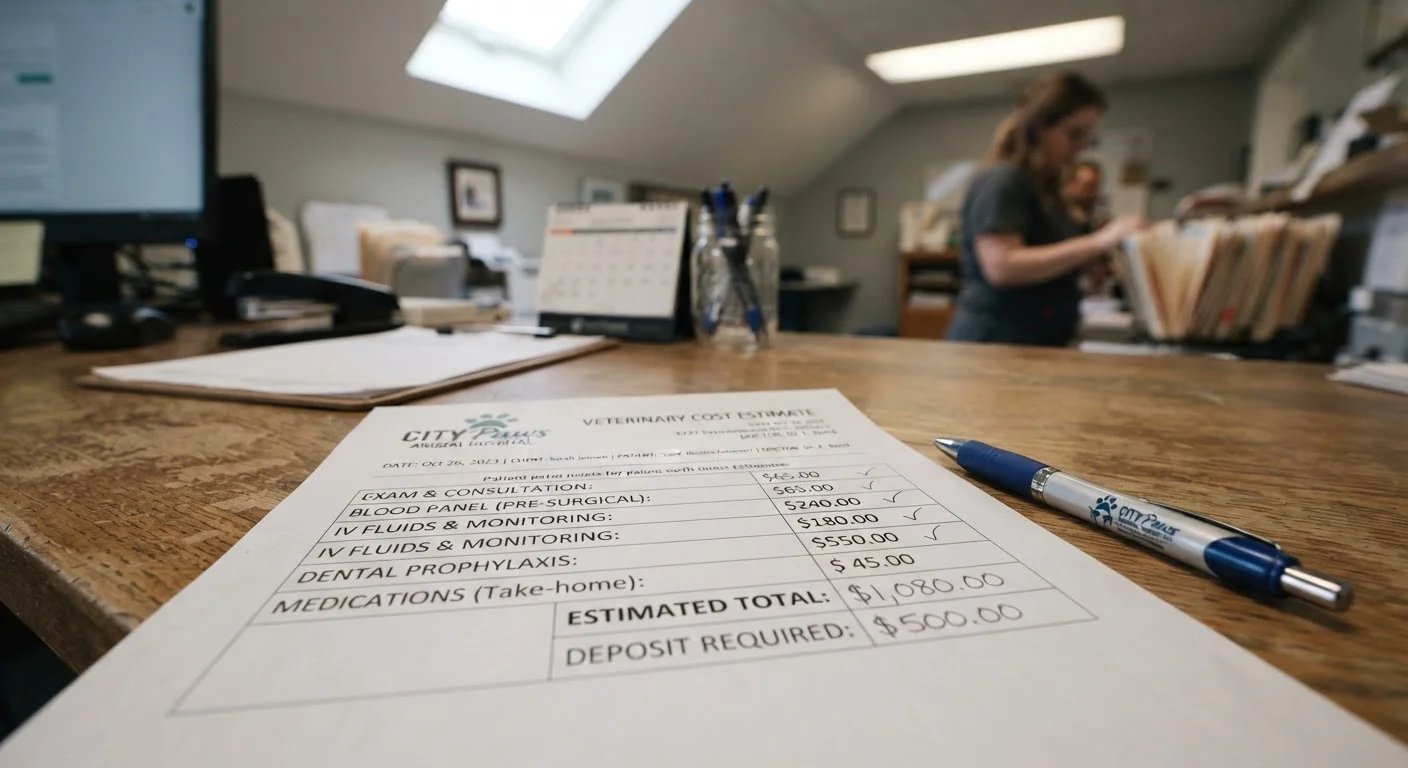
Photo: InsightsVault.com | Interesting Daily Reads editorial
Why Vet Estimates Are Hard to Read
Veterinary invoices blend medical terminology, procedure codes, and facility fees into a single document that most pet owners have never been trained to interpret. Unlike a grocery receipt, each line may represent a bundled set of services, a markup on a product, or a fee category unique to that clinic's billing structure.
This reference breaks down the most common line items so you can verify what you're being charged for, ask informed questions, and - where appropriate - discuss alternatives before you approve treatment. For a broader look at how vet spending adds up over time, see our guide to pet health budgeting.
Common Line Items Decoded
The following categories appear on most U.S. veterinary estimates. Exact wording varies by clinic, but the underlying charges are consistent.
Examination Fee
This is the base charge for the veterinarian's physical assessment. It covers the doctor's time, not any tests or treatments. A wellness exam and a sick exam are sometimes billed at different rates. If you see both on one invoice, ask why both apply.
Diagnostics
Grouped under terms like CBC (complete blood count), chemistry panel, urinalysis, or fecal float, these are laboratory tests run on samples from your pet. In-house labs bill per test; some clinics send samples to external labs, which changes the turnaround and sometimes the price. Always confirm whether results will come back same-day or later - that affects whether you can delay treatment decisions.
Imaging
Radiographs (X-rays) are typically billed per view or per body region. Ultrasound is billed separately and often by a specialist. Ask how many views are included and whether a radiologist review fee is bundled or listed separately.
Anesthesia
Anesthesia charges usually appear as a base induction fee plus a per-minute or per-weight maintenance rate. Monitoring (e.g., pulse oximetry, capnography) may be itemized separately. Preanesthetic bloodwork is a distinct charge - it screens for risks before sedation and is generally considered standard of care.
Medications and Dispensing Fees
Drugs prescribed or administered at the clinic carry a product cost plus sometimes a dispensing or handling fee. Clinics are permitted to mark up pharmaceuticals. If a medication will be used long-term, ask whether a written prescription is available so you can comparison-shop at a human or veterinary pharmacy. Note that this is general information - consult your veterinarian before making any changes to your pet's medication plan.
Hospitalization or Monitoring
Day boarding for monitoring is billed per hour or per day and may include nursing checks, fluid administration, and vital sign logging. Each of these sub-services may appear as its own line.
Procedure Fees
Suturing, tooth extractions, mass removals, and similar procedures are typically listed with a procedure code. Ask whether the listed price is all-inclusive or whether consumables (suture material, surgical drapes) are billed additionally.
CBC (Complete Blood Count)
A lab test that measures red blood cells, white blood cells, and platelets. Used to detect infection, anemia, and other systemic conditions.
Chemistry Panel
A blood test that evaluates organ function - commonly liver, kidneys, and pancreas - through a set of chemical markers.
Preanesthetic Bloodwork
Lab work done before sedation to screen for underlying conditions that could increase anesthesia risk. Considered standard of care for most procedures.
Dispensing Fee
A charge added by the clinic for preparing and providing a medication, separate from the cost of the drug itself.
Urinalysis
Laboratory examination of a urine sample to detect infection, kidney disease, diabetes, and other conditions.
Capnography
Anesthesia monitoring that measures carbon dioxide in exhaled breath, used to confirm proper breathing during a procedure.
Concerned some add-ons may not be necessary? Our article on common vet upsell traps walks through the questions to ask before you agree.
How to Use an Estimate Effectively
An estimate is not a final invoice - it's a projection. Most clinics provide a low-end and high-end range. You have the right to ask for itemized estimates, to request that optional services be separated from medically necessary ones, and to approve or decline individual items.
If cost is a concern, ask your veterinarian: "Which of these items are required for safe treatment today, and which can be deferred or discussed further?" Most veterinarians will work with you on sequencing care if the conversation is direct and respectful.
For pet owners in financial difficulty, low-cost veterinary programs and assistance funds may be able to offset some costs - particularly for diagnostics or medications.
Estimates Are Negotiable - Within Limits
This article is for general informational purposes only and does not constitute veterinary or financial advice. Always consult a licensed veterinarian regarding your pet's specific health needs and treatment decisions.
The content provided on our blog site traverses numerous categories, offering readers valuable and practical information. Readers can use the editorial team’s research and data to gain more insights into their topics of interest. However, they are requested not to treat the articles as conclusive. The website team cannot be held responsible for differences in data or inaccuracies found across other platforms. Please also note that the site might also miss out on various schemes and offers available that the readers may find more beneficial than the ones we cover.