
Free Pet Resources

Checking Your Community's Pet Support Landscape: A Practical Audit

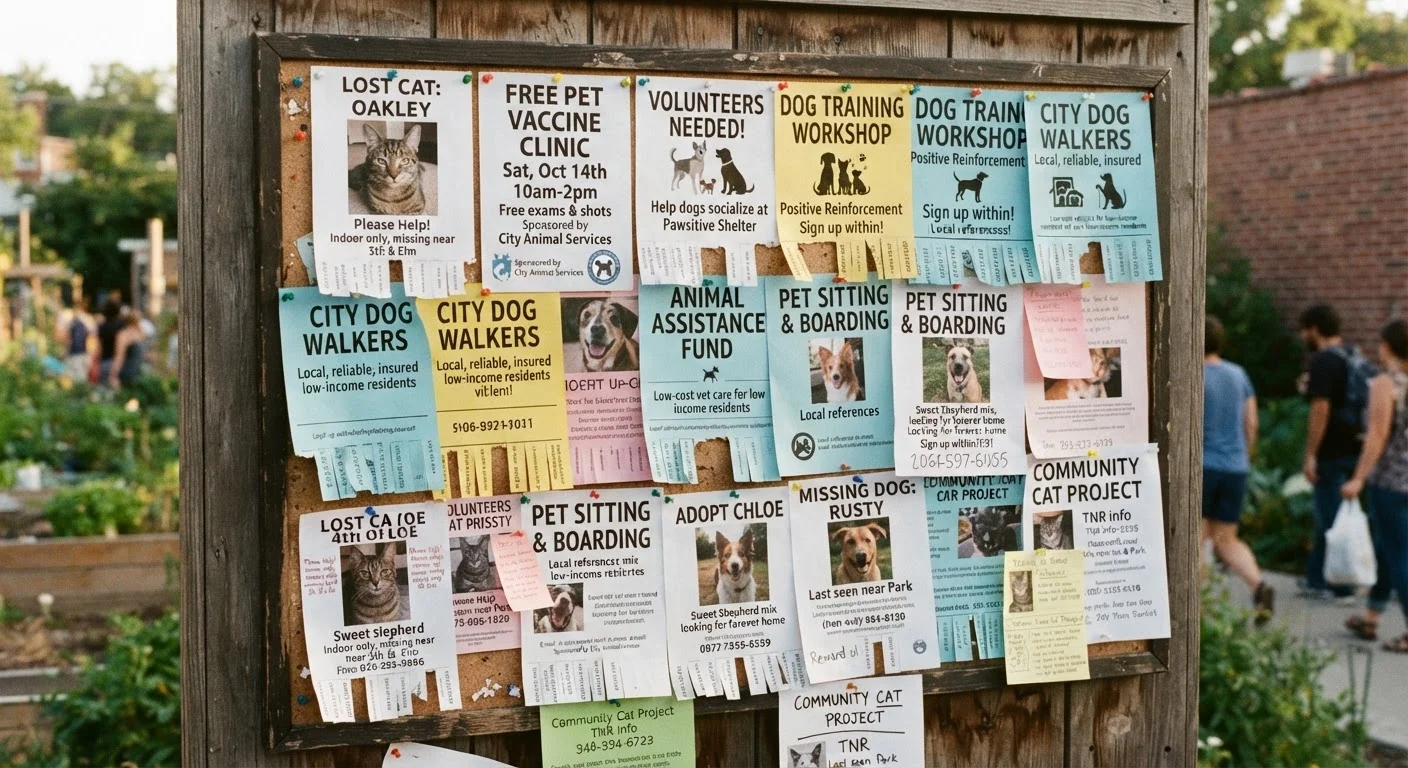
Checking Your Community's Pet Support Landscape: A Practical Audit

Photo: InsightsVault.com | Interesting Daily Reads editorial

Use this checklist to systematically identify free and subsidised pet services available in your area before spending out of pocket.

Key Takeaways

  • Many free and subsidized pet programs exist at the local level but aren't widely advertised.
  • A systematic audit — not a casual search — is what turns up the most useful resources.
  • Calling 211 and contacting local shelters directly often surfaces programs invisible to online searches.
  • Your income level, zip code, and pet species all affect which programs you may qualify for.
  • Completing this audit once gives you a reusable map of support options before a crisis hits.

Why Most Pet Owners Miss Available Resources

Free and subsidized pet services rarely advertise aggressively. A nonprofit running a monthly low-cost vaccine clinic may only post flyers at the shelter, not on social media. A pet food pantry may be listed only in a county human services directory that most residents never open. The result: millions of pet owners pay full price for services that are available at reduced or no cost nearby.

This audit checklist is designed to close that gap. Work through it systematically — ideally before you're facing an unexpected vet bill or supply shortage — and you'll build a working picture of your community's pet support landscape. For a broader look at where pet budgets can be stretched without compromising care, see our guide to stretching your pet care budget.

Keep a simple spreadsheet or notes document open as you go. Log program names, contact details, eligibility requirements, and service schedules. That document becomes a resource you can return to — and update — any time your situation changes.

Required

211.org or phone 211

The primary starting point for locating local pet assistance programs, food banks, and social services in your county.

Required

Spreadsheet or notes app

Used to log program names, eligibility rules, contact details, and service schedules as you complete the audit.

Required

Your county animal services website

Often lists licensed programs, local ordinances, and subsidized services specific to your jurisdiction.

Required

Pet's vaccination and ownership records

Many assistance programs require proof of current vaccinations or documentation of pet ownership to qualify.

Optional

Proof of income or address documents

Income-qualified programs typically require recent pay stubs, benefits letters, or a utility bill showing your address.

Running Your Community Pet Support Audit

Work through each group below in order. Some items take two minutes (a phone call); others may involve a short in-person visit. The checklist is structured so that low-effort, high-yield actions come first.

If you're unsure where to start with phone and directory research, the 211 helpline and local hotlines guide explains exactly how to use those tools to surface programs that standard web searches miss.

Phone and Directory Research

Call 211 (or visit 211.org) and ask specifically about pet food assistance, low-cost vet care, and spay/neuter programs in your county. Must
Contact your county or city animal services department and ask what subsidized programs they operate or know of locally. Must
Call two or three local animal shelters directly — ask about any free or reduced-cost clinics, food pantries, or community programs they run or refer to. Must
Search your state's department of agriculture or animal services website for licensed low-cost spay/neuter programs. Should

Veterinary and Medical Access

Identify any veterinary schools within driving distance — many operate teaching clinics offering services at significantly reduced rates. Must
Search for ASPCA, Humane Society affiliate, or independent nonprofit clinics in your metro area that offer sliding-scale or flat-fee veterinary care. Must
Check whether any local shelters host periodic low-cost vaccine or wellness clinics open to the general public. Should
Ask your current vet whether they participate in any hardship assistance programs or know of local emergency funds for pet medical costs. Should
Look into free microchipping events in your area — but verify what's included before attending. Nice to have

Food and Supply Assistance

Search for pet food pantries in your area — check local food banks, shelters, and faith-based organizations, as many run programs not listed online. Must
Contact your nearest human food bank and ask whether they distribute pet food; many now do as part of keeping families and pets together. Should
Ask local veterinary offices and shelters if they maintain supplies of donated food or medications for clients in need. Should
Check neighborhood mutual aid groups or community Facebook groups for recurring pet supply exchanges or donation posts. Nice to have

Spay, Neuter, and Preventive Care Programs

Identify any income-qualified spay/neuter programs through your county or local humane organizations — eligibility and waitlists vary widely. Must
Check whether your city or state offers any rebate or voucher programs for spay/neuter procedures performed at participating clinics. Should
Ask shelters whether they offer post-adoption spay/neuter coverage that could apply to a recently adopted pet. Should

Emergency and Crisis Support

Research whether any local nonprofits or humane societies maintain emergency medical funds for pet owners facing sudden financial hardship. Must
Identify at least one pet-friendly emergency shelter or boarding option in your area in case of natural disaster or housing crisis. Must
Ask your local shelter whether they offer short-term foster or temporary housing for pets during owner emergencies. Should

Documentation and Eligibility Prep

Gather documents you may need for income-based programs: proof of address, household income verification, and pet ownership records. Must
Note eligibility criteria and application windows for each program you identify — some have limited enrollment periods or waiting lists. Must
Record contact names, hours, and reapplication schedules for any program you qualify for and plan to use. Should

Eligibility and Availability Change Frequently

Programs run by nonprofits and local governments are often grant-funded, meaning they can close, pause, or change income limits with little public notice. Always call to confirm current availability before making plans that depend on a specific program. What was offered six months ago may no longer be active — and new programs may have opened that didn't exist when you last searched.

Once you've completed the audit, cross-reference what you find against your current spending. Our annual pet care expense audit helps you identify line items where newly discovered programs could replace out-of-pocket costs. For a deeper look at low-cost veterinary options specifically, the community clinics and nonprofit assistance guide explains how those programs are structured and who typically qualifies.

Pets Without Overspending Editorial Team

InsightsVault.com | Interesting Daily Reads

Pets Without Overspending Editorial Team is the collective byline for our editorial team and contributor network. Articles published under this byline or an editorial pen name are researched, written, and reviewed according to our editorial standards for clarity, consistency, and independence before publication.

Budget Pet HealthLow-Cost Pet CareFree Pet Resources
View author profile

The content provided on our blog site traverses numerous categories, offering readers valuable and practical information. Readers can use the editorial team’s research and data to gain more insights into their topics of interest. However, they are requested not to treat the articles as conclusive. The website team cannot be held responsible for differences in data or inaccuracies found across other platforms. Please also note that the site might also miss out on various schemes and offers available that the readers may find more beneficial than the ones we cover.