
Humane Societies vs. Nonprofit Rescue Groups: What Each One Offers Pet Owners

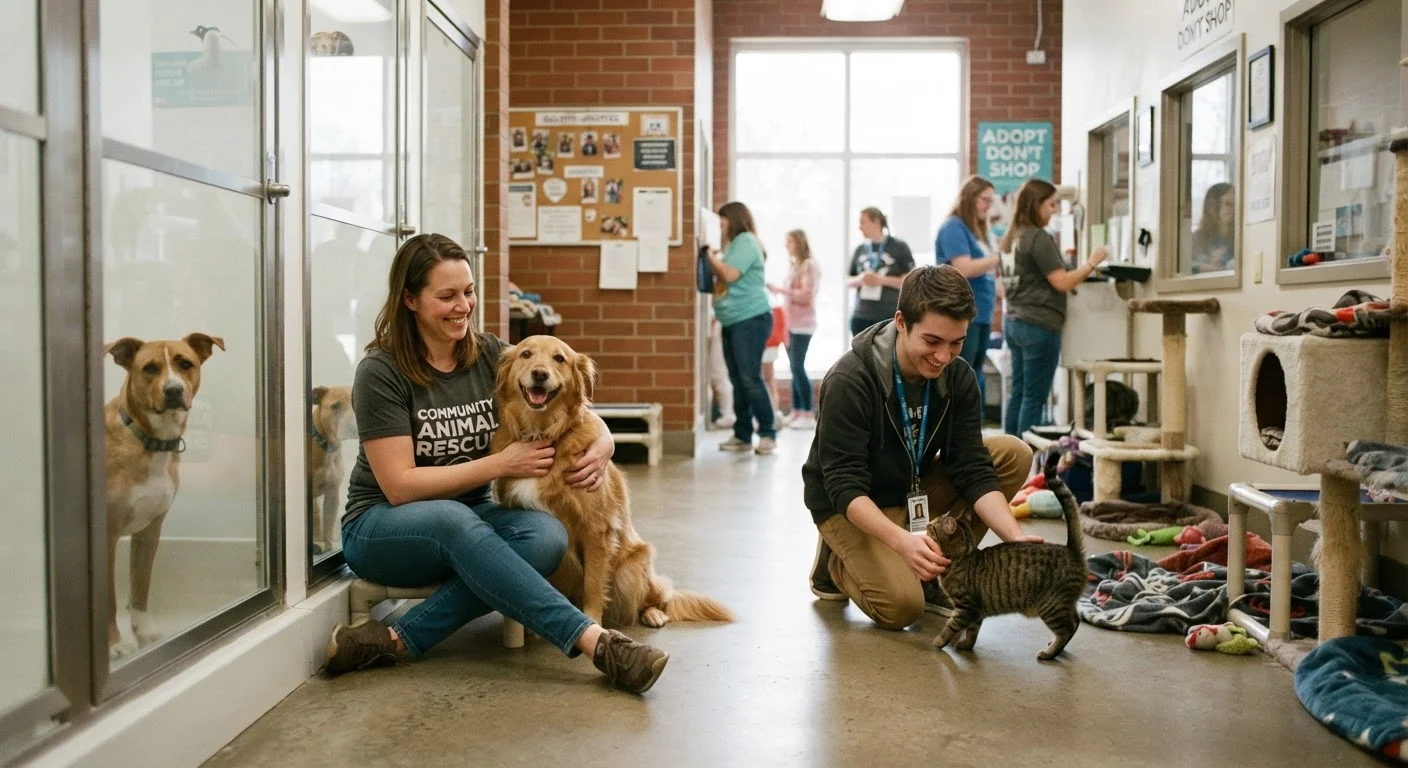
Photo: InsightsVault.com | Interesting Daily Reads editorial
Key Takeaways
- Humane societies typically operate physical facilities and offer walk-in services like stray intake and lost-pet reunification.
- Nonprofit rescue groups usually run on foster networks and often provide breed-specific expertise and behavioral support.
- Both organization types commonly offer community programs beyond adoptions, such as food banks and low-cost vaccine clinics.
- Funding structures differ significantly and affect what free or reduced-cost services each organization can sustain.
- Checking both types of organizations in your area maximizes your access to free and low-cost pet resources.
Understanding the Structural Difference
The terms "humane society" and "rescue group" are often used interchangeably by pet owners, but they describe meaningfully different organizational models - and that distinction shapes what services each can realistically deliver.
Humane societies are generally incorporated nonprofit organizations that operate physical sheltering facilities. They accept stray and surrendered animals, manage adoption programs, and in many cases hold municipal contracts for animal control services. Because they maintain buildings and paid staff, they can offer consistent walk-in services: lost-and-found registries, owner-surrender intake, on-site veterinary clinics, and community programs like pet food banks. The ASPCA and local humane societies are legally independent - the name "humane society" carries no national affiliation requirement.
Nonprofit rescue groups, by contrast, typically operate without a central facility. Animals are placed in volunteer foster homes while awaiting adoption. This keeps overhead lower and allows rescues to specialize - by breed, species, age group, or behavioral need. Their community services tend to be more targeted, such as coordinating transport for hard-to-place animals or offering post-adoption behavioral check-ins. For a broader overview of how these and other organizations fit together, see this practical starting point for new owners.
| Criterion | Humane Societies | Nonprofit Rescue Groups |
|---|---|---|
| Physical facility | Yes - owned or leased shelter | Rarely - foster-home based |
| Walk-in services | Commonly available | Usually by appointment or online |
| Stray/lost animal intake | Standard service | Rarely; refer to shelters |
| On-site vet clinic | Often available | Uncommon |
| Breed/species specialization | Generalist | Frequently specialized |
| Post-adoption support | Variable | Common via foster network |
| Pet food bank access | More common at larger societies | Less common; supply-drive based |
| Government funding | Often (via municipal contracts) | Rarely |
Community Programs Beyond Adoptions
Most pet owners associate both types of organizations primarily with adoptions - but the community programs they run are often the higher-value resource for existing pet owners on tight budgets.
Common humane society programs:
- Pet food pantries: Many larger humane societies operate or partner with food banks that distribute kibble and canned food to qualifying households, typically at no cost.
- Low-cost or free vaccine clinics: On-site or partnered clinics frequently offer core vaccines (rabies, distemper, parvo) at reduced rates, sometimes free for income-qualified owners.
- Spay/neuter subsidies: Municipal contracts often include subsidized spay/neuter for owned pets, not just shelter animals.
- Microchipping events: Often offered at reduced cost during community outreach days.
Common nonprofit rescue programs:
- Breed-specific advice lines: Many rescues field calls or emails from owners struggling with the particular quirks of a breed, at no charge.
- Behavioral triage: Before surrendering a dog with reactivity issues, owners can often consult a rescue's foster network - volunteers who have hands-on experience with similar animals.
- Emergency foster placement: Some rescues accept temporary placements when an owner faces a short-term housing or medical crisis, preventing unnecessary permanent surrenders.
- Supply drives: Rescues frequently receive donated supplies - leashes, crates, food - and may redistribute to owners in need.
For a comprehensive breakdown of programs spanning every stage of ownership, the full overview of free pet resources is worth bookmarking.
Program Availability Varies Widely by Location
How Funding Shapes What's Available to You
Understanding where each organization gets its money helps explain why services vary so widely - even between two humane societies in neighboring counties.
Humane societies with government contracts receive some municipal funding tied to animal control duties. That base revenue allows them to maintain facilities and staff consistently. Additional funding comes from donations, adoption fees, and grants. The trade-off: government contracts come with reporting requirements and service obligations that can limit programming flexibility.
Nonprofit rescues run almost entirely on private donations, adoption fees, and grant funding. With no facility overhead, a well-run rescue can direct more of each dollar toward direct animal care or community programs - but their capacity is more volatile. A single large donor departing or a grant not renewing can significantly affect what they can offer month to month.
What this means practically: humane society programs tend to be more stable and predictable; rescue group programs may be more innovative but less consistent. If you're counting on a specific service, verify current availability directly with the organization before making plans. This is especially true for veterinary services - see how community vet clinics and assistance programs work for a deeper look at what's typically available and how to access it.
Finally, using these resources responsibly matters. Both types of organizations operate with limited capacity. The principles for accessing free pet programs sustainably are worth reading before you tap into community services regularly.
~3,500
Animal shelters operating in the U.S.
The Shelter Animals Count national database tracks thousands of sheltering organizations, which vary widely in size, structure, and services offered.
~10,000+
Estimated U.S. rescue groups
Rescue group counts are difficult to pin down precisely, but industry estimates consistently place the number of active nonprofit rescues well into the tens of thousands nationally.
The content provided on our blog site traverses numerous categories, offering readers valuable and practical information. Readers can use the editorial team’s research and data to gain more insights into their topics of interest. However, they are requested not to treat the articles as conclusive. The website team cannot be held responsible for differences in data or inaccuracies found across other platforms. Please also note that the site might also miss out on various schemes and offers available that the readers may find more beneficial than the ones we cover.