
Homemade Pet Toys That Actually Hold a Dog or Cat's Attention

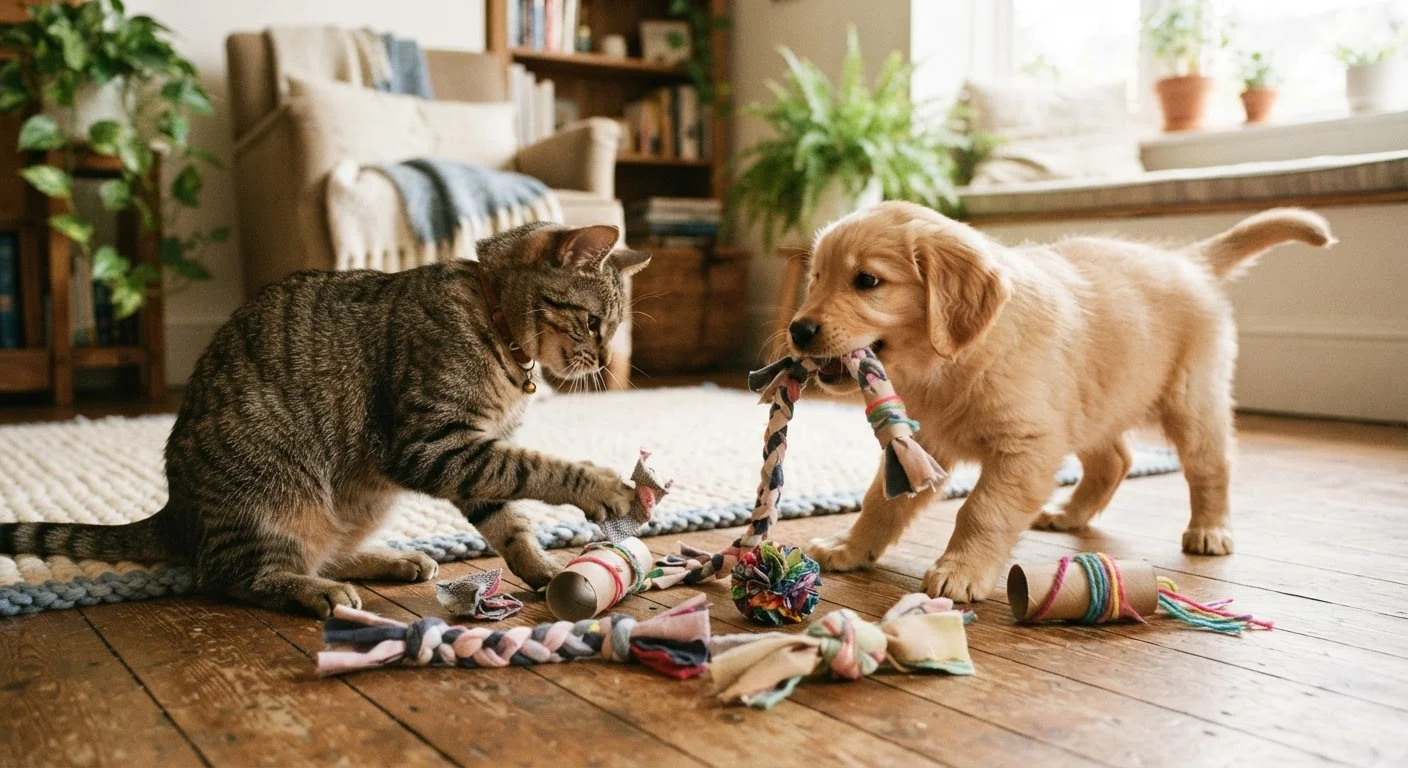
Photo: InsightsVault.com | Interesting Daily Reads editorial
Key Takeaways
- Most effective pet toys tap into instinctual behaviors like hunting, foraging, and chewing.
- Common household materials-fabric scraps, cardboard, bottles-can be safely repurposed into enrichment toys.
- Supervise pets with any homemade toy and inspect for wear regularly to prevent ingestion hazards.
- Rotating toys every few days keeps novelty high without spending more money.
- DIY enrichment can meaningfully reduce destructive behavior linked to boredom.
Why Pets Disengage - and What Actually Holds Attention
Pet toy marketing often focuses on novelty materials and bright colors, but attention span is driven by something more fundamental: instinct. Dogs are motivated by scent, chewing, and social play. Cats are hardwired to stalk, pounce, and capture. Toys that tap these drives hold attention far longer than passive objects that simply sit there.
Commercial toys often fail after a few days because they don't adapt. A squeaky toy loses appeal once the pet has learned it poses no challenge. Homemade alternatives can be rebuilt, refilled, or modified constantly - which is exactly why they stay interesting. For more on where to spend and where to pull back in your pet care budget, see our guide to stretching your pet care budget.
The principles that keep pets engaged are straightforward: unpredictability, food motivation, sensory variety (texture, scent, sound), and an appropriate challenge level. The toys below are built around those principles using items most households already have.
Novelty Is Free - Rotate Often
What You'll Need Before You Start
No special purchases are required. The materials listed below are starting points - substitute freely based on what you have on hand. The goal is safe, engaging, and replaceable.
What you will need
Cardboard tubes (paper towel or toilet paper rolls)
Used as the base for foraging toys and crinkle tunnels for cats.
Old fleece or cotton t-shirt fabric
Cut into strips for braided tug toys or tied knot toys for dogs.
Clean plastic water bottle (label removed)
Serves as a rattling foraging dispenser when filled with kibble.
Scissors
For cutting fabric strips and trimming loose threads.
Kibble or small treats
Used as a food motivator inside foraging and puzzle toys.
Always Supervise Homemade Toys
Before you begin, assess your pet's typical play style. A power chewer needs denser, sturdier materials than a gentle mouthing dog. A skittish cat may need a quieter, lower-stimulation first toy before graduating to rattling dispensers. Matching toy type to temperament is the biggest factor in whether a homemade toy actually gets used.
Step-by-Step: Five Toys to Make Today
Make a braided fleece tug toy (dogs)
Cut three strips of fleece or old t-shirt fabric, each roughly 18-24 inches long and 1-2 inches wide. Knot the strips together at one end, then braid them firmly to within 4 inches of the other end and tie a finishing knot. Trim any loose threads. The result is a washable, soft tug toy with satisfying texture and give.
Build a cardboard foraging roll (dogs and cats)
Take a cardboard tube and fold or crimp one end closed. Drop in a small handful of kibble or a few treats. Fold the other end closed. The pet must manipulate and roll the tube to release the food. For dogs, use a paper towel tube; for cats, a toilet paper roll works well. Do not seal the ends with tape - folding is sufficient and safer.
Create a crinkle tunnel or hide (cats)
Lay a large paper shopping bag on its side with the handles removed. Fold the opening slightly to create a narrowed entrance. Place it on the floor in a quiet corner. Most cats will investigate within minutes - the crinkle sound, enclosed space, and novel smell trigger hunting and hiding instincts simultaneously. You can drop a small treat just inside the opening to speed up initial interest.
Make a kibble-dispensing bottle (dogs)
Remove the label from a clean, dry plastic water bottle. Pierce 4-6 small holes in the sides using a skewer or nail - holes should be just large enough for kibble to fall through when the bottle is rolled. Replace the cap. Fill the bottle about one-quarter full with the dog's regular kibble. The dog rolls and noses it around the floor to release food, which can occupy a medium-energy dog for 10-20 minutes at mealtime.
Tie a fabric wand for interactive cat play
Cut a strip of fleece roughly 12 inches long and 1 inch wide. Tie it to the end of an unsharpened pencil or a clean chopstick using a secure double knot. Move the wand in short, irregular bursts - darting sideways, pausing, then retreating - to mimic prey movement. Interactive wand play is among the most effective tools for burning off feline energy and reducing nighttime activity.
Avoid These Common Materials
Each of these toys can be made in under 10 minutes, uses no adhesives or hardware, and can be discarded when worn without guilt. That disposability is a feature, not a flaw - it makes hygiene easier and forces regular replacement, which resets novelty automatically.
Building enrichment habits into your routine pairs well with other low-cost care strategies. Our article on smart habits that keep routine pet care costs predictable covers how consistent small actions - including regular play - can prevent the kind of stress-related or boredom-driven behavior that leads to expensive problems.
Making These Toys Part of a Broader Low-Cost Care Strategy
DIY enrichment isn't a replacement for veterinary care, quality food, or appropriate exercise - but it is a legitimate way to reduce spending on an expense category (pet toys and accessories) that can quietly add up. Pet toy spending can reach several hundred dollars per year for some households, much of which goes toward items that are ignored within a week.
Redirecting that budget while maintaining or improving enrichment quality is a practical win. Pets that receive consistent mental stimulation tend to exhibit less destructive behavior, which itself has real financial consequences - replacement furniture, chewed cords, and scratched floors are not cheap. For a broader look at cost-effective preventive habits, visit our section on preventive pet care on a tight budget.
If you're also exploring community-based resources to reduce overall pet ownership costs, the Free Pet Resources hub is a practical starting point for programs available in many U.S. regions.
The content provided on our blog site traverses numerous categories, offering readers valuable and practical information. Readers can use the editorial team’s research and data to gain more insights into their topics of interest. However, they are requested not to treat the articles as conclusive. The website team cannot be held responsible for differences in data or inaccuracies found across other platforms. Please also note that the site might also miss out on various schemes and offers available that the readers may find more beneficial than the ones we cover.