
What Accommodation Ratings and Star Systems Actually Mean

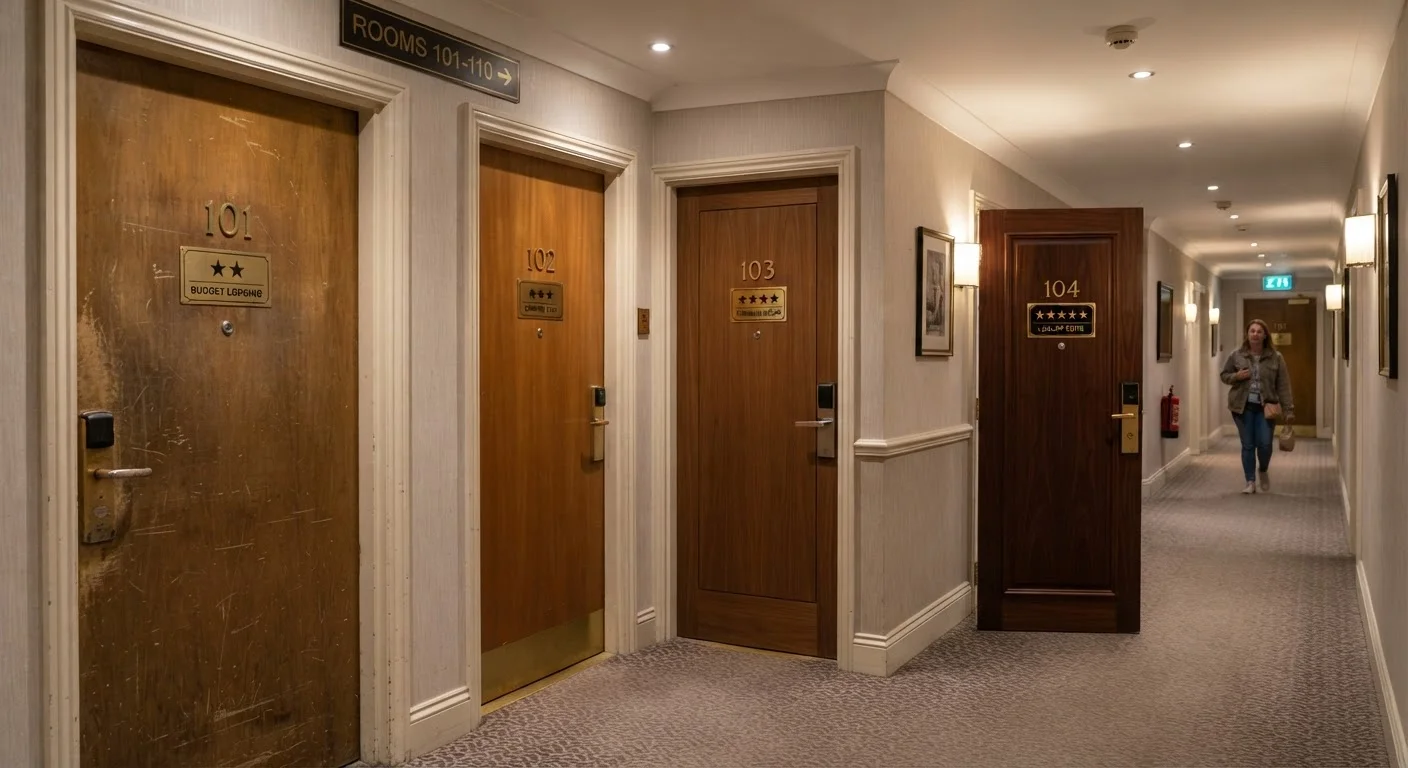
Photo: InsightsVault.com | Interesting Daily Reads editorial
Key Takeaways
- Star ratings are not standardized globally - the same number of stars can mean very different things by country.
- In the US, no single official body assigns hotel stars; ratings often come from private platforms or the hotels themselves.
- Stars measure facility quantity, not cleanliness, value, or guest experience.
- Guest review scores on booking platforms are often more reliable signals of actual comfort than star ratings.
- A lower-star property with strong, consistent reviews can offer better value than a higher-star property with mediocre ones.
Where Star Ratings Come From
Star ratings were developed to give travelers a quick shorthand for what to expect from a property. The concept has been around since the mid-20th century, but standardization never followed. Different countries developed their own systems, often administered by tourism ministries, automobile clubs, or hospitality associations - each with different criteria and inspection processes.
In Europe, schemes like Germany's DEHOGA or France's Atout France set specific, audited benchmarks that properties must meet to earn a given rating. In contrast, the US has no equivalent mandatory system. Ratings here are applied by private organizations, booking platforms using algorithmic scoring, or even by the hotels themselves. That gap matters: a hotel can call itself a four-star property on its own website regardless of what it actually offers.
The result is a patchwork. Two hotels sitting at the same star count on a search results page may have earned that designation through entirely different processes - one via independent inspection, the other via self-classification. See our guide to hostels, guesthouses, and budget hotels for more on how accommodation categories compare beyond the star scale.
What Stars Actually Measure
Stars primarily count inputs - the presence of certain features and services. A five-star property is expected to have a full-service restaurant, concierge, room service, and premium finishes throughout. A two-star property is assessed on a narrower checklist: a private bathroom, basic breakfast provision, and reliable Wi-Fi might be enough to qualify.
What stars do not measure: cleanliness, friendliness of staff, how accurately the listing photos represent the actual room, noise levels, or whether the air conditioning actually works in summer. These are the factors that most affect whether a stay feels comfortable - and they are invisible to any star scale.
No single standard
Global hotel star rating authority
The World Tourism Organization has noted the absence of a universally recognized hotel classification system, with countries maintaining their own independent schemes.
50+ systems
Hotel classification schemes worldwide
Industry observers estimate there are more than 50 distinct hotel rating systems globally, each with differing criteria and inspection requirements.
This is why two properties at the same star level can produce wildly different stays. A three-star chain hotel may score adequately on checklist criteria but disappoint on execution, while a two-star family-run guesthouse that keeps everything spotless and has staff who genuinely help may leave guests far more satisfied.
How to Read Reviews More Effectively
For budget travelers, verified guest reviews are a sharper tool than star ratings. Rather than reading individual reviews in isolation, look for patterns: if a dozen reviewers across different months mention the same thin walls or dated bathrooms, that pattern is credible. A single five-star review praising the same room means far less.
Filter Reviews by Trip Type
Pay particular attention to reviews from travelers whose priorities match yours. A business traveler complaining about no gym is less relevant if you're checking in for one night. A family noting that street noise made sleep difficult is directly relevant if you're a light sleeper. Sort reviews by most recent to filter out any improvements or deterioration since older reviews were written.
For a deeper breakdown of what specific listing signals are worth your attention, see how to spot a genuinely good budget accommodation.
Matching Your Expectations to the Right Property
The practical takeaway: use star ratings as a coarse first filter, not a decision-maker. A one-star or two-star property isn't automatically uncomfortable - it signals fewer amenities, not necessarily poor quality. If you don't plan to use a pool, a spa, or in-room dining, you may be paying for stars that represent services you'll never touch.
Cross-referencing the star count with a strong review score and a high review volume gives you a much more useful picture. A property sitting at three stars with 400 reviews averaging 8.5 out of 10 is generally a safer bet than a four-star property with 40 reviews averaging 7.2. Much like how official fuel ratings don't always reflect real-world performance - a pattern explored in our guide to what MPG really means - accommodation ratings often diverge from the experience you actually get.
Set a clear priority list before searching: location, cleanliness, quiet nights, free cancellation. Filter by those. Let stars tell you roughly what tier of amenity to expect, then let reviews tell you whether a specific property delivers on the basics that matter to you.
Frequently Asked Questions
The content provided on our blog site traverses numerous categories, offering readers valuable and practical information. Readers can use the editorial team’s research and data to gain more insights into their topics of interest. However, they are requested not to treat the articles as conclusive. The website team cannot be held responsible for differences in data or inaccuracies found across other platforms. Please also note that the site might also miss out on various schemes and offers available that the readers may find more beneficial than the ones we cover.