
Flexible Dates, Flexible Savings: Using Date Grids and Calendar Views to Find Cheaper Fares

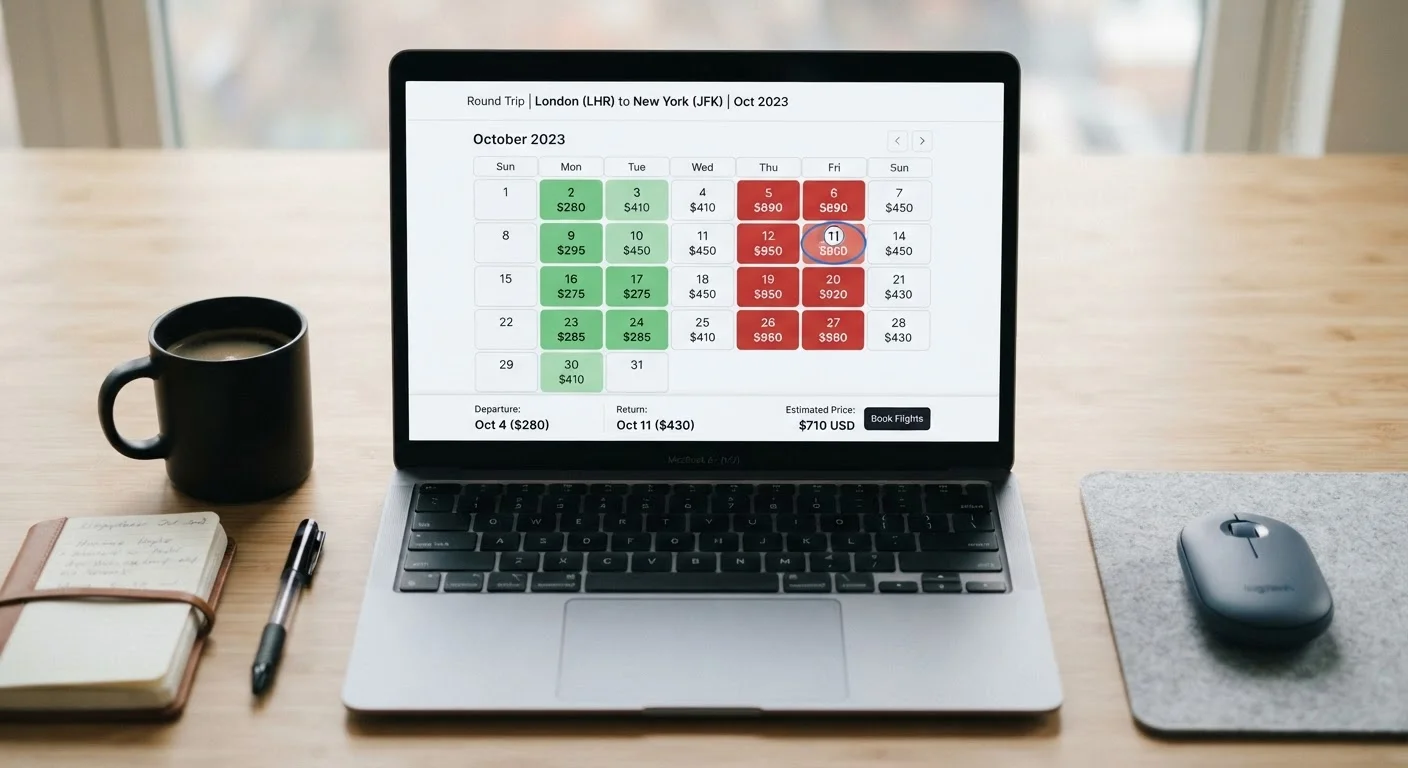
Photo: InsightsVault.com | Interesting Daily Reads editorial
Key Takeaways
- Date grid and calendar views show fare prices across an entire month, making price patterns visible at a glance.
- Shifting a trip by even one or two days can meaningfully reduce airfare costs.
- Midweek departures and returns typically carry lower prices than weekend travel on most routes.
- Combining flexible-date searches with fare alerts strengthens your ability to catch price drops.
- Always verify the total fare - including fees - before treating a calendar price as final.
Why Date Flexibility Changes the Fare Game
Airline pricing is dynamic - the same seat on the same route can vary by hundreds of dollars depending on which day you fly. That variability is not random. Airlines use sophisticated yield-management systems that push prices up as demand climbs for specific dates and pull them down when seats on less popular days need filling. Date grids and calendar views in flight search tools are designed to make those patterns readable to ordinary travelers.
Rather than committing to rigid dates and then searching, the more effective approach is to search across a range of dates first and then commit. This is the foundational mindset shift that separates travelers who consistently find lower fares from those who overpay. For a broader look at these habits, see what experienced budget travelers do differently.
Calendar fare views typically display the lowest available fare for each date in a grid format, color-coded or numerically ranked so that cheap and expensive days are immediately obvious. They work best when your travel window is at least two to three weeks wide - the narrower your flexibility, the less advantage you gain.
Use Incognito Mode When Searching
What You Need Before You Start
Date-grid searching requires minimal setup, but having a few things in place sharpens your results significantly.
What you will need
It also helps to understand what the calendar view is showing you. Most tools display the lowest fare found for that date, which may reflect a basic or restricted fare class. Always click through to confirm what's included - baggage allowances, change fees, and seat assignment costs can turn an apparent deal into a comparable or worse value than a higher-sticker ticket. This is part of a broader discipline of reading total trip costs, which the Complete Playbook for Affordable Flights covers in depth.
How to Use Date Grids Step by Step
The steps below apply to most major flight search platforms that offer a calendar or date-grid view. Interface labels may differ slightly across tools, but the underlying logic is consistent.
Enter your route without locking in dates
Open the flight search tool and enter your origin and destination airports. Where the interface offers a flexible-dates or calendar option - sometimes labeled "Flexible dates," "Date grid," or "Whole month" - select it before running the search. Do not enter specific dates yet if you can avoid it; let the tool surface the full range.
Set your acceptable travel window
Define the earliest you could depart and the latest you could return. Be honest about hard constraints - a work commitment or a non-refundable hotel booking narrows your window and reduces the benefit. The wider your window, the more price variation you'll see and the better your chances of finding a lower fare.
Read the calendar grid and note price clusters
Look at the fare displayed for each date. Identify clusters of lower-priced days - not just the single cheapest date, but a range of nearby dates at a similar price. This gives you backup options if the absolute lowest date sells out or rises in price before you book.
Compare round-trip combinations, not just one-way legs
If your search tool allows it, use the fare grid for both outbound and return legs independently. Sometimes the cheapest outbound day pairs poorly with the cheapest return day due to minimum-stay requirements or fare class availability. Check multiple combinations rather than assuming the cheapest individual days produce the cheapest round-trip.
Click through and verify the total fare
Select your target dates and proceed to the fare breakdown screen. Confirm the total cost including all mandatory fees before treating the calendar price as accurate. Check whether the fare class includes carry-on luggage, how strict the change or cancellation terms are, and whether seat selection costs extra. The calendar headline price is a starting point - the total fare is what matters.
Once you've identified your target date or window, consider pairing this approach with price-watch tools. Our guide to how fare alerts work and when to trust them explains how to layer alerts onto flexible-date research without over-relying on automated notifications.
Calendar Prices Are Not Guaranteed Until Booked
Reading the Patterns: What Calendar Views Reveal
Once you've run a few flexible-date searches, certain pricing patterns tend to emerge consistently across routes:
- Tuesday and Wednesday departures are often priced lower than Friday or Sunday flights on domestic US routes, though this varies by market and season.
- Return date matters as much as departure. A round-trip with a Tuesday return is often cheaper than the same outbound paired with a Sunday return.
- Holiday shoulder days - the day before or after a peak travel day - sometimes carry significantly lower fares than the peak itself.
- Month-boundary pricing can shift noticeably; comparing the last days of one month against the first days of the next often surfaces cheaper options.
These patterns are not guarantees - fares are route-specific and change constantly. The calendar view's value is not in predicting the future but in making current pricing transparent so you can make a faster, better-informed decision.
If your trip timing is truly locked but you're still hoping to reduce costs, it may be worth exploring routing alternatives. Strategies like split ticketing and positioning flights operate on a different axis than date flexibility and carry their own tradeoffs - worth understanding before using.
For travelers managing a tight trip budget end to end, the savings you find on airfare compound well with smarter on-the-ground spending. The On-the-Road Savings hub covers how to keep daily costs low once you've landed.
The content provided on our blog site traverses numerous categories, offering readers valuable and practical information. Readers can use the editorial team’s research and data to gain more insights into their topics of interest. However, they are requested not to treat the articles as conclusive. The website team cannot be held responsible for differences in data or inaccuracies found across other platforms. Please also note that the site might also miss out on various schemes and offers available that the readers may find more beneficial than the ones we cover.