
The Anatomy of an Airfare Price: Why the Same Seat Costs Different Amounts

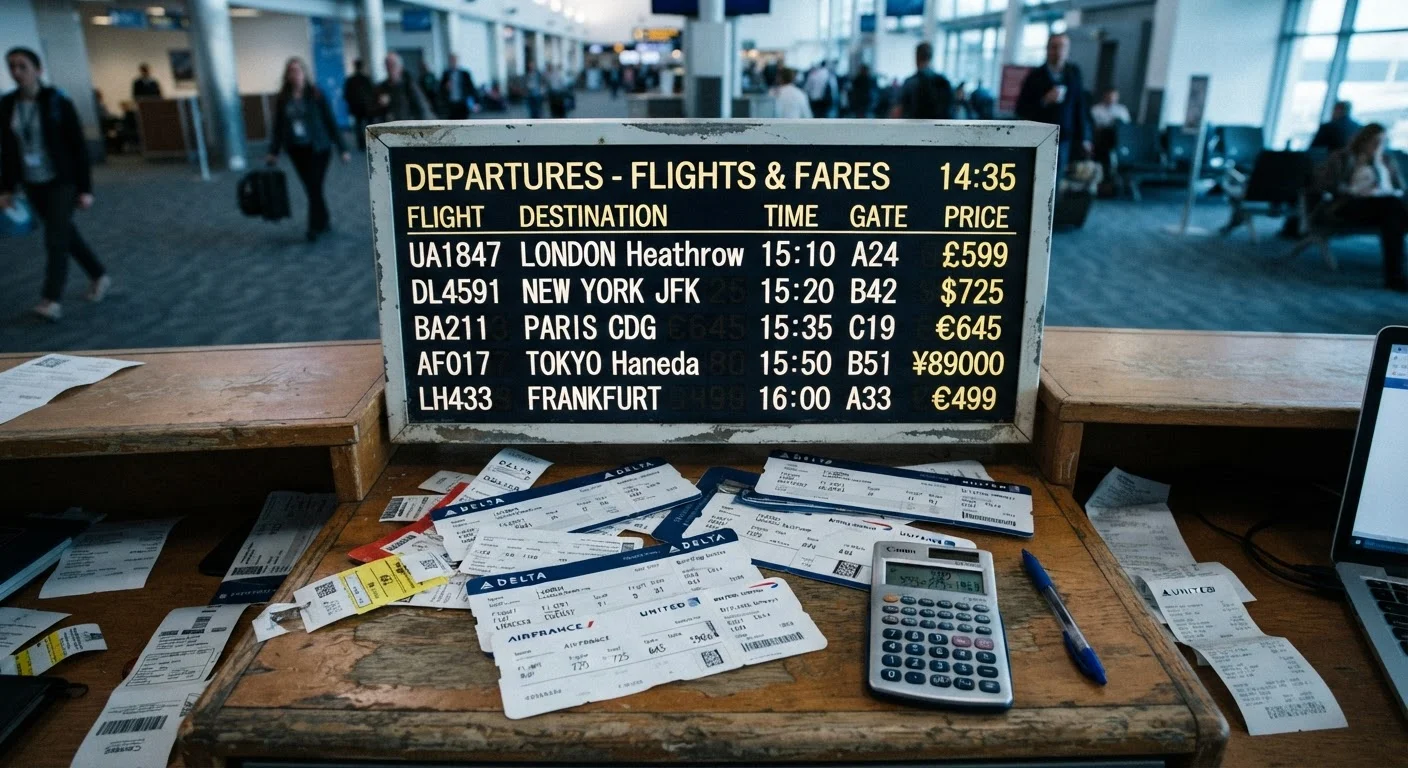
Photo: InsightsVault.com | Interesting Daily Reads editorial
Key Takeaways
- Every seat on a flight is assigned to a fare class that controls its price and conditions.
- Fares rise as cheaper inventory buckets fill up - not just because the departure date is close.
- Search timing, day of week, and route competition all influence the price you see.
- Booking round trips isn't always cheaper than one-ways on the same airline.
- Understanding fare mechanics helps you identify genuinely good prices rather than guessing.
Fare Classes: The Hidden Inventory System
Every seat on a commercial flight is assigned to a fare class - an internal inventory bucket identified by a single letter code. Economy cabins alone can have eight or more distinct fare classes, each carrying a different price and a different set of conditions around refunds, changes, and frequent flyer accrual.
When you search for a flight and see a price, you're seeing the lowest-priced fare class that still has seats available. As those seats sell, the airline's system closes that bucket and the next tier opens - which is why a fare can jump $80 overnight even though the plane is far from full. You can explore the terminology in more depth in our airfare terms glossary.
8-26
Fare classes per cabin on a typical flight
Airlines commonly maintain multiple lettered fare buckets within a single cabin class, each with distinct pricing and booking conditions.
~1-3 months
Domestic booking window with stable pricing
Industry analysis generally finds domestic fares in the US tend to be most predictable when purchased one to three months before departure, though routes vary.
Up to 4x
Price variation for the same seat
On high-demand routes, the spread between the cheapest and most expensive economy fare class on a single flight can be substantial, depending on booking timing and demand.
What Actually Moves the Price
Several variables feed into the fare you see at any moment:
- Remaining inventory: Fewer cheap seats available means higher-priced buckets are open.
- Days until departure: Airlines manage risk by holding some cheaper fares back for longer booking windows and raising prices as the flight fills closer to departure.
- Route competition: A route served by several carriers tends to have lower base fares than a monopoly or near-monopoly route. When one carrier drops a fare, others often follow within hours.
- Day-of-week demand: Business-heavy routes (think Monday morning, Friday afternoon departures) consistently price higher than mid-week departures on the same route.
- Seasonality and events: School holidays, major sporting events, and local festivals create demand spikes that push entire fare class ladders upward.
“Yield management is essentially a form of price discrimination - the airline's goal is to extract the maximum willingness to pay from every passenger segment on the plane, from the leisure traveler booking months out to the business traveler booking the night before.”
— Clifford Winston, Senior Fellow, Brookings Institution, transportation economics researcher
Understanding this hierarchy explains why flexible travelers - those who can shift departure by a day or choose an off-peak time slot - consistently find lower fares without relying on luck.
How Airlines Manage Revenue Around You
Airlines use yield management (also called revenue management) - a form of algorithmic pricing designed to maximize revenue per flight, not to offer you the lowest possible fare. The system forecasts demand using historical booking patterns, current sales pace, and competitive data, then adjusts which fare buckets are open at any given moment.
One practical consequence: booking early doesn't always mean booking cheap. Airlines sometimes release introductory fares at launch, pull them quickly as demand builds, then occasionally drop unsold inventory close to departure. The middle of the booking window - typically one to three months out for domestic flights - is often where the most stable mid-range pricing sits, though this varies significantly by route.
This is also why searching across multiple dates matters more than searching on a specific day. A Thursday departure on the same route might be in a lower-demand fare class than the Saturday departure a traveler originally wanted.
One-Ways, Round Trips, and Pricing Logic
A persistent myth is that round-trip fares are always cheaper than two one-ways. On legacy carriers, round-trip pricing historically bundled both legs to meet minimum stay requirements. Today, on many routes - particularly those with low-cost carrier competition - two separate one-way tickets can match or beat a round-trip fare while giving you more scheduling flexibility.
The reverse is also true: on some international routes, buying a round trip is still structurally cheaper because of the way fare rules are written. The only reliable check is to compare both options at the time of booking rather than assuming one format wins.
For a broader look at how routing choices affect price, unconventional ticketing strategies like split ticketing are worth understanding - though each carries its own tradeoffs.
Use a Date Grid Before Committing
Turning Fare Mechanics Into Better Search Habits
Knowing how fares are constructed changes how you search. Rather than checking one date and hoping the price is right, you can search across a date grid to identify which departure days have cheaper fare classes open. You can watch a route over time to understand its typical price floor. And you can recognize when a fare is genuinely competitive versus when you're simply seeing a higher bucket that happens to be the cheapest one left.
These habits separate travelers who consistently find reasonable fares from those who overpay. For a full picture of the behaviors that quietly inflate what people pay, see why travelers overpay for flights. And if you want to put all of this into a repeatable process, the complete playbook for booking affordable flights covers every stage of the search-to-booking workflow.
Frequently Asked Questions
The content provided on our blog site traverses numerous categories, offering readers valuable and practical information. Readers can use the editorial team’s research and data to gain more insights into their topics of interest. However, they are requested not to treat the articles as conclusive. The website team cannot be held responsible for differences in data or inaccuracies found across other platforms. Please also note that the site might also miss out on various schemes and offers available that the readers may find more beneficial than the ones we cover.