
Agreed Value vs. Market Value Car Insurance: Which Pays Out More After a Total Loss?

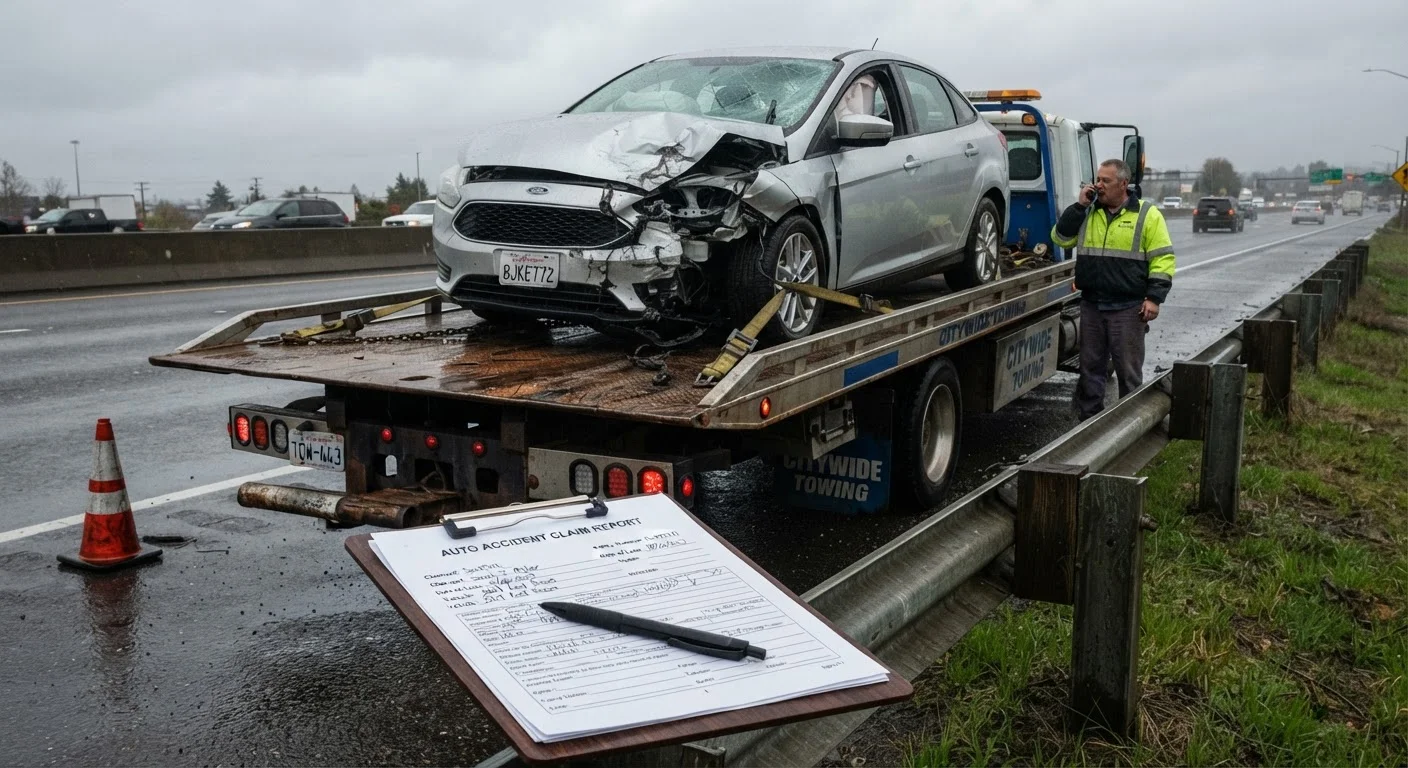
Photo: InsightsVault.com | Interesting Daily Reads editorial
Key Takeaways
- Agreed value locks in a payout amount at policy inception; market value pays what the car is worth on the day it's totaled.
- Market value policies typically carry lower premiums but can leave a gap between the payout and what you owe on a loan.
- Agreed value coverage usually costs more upfront but eliminates depreciation-driven settlement disputes.
- Gap insurance can offset the shortfall under a market value policy if you finance or lease your vehicle.
- Neither policy type guarantees you'll be made financially whole - deductibles, policy limits, and terms still apply.
- Your choice should reflect the vehicle's depreciation curve, how you financed it, and how much premium certainty matters to you.
How Each Policy Values Your Car After a Total Loss
When an insurer declares a car a total loss - meaning the cost to repair it exceeds a set percentage of its value - your payout hinges on one critical variable: how your policy defines what the car is worth.
Agreed value (sometimes called stated value, though the two can differ by insurer) means you and the insurer negotiate a fixed dollar amount at the start of the policy. If the car is totaled, you receive that amount, minus your deductible, without further negotiation. There's no room for the insurer to argue depreciation after the fact.
Market value (also called actual cash value, or ACV) works differently. At the time of a total loss, the insurer determines what your car would have sold for on the open market immediately before the accident. That figure accounts for age, mileage, condition, and regional demand - and it will almost always be lower than what you paid, sometimes significantly so. Understanding how depreciation erodes that number over time is worth reading about in depth: how depreciation works.
| Criterion | Agreed Value | Market Value (ACV) |
|---|---|---|
| Payout basis | Pre-set amount at policy start | Car's market value at time of loss |
| Depreciation impact | None - amount is locked in | Full depreciation applied at claim |
| Typical premium cost | Higher | Lower |
| Settlement disputes | Rare - amount is pre-agreed | Possible - valuation can be contested |
| Best vehicle type | Classic, specialty, or appreciating cars | Standard modern vehicles |
| Gap risk if financed | Lower, if agreed amount covers balance | Higher - gap insurance often needed |
| Availability | Less common; specialty insurers | Standard across most policies |
This article provides general insurance information for educational purposes only. Coverage terms, eligibility, and payouts vary by insurer, policy, and state. Consult a licensed insurance professional before making decisions about your own coverage.
The Real Cost Difference: Premiums vs. Payout Risk
Agreed value policies cost more in premiums - often noticeably so. Insurers are accepting a fixed liability regardless of how far the car's market price drops, so they price that certainty in. For a standard commuter vehicle depreciating on a predictable curve, that premium bump may not be worth it.
Market value policies are cheaper month to month, but they expose you to a specific financial risk: the coverage gap. If you owe $22,000 on a car loan and the insurer values the car at $17,500 at total loss, you still owe the lender $4,500 - for a car you no longer have. This is where gap insurance (Guaranteed Asset Protection) becomes relevant. It covers the difference between an ACV payout and your remaining loan or lease balance. Gap coverage is typically available as an add-on; understanding what add-ons actually cover before declining them can prevent an expensive surprise.
~20%
Average new car value lost in year one
According to Edmunds and industry depreciation research, most new vehicles lose roughly 20% of their value within the first twelve months of ownership.
~50%
Value remaining after five years
Industry data consistently shows average vehicles retain around half their original value after five years, though this varies significantly by make, model, and market conditions.
If you own your car outright and it's a standard deprecating model, the coverage gap risk diminishes considerably - the market value payout is simply what you get, and your decision is whether that's adequate. For most drivers of ordinary vehicles, it often is.
When Agreed Value Makes Practical Sense
Agreed value policies are most commonly used for vehicles that don't follow a standard depreciation curve. Classic and vintage cars, restored vehicles, low-production models, and certain electric vehicles with volatile resale markets are all examples where a market valuation at claim time could be unpredictable or unfairly low.
The agreed amount is typically set after the insurer reviews an appraisal, photos, and documentation of the car's condition and any modifications. That paper trail matters - agreed value isn't a blank check; the amount must be justified at policy inception.
For drivers of appreciating or stable-value vehicles, locking in a number also protects against a scenario where a dispute over valuation delays or reduces a settlement. Total loss settlements under ACV policies can involve back-and-forth over comparable sales, condition adjustments, and regional market differences - a process that takes time and may not resolve in your favor. When a repair bill exceeds the car's value, the same valuation questions arise, making it worth thinking through before you're in that position.
One practical note: some insurers use "stated value" as a variation that sets a maximum payout rather than a guaranteed one. Read the policy wording carefully - stated value is not always the same as agreed value.
Making the Right Call for Your Situation
The decision between agreed and market value coverage isn't about which pays more in every case - it's about which approach fits your vehicle, your finances, and your tolerance for uncertainty.
Start with your car's depreciation trajectory. A three-year-old mainstream sedan loses a predictable percentage of value annually; a 1968 muscle car or a limited-edition model may not. If your vehicle's value is hard to pin down or likely to be contested, the premium cost of agreed value may be money well spent.
Next, consider your loan or lease position. If you're underwater on financing - meaning you owe more than the car is worth - a market value payout alone won't clear the debt. Either add gap coverage or reconsider whether agreed value is a better fit from the start. For a broader look at how insurance costs evolve throughout a driving lifetime, how premiums shift as you age and change vehicles offers useful context.
Finally, revisit your policy at renewal. A car you financed five years ago and now own outright has a different risk profile than it did at purchase. The coverage structure that made sense then may not be the most efficient choice now.
"Stated Value" Is Not Always Agreed Value
The content provided on our blog site traverses numerous categories, offering readers valuable and practical information. Readers can use the editorial team’s research and data to gain more insights into their topics of interest. However, they are requested not to treat the articles as conclusive. The website team cannot be held responsible for differences in data or inaccuracies found across other platforms. Please also note that the site might also miss out on various schemes and offers available that the readers may find more beneficial than the ones we cover.