
Car Ownership and Repair Costs: A Complete Financial Overview

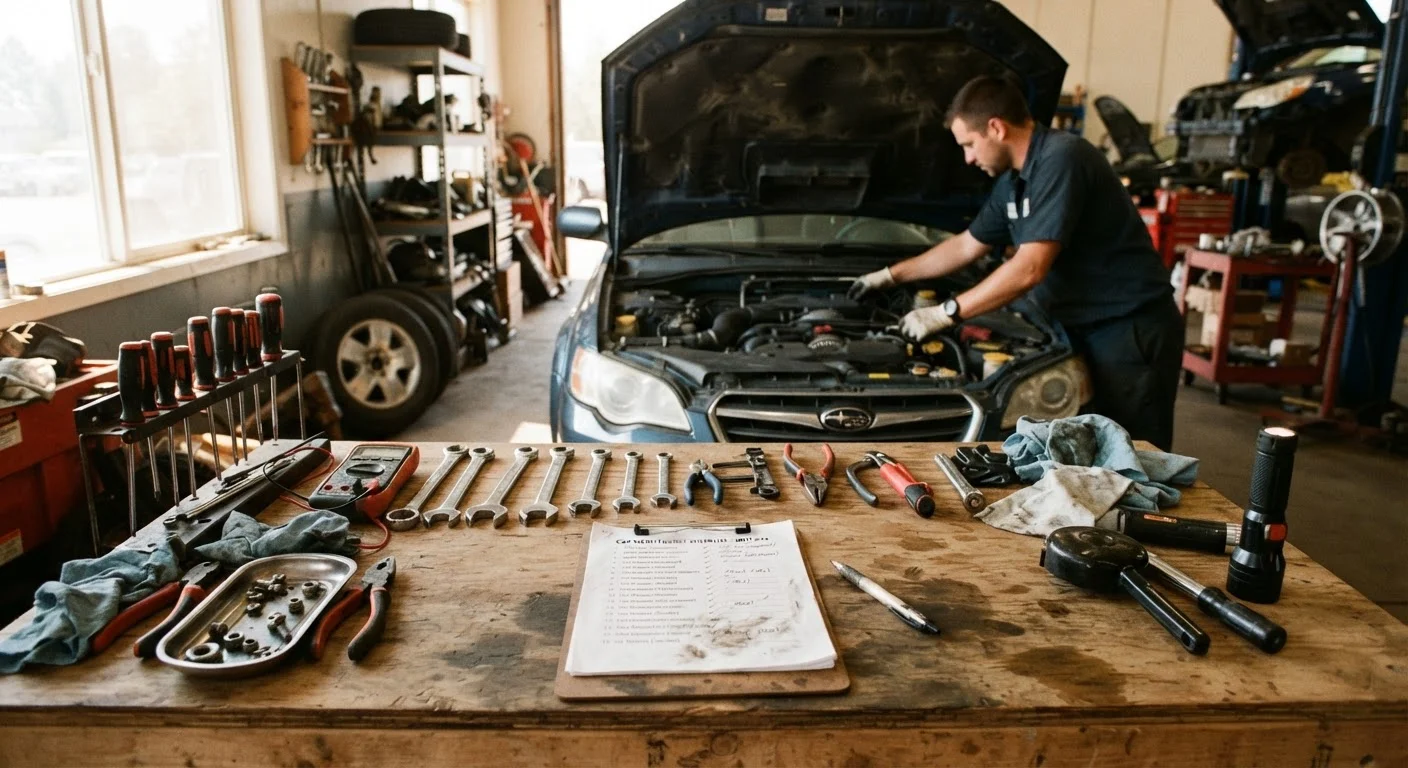
Photo: InsightsVault.com | Interesting Daily Reads editorial
Key Takeaways
- AAA estimates average vehicle maintenance and repair costs at roughly $1,200 per year for a typical sedan.
- Preventive maintenance consistently costs less than emergency repairs - skipping oil changes risks engine damage worth thousands.
- Labor rates vary widely by region and shop type; always get itemized estimates before authorizing work.
- Setting aside a dedicated monthly car repair fund smooths out the financial shock of unexpected breakdowns.
- Older vehicles generally have lower insurance costs but higher maintenance expenses - a real trade-off to plan for.
Why Repair and Maintenance Costs Catch Owners Off Guard
Most car buyers focus on the monthly payment and miss the fuller picture. Repairs and maintenance are the costs that quietly accumulate over a vehicle's lifetime - and they can be substantial. According to AAA research, the average American driver spends around $1,200 annually on vehicle maintenance and repairs, though that number climbs as a car ages.
The problem isn't that these costs are unavoidable - many are - but that most owners have no framework for anticipating them. A surprise $900 brake job hits differently when you haven't set aside a cent for it. For a complete picture of what car ownership actually costs, see The True Annual Cost of Owning a Car, which breaks down every recurring expense category.
Understanding repair costs also changes how you think about vehicle age. Older vehicles vs. newer models involves a genuine maintenance trade-off - and knowing the numbers helps you make a more deliberate choice.
$1,200
Average annual maintenance and repair cost
According to AAA's annual Your Driving Costs study, this is the typical figure for a mid-size sedan under normal driving conditions.
30-60%
Premium repair cost for luxury/European vehicles
Industry labor and parts data consistently show luxury and European models cost significantly more to service than domestic or Japanese equivalents.
20-30%
Typical dealer vs. independent shop price gap
Industry labor rate surveys indicate dealer service departments generally charge more than independent mechanics for identical services.
Scheduled Maintenance: What You'll Pay and When
Scheduled maintenance is the predictable side of car upkeep - the services your owner's manual specifies at set mileage intervals. Knowing what's coming lets you plan and shop around.
- Oil and filter change: Typically $40-$100 depending on oil type (conventional vs. synthetic) and shop. Required every 5,000-10,000 miles depending on the vehicle.
- Tire rotation: Usually $20-$50; often bundled with oil changes. Extends tire life meaningfully when done on schedule.
- Air filter replacement: $20-$60 for parts and labor; a straightforward job some owners do themselves.
- Brake inspection and pad replacement: Pad replacement typically runs $150-$300 per axle, more for rotors. Neglecting brakes turns a moderate cost into a serious safety and financial problem.
- Transmission service: Fluid exchange runs $80-$250; a major service with filter replacement can reach $400 at independent shops.
- Coolant flush: Generally $100-$150. Protects the engine from overheating and corrosion.
Dealer service departments tend to charge more than independent mechanics - often 20-30% higher for the same job, according to industry labor rate surveys. Always ask for an itemized estimate so you can compare parts and labor separately.
When scheduling a major service, ask the shop to perform any additional needed repairs at the same time if they require overlapping labor - for example, replacing a water pump while the timing belt is already off. You pay for the labor once instead of twice.
Keep a simple log of every service performed, with the date, mileage, and cost. When selling the vehicle or negotiating on price at trade-in, documented maintenance history is tangible evidence of value.
Common Unplanned Repairs and Their Typical Price Ranges
Even with perfect maintenance habits, mechanical failures happen. The most common unplanned repairs - and their rough national average costs - include:
| Repair | Typical Cost Range |
|---|---|
| Battery replacement | $150-$300 installed |
| Alternator replacement | $400-$800 |
| Starter motor | $300-$600 |
| Catalytic converter | $900-$2,500+ |
| Timing belt/chain | $500-$1,500 |
| Water pump | $300-$750 |
| Suspension components | $200-$1,000+ depending on parts |
These figures vary by vehicle make, model, and local labor rates. Luxury and European vehicles routinely cost 30-60% more to repair than domestic or Japanese equivalents, largely due to parts pricing and specialist labor. The Ownership Costs hub covers how these expenses fit within your broader ownership budget.
A diagnostic scan (typically $80-$150) before authorizing any major repair is money well spent - it confirms exactly what's failing rather than relying on guesswork.
How to Avoid Overpaying at the Shop
Repair pricing is not fixed. The same job can vary by hundreds of dollars depending on where you take your car and whether you ask the right questions.
- Get at least two estimates for any repair over $200. Prices vary significantly between dealers, chain shops, and independent mechanics.
- Ask for an itemized written estimate before any work begins. This separates parts costs from labor and makes comparisons meaningful.
- Look up the flat-rate labor time for the job using a resource like a published labor guide. Shops charge per the standard estimated hours, not actual time - knowing this helps you spot inflated labor charges.
- Supply your own parts where appropriate. Many independent shops allow customer-supplied parts, which can reduce costs - though confirm the shop's warranty policy on those parts first.
- Ask about aftermarket vs. OEM parts. Original equipment manufacturer (OEM) parts match factory specs but cost more. Quality aftermarket parts from reputable suppliers often perform equivalently at lower cost for non-critical components.
Also check whether your vehicle is under any active manufacturer recall or technical service bulletin (TSB). Recall repairs are free; some TSBs also qualify for extended warranty coverage. The National Highway Traffic Safety Administration (NHTSA) website lets you search by VIN at no cost.
Building a Maintenance Budget That Actually Works
The most reliable way to handle repair costs is to treat them as a fixed monthly expense - because over time, they are. Financial planners often suggest setting aside 1-2% of a vehicle's current market value per year for maintenance and repairs, though older vehicles may require more.
A practical approach: open a dedicated savings account labeled for car maintenance and transfer a set amount each month. Even $75-$100 monthly builds a buffer that absorbs most routine repairs without touching your emergency fund.
Start Your Car Repair Fund Today
Repair costs are just one piece of the ownership picture. Fuel and insurance together often exceed maintenance spending for many drivers - see Managing Fuel and Insurance Costs Across a Car's Lifetime for strategies that apply across the vehicle's full life. And don't overlook the costs that rarely come up at the dealership - ownership costs your dealer rarely mentions rounds out the complete picture.
This article provides general information about vehicle maintenance and repair costs for educational purposes. Actual costs vary by vehicle, location, and provider. Consult a qualified mechanic for advice specific to your vehicle's condition and needs.
The content provided on our blog site traverses numerous categories, offering readers valuable and practical information. Readers can use the editorial team’s research and data to gain more insights into their topics of interest. However, they are requested not to treat the articles as conclusive. The website team cannot be held responsible for differences in data or inaccuracies found across other platforms. Please also note that the site might also miss out on various schemes and offers available that the readers may find more beneficial than the ones we cover.