
How Labour Time Guides Work - and Why They Affect What You Pay

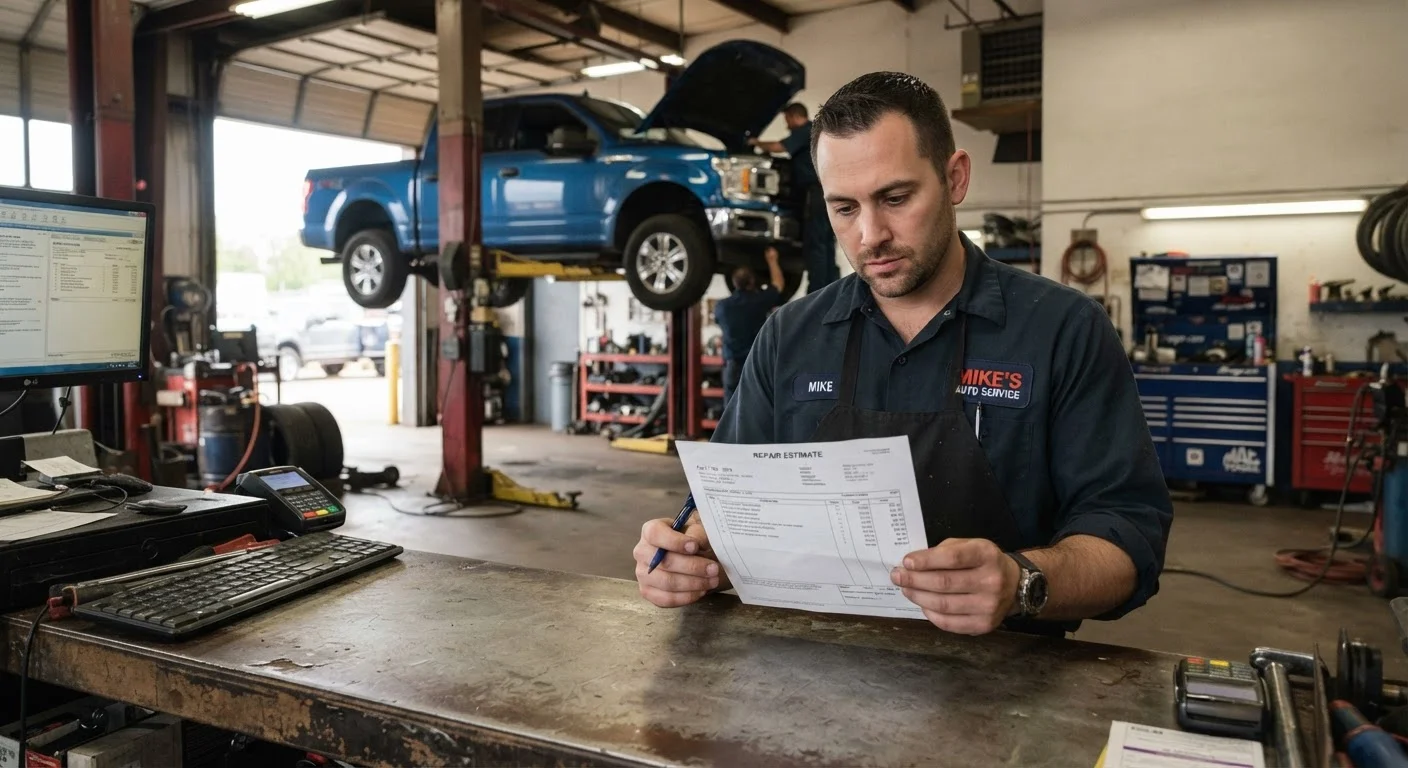
Photo: InsightsVault.com | Interesting Daily Reads editorial
Key Takeaways
- Shops bill you for "book time" - the hours listed in the guide - not necessarily clock time.
- An experienced mechanic finishing faster than book time does not automatically lower your bill.
- Labour rates vary by shop type; the time guide is separate from the hourly rate.
- Understanding book time helps you evaluate whether a quote is within a normal range.
- Always ask for the labour hours and the hourly rate as separate line items before approving work.
What Labour Time Guides Actually Are
When a mechanic quotes you $320 in labour to replace a water pump, that number almost certainly came from a labour time guide - not a stopwatch. These are published databases that assign a standard number of hours to thousands of specific repair procedures, broken down by vehicle year, make, and model.
Publishers like Chilton and Mitchell compile these times using a combination of manufacturer data, technician studies, and real-world repair records. Shops subscribe to the guides and use them as the basis for every labour charge on your invoice. The system exists to create pricing consistency and protect both parties: shops know what to charge before a job starts, and customers get a predictable quote rather than an open-ended hourly bill.
It is worth noting that dealerships sometimes use a different set of times - the manufacturer's own flat-rate standards - which can run higher or lower than independent guides depending on the job.
How "Book Time" Translates Into Your Bill
The listed hours in a time guide are called book time or flat rate. Here is how the math works: if the guide says a timing belt replacement on your vehicle is 3.5 hours, and the shop's labour rate is $130 per hour, your labour charge will be $455 - regardless of whether the job took two hours or five hours on the actual clock.
This is the part that surprises most car owners. An efficient, experienced technician who finishes the job in two hours still bills you for 3.5 hours, because the shop invoices book time, not clock time. Conversely, if something unexpected makes the job run long, a reputable shop should not simply add hours without telling you first.
$80-$200+
Typical US shop hourly labour rate range
Independent shops generally charge less per hour than franchised dealerships, according to industry pricing surveys and consumer auto-cost research.
Thousands
Procedures covered in major time guide databases
Publishers like Mitchell and Chilton maintain entries for thousands of specific repair operations across hundreds of vehicle makes, models, and model years.
Understanding this structure is why it pays to ask for a written estimate that separates labour hours from the hourly rate before you approve any work. See our guide to reading a workshop invoice for a full breakdown of how each charge on your bill is constructed.
Why Quotes Differ Between Shops
Two shops quoting the same repair can arrive at different labour totals for two legitimate reasons: they may be using different time guides, or they charge different hourly rates. Independent shops typically charge $80-$150 per hour, while dealership rates often run $150-$200 or more, according to industry pricing surveys. The same book time multiplied by a higher rate produces a bigger bill.
Time guides can also differ in the hours they assign to the same job. Mitchell and Chilton sometimes list different times for identical procedures on the same vehicle. Neither is inherently wrong - they reflect different methodologies - but it does mean that a quote from one shop is not directly apples-to-apples with another without knowing both the hours and the rate.
Ask About Overlap on Combined Repairs
This is one of the key reasons online repair estimators sometimes produce figures that look nothing like what your mechanic quotes. Our explainer on why mechanic quotes diverge from online estimates covers the full list of factors at play.
How to Use This Knowledge at the Shop
You do not need to memorise any guide to use this system to your advantage. A few practical habits make a real difference:
- Ask for itemised estimates. Request the number of labour hours and the hourly rate as separate figures, not just a combined total.
- Use online estimators as a sanity check. Tools like those offered by major auto-data sites give a ballpark range based on similar guide data. A quote that is dramatically higher deserves a follow-up question.
- Get a second quote on large jobs. For anything over a few hundred dollars in labour, a second opinion from a reputable independent shop costs nothing and can reveal meaningful differences.
- Ask about overlap time. When multiple repairs are done simultaneously - for example, replacing both the timing belt and water pump at the same time - some labour time should overlap, since the engine is already opened up. Ask whether the estimate reflects that.
This general information is intended to help you ask better questions, not to substitute for the judgment of a qualified mechanic. Repair complexity varies significantly by vehicle and condition.
Frequently Asked Questions
The content provided on our blog site traverses numerous categories, offering readers valuable and practical information. Readers can use the editorial team’s research and data to gain more insights into their topics of interest. However, they are requested not to treat the articles as conclusive. The website team cannot be held responsible for differences in data or inaccuracies found across other platforms. Please also note that the site might also miss out on various schemes and offers available that the readers may find more beneficial than the ones we cover.