
Why Your Mechanic's Quote Looks Nothing Like the Online Estimate

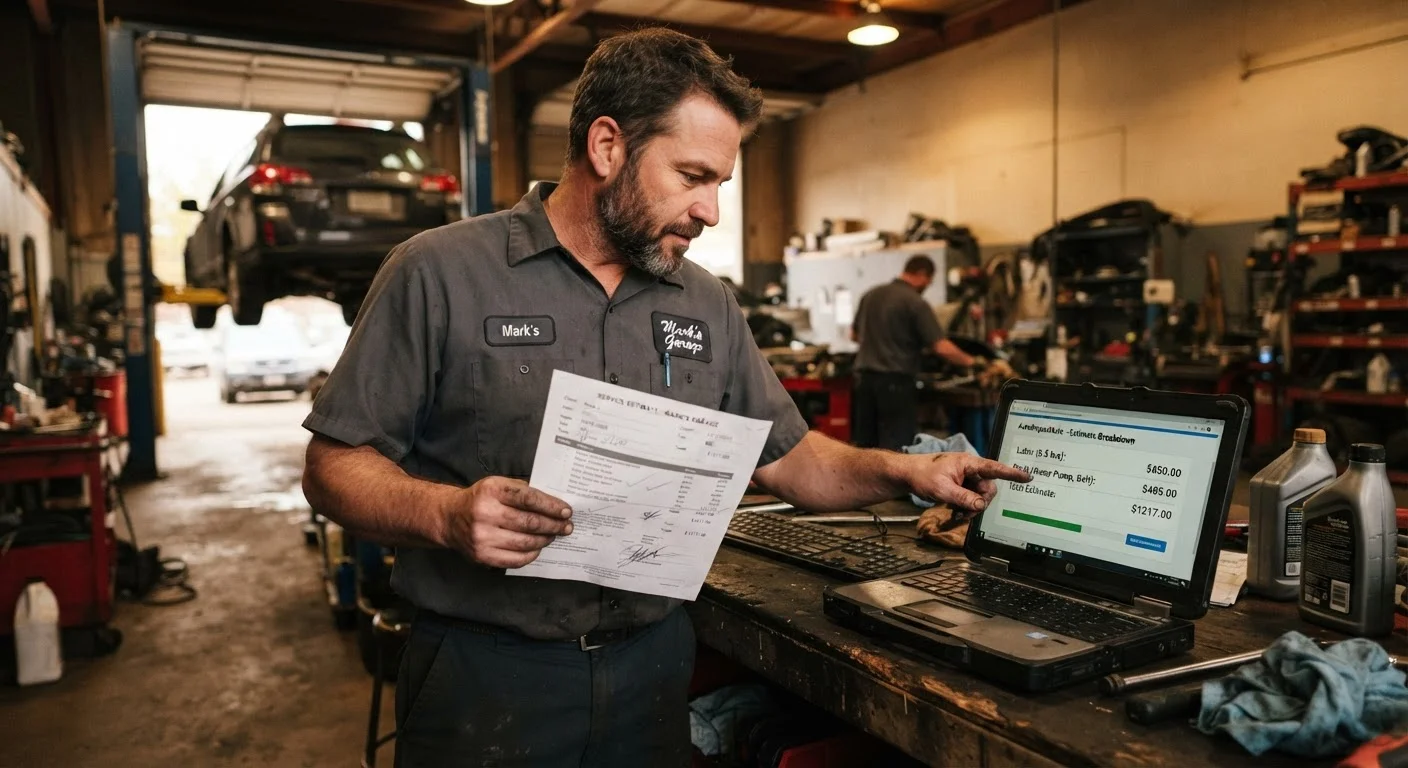
Photo: InsightsVault.com | Interesting Daily Reads editorial
Key Takeaways
- Online estimates use national averages that may not reflect local labor rates or your specific vehicle's condition.
- Parts prices vary widely depending on whether a shop uses OEM, aftermarket, or remanufactured components.
- Diagnostic findings, hidden damage, and add-on jobs discovered during repair routinely push final bills higher.
- A written estimate from your mechanic - not an online tool - is the document that matters legally and financially.
- Getting a second quote from another shop is a normal, sensible step before authorizing major repairs.
What Online Estimators Actually Measure
Tools like those offered by major automotive reference sites calculate repair costs using two inputs: standardized labor time guides (which assign a set number of hours to each job type) and average parts pricing pulled from supplier databases. They then apply a regional average hourly labor rate to produce a cost range.
The problem is that "regional average" can span a very wide area. A shop in a high cost-of-living city and a shop in a rural town two hours away may both fall inside the same regional bucket, yet charge $50 or more per hour apart. That gap alone can add $150-$300 to a job that takes three hours. The estimator has no way to know which end of the range applies to you.
Understanding how labor time guides work is one of the most practical things a car owner can do before authorizing any repair, because those guides are the backbone of nearly every quote you'll receive.
$50-$80+
Typical hourly labor rate range variation by region
AAA data and industry surveys consistently show labor rates vary widely across US metro and rural markets, directly affecting final repair totals.
20-50%
OEM vs. aftermarket parts price premium
Consumer Reports and auto parts industry analyses indicate OEM components commonly carry a significant price premium over aftermarket alternatives for the same application.
$80-$150
Typical shop diagnostic fee
Most independent and dealership service centers charge a separate diagnostic labor fee that online estimator tools frequently omit from their cost ranges.
Parts: The Variable the Estimate Can't Pin Down
Online tools typically price parts at a median market rate, often assuming aftermarket components. Your mechanic may quote OEM (original equipment manufacturer) parts, which can cost 20-50% more than aftermarket equivalents. Alternatively, a shop might use remanufactured parts, which sit somewhere in between.
Beyond the type of part, there's the matter of sourcing. Shops have preferred supplier relationships, and parts prices fluctuate. What a tool priced your brake rotors at last month may not match what your shop paid this week. Neither number is wrong - they're simply pulled from different points in the supply chain.
Common repair cost myths - including the idea that cheaper parts always save money - can make this parts pricing gap harder to evaluate clearly. A lower-cost aftermarket part is not always the wrong choice, but it's a tradeoff that deserves a direct conversation with your mechanic.
What the Mechanic Finds That the Website Couldn't
An online estimate is based on a clean-room assumption: your car has exactly the problem you described, nothing more. Real repairs rarely work that way. A mechanic replacing a water pump may find corroded hose clamps that need replacing. A brake job might reveal a seized caliper. These aren't upsells - they're connected problems that were invisible until someone physically opened the system.
Diagnostic time is another common gap. Many estimators omit it entirely, or fold it into the job time. In practice, shops charge a diagnostic fee - often $80-$150 - to confirm what the problem actually is before quoting the fix. That fee frequently doesn't appear in online tools.
Always Ask for a Written, Itemized Estimate
If a repair bill ends up far exceeding what you expected, our guide on what to do when a repair exceeds your car's value walks through the decision clearly, without pressure.
How to Use Estimates Wisely
Online estimates are most useful as a sanity check, not a benchmark to hold a mechanic to. If a quote comes in at twice the online figure, that's a reasonable prompt to ask questions. If it's 15-20% higher, that's often explained by local rates and parts sourcing.
The most productive step is to ask your mechanic for a written estimate that breaks out parts and labor separately. That breakdown lets you compare apples to apples and spot where the differences lie. Asking the right questions at the shop makes these conversations far less intimidating than most drivers expect.
For significant repairs, getting a second opinion is a normal and sensible step. Price variation between shops for identical work is common, and a second written estimate gives you real data to work with. You can also put repair costs in broader context by reviewing what scheduled versus reactive maintenance actually costs over time - the comparison often makes a strong case for staying ahead of problems rather than reacting to them.
Frequently Asked Questions
The content provided on our blog site traverses numerous categories, offering readers valuable and practical information. Readers can use the editorial team’s research and data to gain more insights into their topics of interest. However, they are requested not to treat the articles as conclusive. The website team cannot be held responsible for differences in data or inaccuracies found across other platforms. Please also note that the site might also miss out on various schemes and offers available that the readers may find more beneficial than the ones we cover.