
Repair Cost Myths That Lead Car Owners to Overpay

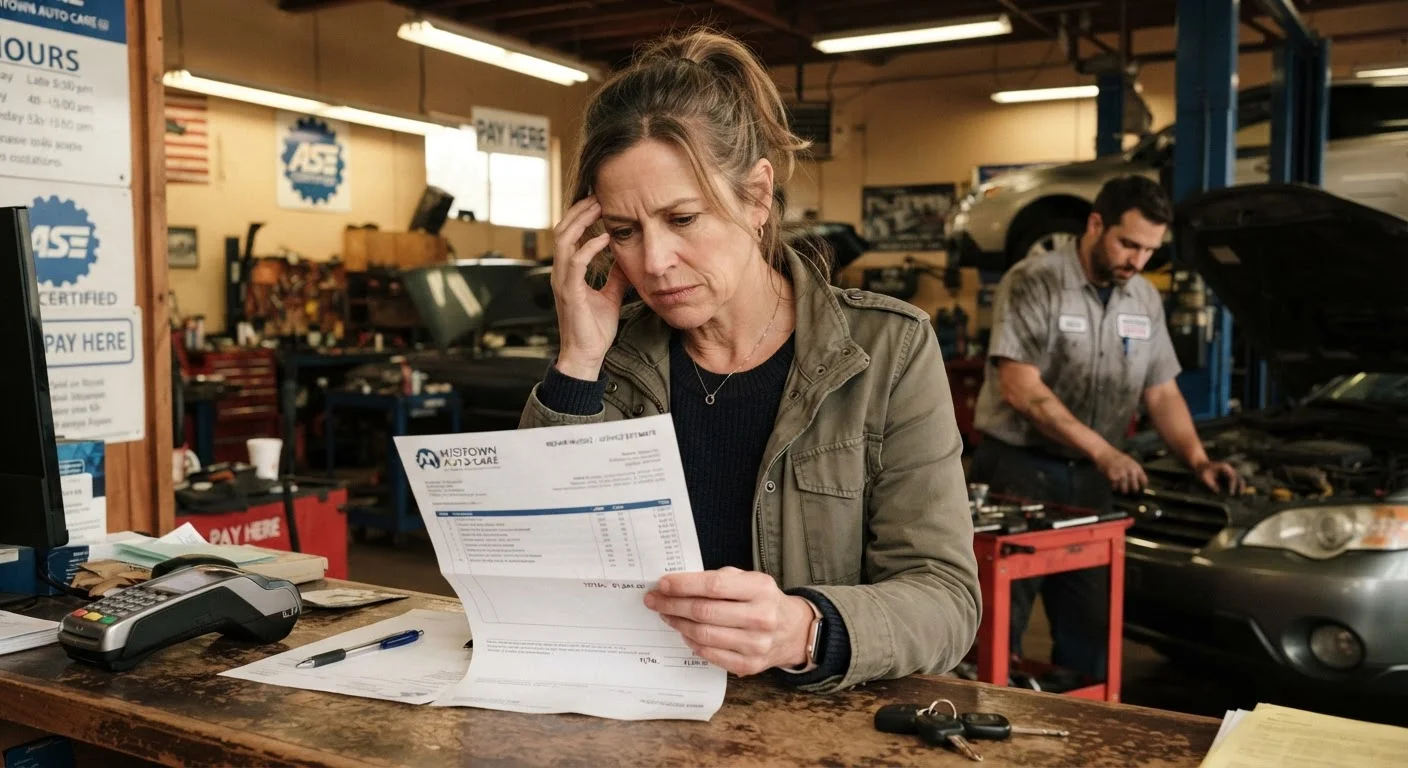
Photo: InsightsVault.com | Interesting Daily Reads editorial
Key Takeaways
- Dealerships don't always charge more than independent shops - labor rates vary widely by region and job type.
- Cheap aftermarket parts can cost more in the long run if they fail sooner or void warranty coverage.
- Skipping preventive maintenance to save money today typically leads to far larger repair bills later.
- Getting multiple written estimates before authorizing major repairs is one of the most reliable ways to avoid overpaying.
- Online repair estimates are useful reference points, but final quotes often differ due to legitimate local factors.
Why Repair Myths Are Expensive
Most drivers don't think much about car repair costs until they're already sitting in a waiting room staring at a quote. That's exactly when bad assumptions do the most damage. Misconceptions about where to go, which parts to use, and what maintenance to skip get baked into habits - and those habits quietly drain wallets over years of ownership.
Understanding the true recurring costs of car ownership means confronting some repair myths head-on. The corrections below draw on industry labor-rate data, consumer pricing surveys, and widely cited automotive maintenance research. None of it is advice tailored to your specific vehicle or situation - for that, a trusted, qualified mechanic is your best resource.
Myth
Dealerships always charge more for repairs than independent shops.
Fact
Dealer labor rates are sometimes higher, but not universally - and for certain repairs they can actually be competitive or cheaper.
Dealer service departments have higher overhead in some markets, but they also have factory-trained technicians, proprietary diagnostic tools, and direct access to OEM (original equipment manufacturer) parts. For complex, model-specific problems - particularly on newer vehicles under warranty - dealers may resolve issues faster and at lower total cost than an independent shop that has to order parts or guess at a proprietary fault code. AAA repair cost surveys have found that dealer and independent shop rates overlap considerably depending on the region and the type of repair. The smart move is to compare written estimates for the specific job rather than assume one channel is always cheaper.
Myth
Using cheap aftermarket parts saves money on repairs.
Fact
Lower-priced parts can reduce upfront costs but may fail sooner, void coverage, or cause secondary damage that costs more to fix.
Aftermarket parts range from high-quality equivalents of OEM components to significantly inferior copies. Quality varies enormously, and price alone is a poor guide. A brake pad that wears in half the time of a quality part costs more per mile, not less. Beyond durability, using non-OEM parts on a vehicle still under a manufacturer's or extended warranty may affect coverage depending on the specific warranty terms - it's worth reading your warranty documents or asking the warrantor directly before authorizing any substitution. For high-wear, safety-critical components (brakes, suspension, steering), the savings from a lower-priced part can evaporate quickly if the part underperforms.
Myth
Skipping routine maintenance saves money when your car seems to be running fine.
Fact
Deferred maintenance is one of the most reliable ways to turn a small, inexpensive service into a large, expensive repair.
Many maintenance intervals - oil changes, coolant flushes, transmission fluid changes, timing belt replacements - exist because components degrade on a predictable schedule, often before any symptom is noticeable. A timing belt that snaps because it was overdue can destroy an entire engine. A coolant system neglected past its service interval can lead to overheating and a blown head gasket, a repair that routinely costs several times what the flush would have. The common misconceptions about ownership costs article explores how this pattern of deferred maintenance inflates long-term costs in ways most drivers don't see coming.
Myth
An online repair estimate tells you what you should actually pay.
Fact
Online estimators provide a useful range, but final prices legitimately vary based on local labor rates, parts sourcing, and vehicle condition.
Tools that generate repair cost estimates use national or regional average data. They don't account for your specific vehicle's condition, the local cost of living (which drives labor rates), parts availability in your area, or any complicating factors a mechanic finds once the job is underway. A quote that comes in above an online estimate isn't automatically inflated - there are often legitimate reasons for the gap. Use estimates as a rough reference point and a conversation starter, not as a fixed budget ceiling. If a quote is significantly higher than the estimate, ask the shop to walk you through the line items.
Myth
You must return to the dealership for all maintenance to keep your warranty valid.
Fact
Federal law in the U.S. generally prohibits manufacturers from voiding a warranty solely because you used an independent shop for routine maintenance.
The Magnuson-Moss Warranty Act broadly protects consumers from warranty conditions that require them to use only the manufacturer's service network for routine maintenance - provided the work is done correctly and with appropriate parts. This means oil changes, filter replacements, and similar services performed by a qualified independent mechanic should not, in most circumstances, void your powertrain or bumper-to-bumper warranty. However, warranty terms can be complex, and there are exceptions. Reading your specific warranty document and consulting a qualified mechanic or legal resource for your situation is the safest approach before making assumptions either way.
What Smart Repair Decisions Actually Look Like
Avoiding overpayment isn't about distrust - it's about preparation. Before authorizing any repair over a few hundred dollars, get at least two written estimates that itemize both parts and labor separately. This gives you a baseline and surfaces any major pricing outliers. Our explainer on why quotes diverge from online estimates walks through the most common reasons for that gap.
$1,986
Average annual vehicle maintenance and repair cost per driver
According to AAA's annual Your Driving Costs study, U.S. drivers spend roughly this amount per year on maintenance, repairs, and tires on average.
3-4×
Cost multiplier of deferred vs. timely maintenance
Industry repair data consistently shows that neglected routine services - such as coolant or transmission fluid changes - commonly result in repair bills several times higher than the skipped service cost.
Up to 35%
Labor rate variation between markets
RepairPal and similar pricing databases report that labor rates for the same job can vary by 30-35% or more between high-cost and lower-cost metro areas within the U.S.
When a repair bill is very large, the math gets more complex. Whether to fix an older vehicle or move on is a structured decision - one worth thinking through carefully rather than under pressure. See our guide to thinking through high repair bills for a practical framework. And if you want a broader view of the costs most dealers never bring up at the point of sale, this article covers the recurring expenses that rarely feature in showroom conversations.
Always Get Estimates in Writing
The same pattern of myth-driven overspending shows up beyond the garage. Readers who want to apply similar critical thinking to other household budgets may find our look at common DIY home repair myths and low-cost pet care misconceptions useful for the same reason: the myths feel like common sense right up until they cost you money.
The content provided on our blog site traverses numerous categories, offering readers valuable and practical information. Readers can use the editorial team’s research and data to gain more insights into their topics of interest. However, they are requested not to treat the articles as conclusive. The website team cannot be held responsible for differences in data or inaccuracies found across other platforms. Please also note that the site might also miss out on various schemes and offers available that the readers may find more beneficial than the ones we cover.