
Affordable Nutrition: An End-to-End Guide to Eating Well Without Overspending

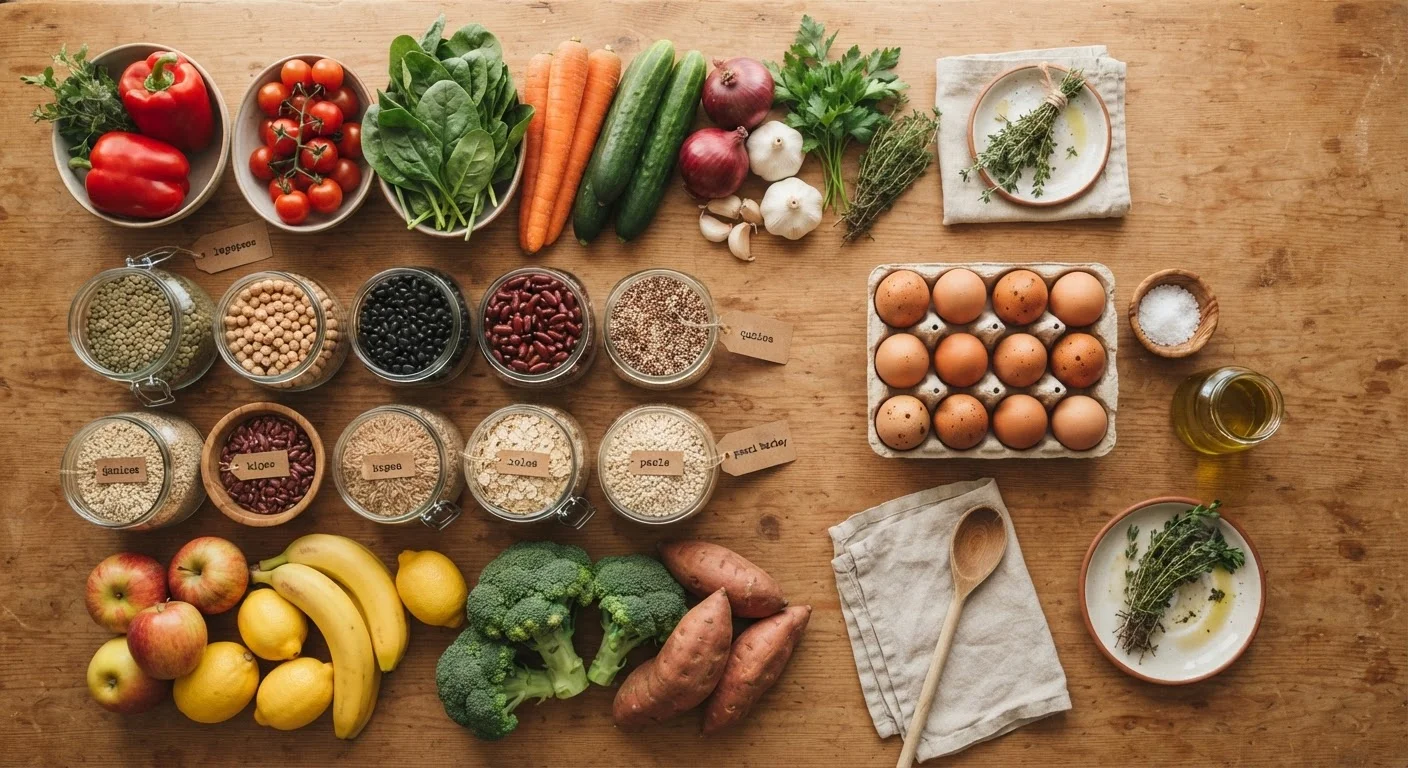
Photo: InsightsVault.com | Interesting Daily Reads editorial
Key Takeaways
- Nutrient-dense staples like legumes, oats, and eggs deliver strong nutrition at low cost per serving.
- Meal planning and a pre-shop audit are the most effective tools for cutting food waste and impulse spending.
- Batch cooking and proper storage extend the value of every grocery dollar you spend.
- Store brands and frozen produce are nutritionally comparable to premium alternatives in most categories.
- Reducing food waste by even 25% can meaningfully lower monthly grocery costs without changing what you eat.
Why Affordable Nutrition Is Achievable
A common belief holds that eating healthily is inherently expensive. The evidence, however, tells a more nuanced story. The cost of a nutritious diet depends far more on how you shop and cook than on the foods themselves. Many of the most nutrient-dense foods available - dried lentils, oats, eggs, canned fish, frozen spinach - are also among the least expensive items in any grocery store.
The challenge is not a lack of affordable options. It is a lack of a system. Without a plan, shoppers tend to overbuy perishables, duplicate pantry staples, and reach for convenience foods that cost two to three times more per serving than their home-cooked equivalents. This guide addresses every stage of that system: what to know before you shop, how to shop efficiently, and how to cook and store food so nothing goes to waste.
For a grounding in the core nutritional principles that underpin this approach, see our nutritional foundation guide, which covers what your body actually needs and how affordable foods can meet those needs.
~30-40%
Potential food cost savings from meal planning
Research from the Academy of Nutrition and Dietetics suggests structured meal planning is associated with meaningful reductions in food expenditure and waste.
~31%
Share of food supply wasted at consumer level
USDA Economic Research Service data indicates roughly 31% of the available food supply goes uneaten at the retail and consumer levels combined.
$1,500+
Estimated annual household food waste cost
The Natural Resources Defense Council has estimated that the average American family discards food worth over $1,500 per year.
Building Your Nutritional Foundation
Before optimizing cost, it helps to be clear about nutritional priorities. A balanced diet requires adequate protein, complex carbohydrates, healthy fats, fiber, and a range of vitamins and minerals. The good news is that the foods most associated with these needs are not the premium ones.
- Protein: Eggs, canned tuna, dried beans, lentils, and plain Greek yogurt deliver high protein per dollar compared to many cuts of meat.
- Complex carbohydrates and fiber: Rolled oats, brown rice, whole-grain bread, and sweet potatoes are affordable, filling, and nutritionally rich.
- Healthy fats: Peanut butter, canned sardines, and sunflower seeds are cost-effective sources.
- Micronutrients: Frozen vegetables - often frozen at peak ripeness - retain most of their vitamins and are consistently among the most affordable produce options.
Shoppers who overlook these staples in favor of trendier items often pay a significant premium for marginal nutritional differences. Nutrient-dense foods that cost less than you expect covers this in detail, with specifics on which everyday items punch above their nutritional weight.
When assessing value at the grocery store, calculate cost per gram of protein rather than cost per package. A can of chickpeas frequently outperforms premium packaged snacks and many cuts of meat on this metric.
Keep a 'use-first' shelf in your refrigerator - a single designated spot for items approaching their use-by date. Checking it before every cooking session can meaningfully cut waste over a month.
Planning and Auditing Before You Shop
The single highest-leverage habit for budget-conscious nutrition is planning meals before shopping - not after. A weekly meal plan takes 15-20 minutes and can reduce both food waste and impulse purchases substantially. The process is straightforward:
- Check what you already have. Pantry audits prevent duplicate purchases of items you already own.
- Plan 5-6 dinners and identify which lunches can come from leftovers.
- Build your shopping list from the plan - not from memory or habit.
- Set a per-trip budget before you leave and track it loosely as you shop.
A structured pre-shop checklist formalizes this process and helps close nutritional gaps you might otherwise miss. The budget grocery audit gives you a ready-to-use checklist built specifically for this purpose.
Planning also integrates well with broader spending habits. If you track a monthly food budget as part of your overall finances, connecting your grocery spend to your budget framework makes both easier to manage. Budgeting basics offers simple methods for doing exactly that.
Smart Shopping Strategies
Knowing what to buy is only part of the equation. How and where you shop determines whether your plan holds up in practice.
Choose store brands over name brands
For pantry staples - canned beans, pasta, oats, frozen vegetables - store-brand products typically meet the same food safety and quality standards as name brands at 20-40% lower cost. The nutritional content is usually identical.
Prioritize the perimeter, selectively
Produce, dairy, and proteins typically line store perimeters. But the center aisles contain genuinely valuable items: dried legumes, whole grains, and canned fish. Avoid the perimeter-only rule; instead, shop your list regardless of store layout.
Buy in bulk where it makes sense
Bulk purchasing only saves money when you will actually use the product before it expires or before quality degrades. Dried goods (lentils, rice, oats) are ideal for bulk buying. Fresh produce in bulk often increases waste rather than reducing cost.
For a broader look at how grocery strategy fits into everyday cost-cutting, the complete practical guide to cutting everyday costs provides a useful wider framework.
Cooking and Meal Preparation on a Budget
Cooking from scratch is consistently more cost-effective than purchasing prepared or processed foods. A pot of lentil soup made at home costs a fraction of the equivalent convenience product and gives you control over sodium, fat, and portion size.
Batch cooking as a core strategy
Cooking larger quantities - grains, legumes, roasted vegetables - at one time and portioning them across several meals is one of the most effective ways to reduce both time and cost per meal. It also reduces the temptation to order takeout on busy evenings.
Use low-cost protein anchors
Build meals around eggs, legumes, or canned fish several days per week. These ingredients are nutritionally complete protein sources and form the base of dozens of versatile, satisfying meals. Meat can still feature regularly; the goal is balance, not elimination.
Minimize food-specific equipment costs
A sharp knife, a large pot, a sheet pan, and a cutting board are sufficient for the vast majority of budget-friendly recipes. Specialized gadgets rarely pay for themselves in practice.
Storage and Waste Reduction
Food waste is one of the most direct leaks in a grocery budget. According to USDA estimates, American households waste a significant share of the food they purchase - translating directly to wasted money. Reducing waste starts with storage.
- Freeze before it spoils: Bread, meat, bananas, and cooked grains all freeze well. When you know you won't use something in time, freeze it rather than discarding it.
- Store produce correctly: Some fruits produce ethylene gas that accelerates ripening in nearby vegetables. Keep apples and bananas separate from leafy greens and berries to extend shelf life.
- Use the FIFO method: First in, first out - newer items go to the back of the fridge or pantry, older items to the front. This simple habit catches waste before it happens.
- Repurpose rather than discard: Vegetable trimmings can be used for stock. Stale bread works well in frittatas or soups. Overripe fruit blends into oatmeal or smoothies.
For households managing food budgets across multiple people, waste reduction becomes even more important. Affordable nutrition for families addresses bulk preparation, portioning, and variety strategies for larger households specifically.
Feeding Families Without Overspending
Feeding multiple people on a constrained budget adds complexity but does not fundamentally change the strategy. It amplifies the value of planning and batch cooking while making waste reduction even more financially consequential.
Key adaptations for family contexts include building meals that are easily scaled, relying on filling carbohydrate bases (rice, pasta, potatoes) that stretch protein further, and involving household members in meal planning to reduce the likelihood of food being rejected and wasted. Variety matters for adherence - rotating through a set of 10-15 reliable meals prevents fatigue without requiring constant recipe research.
Our family nutrition guide provides detailed strategies for households feeding children or multiple adults on a reduced food budget, including attention to age-appropriate nutritional needs.
Managing family food costs also connects directly to overall household financial planning. Cutting daily costs covers broader strategies for reducing everyday household expenses without sacrificing quality of life.
This article provides general nutritional and financial information for educational purposes only. It is not a substitute for advice from a registered dietitian, nutritionist, or qualified financial professional. Individual nutritional needs vary; consult a healthcare provider before making significant changes to your diet.
The content provided on our blog site traverses numerous categories, offering readers valuable and practical information. Readers can use the editorial team’s research and data to gain more insights into their topics of interest. However, they are requested not to treat the articles as conclusive. The website team cannot be held responsible for differences in data or inaccuracies found across other platforms. Please also note that the site might also miss out on various schemes and offers available that the readers may find more beneficial than the ones we cover.