
Stretching Pulses, Grains, and Eggs Into a Week's Worth of Balanced Meals

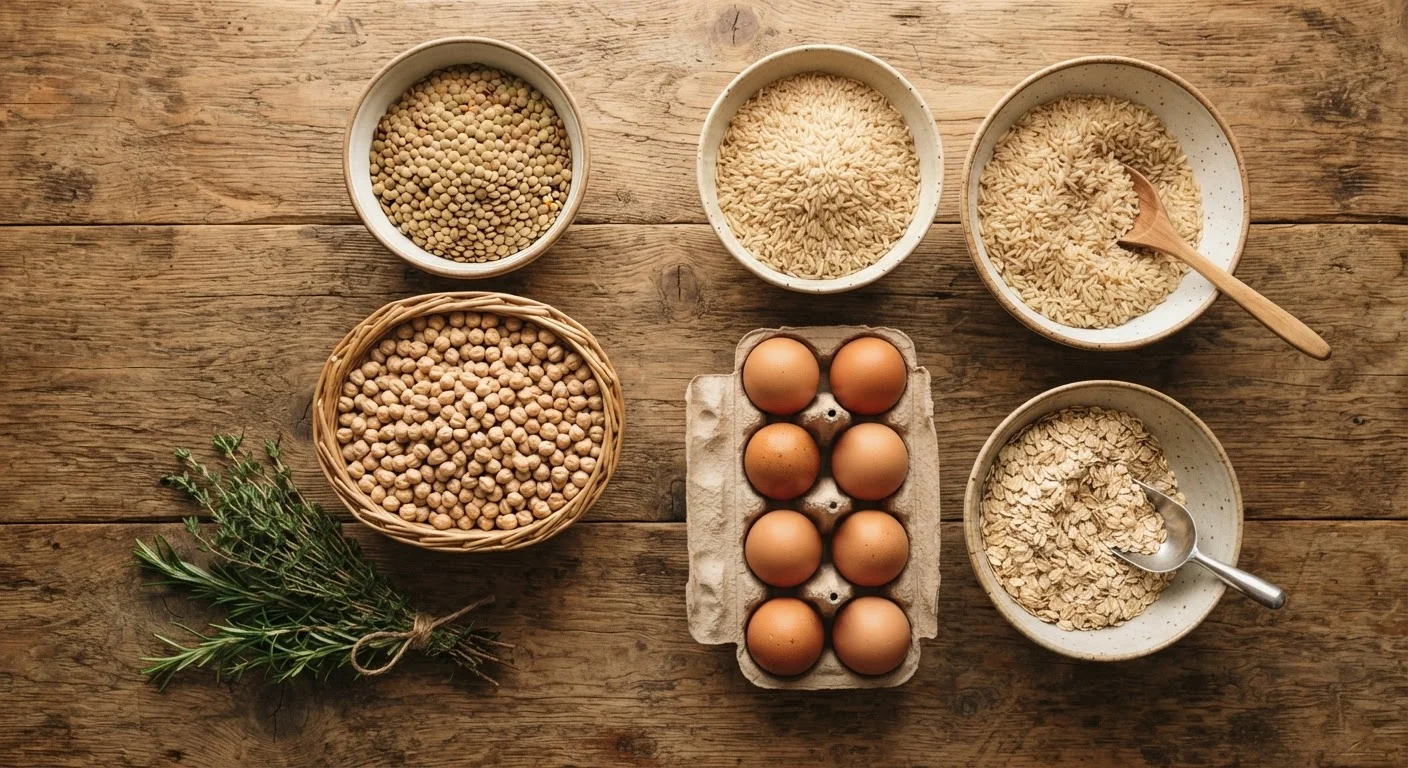
Photo: InsightsVault.com | Interesting Daily Reads editorial
Key Takeaways
- Pulses, whole grains, and eggs are among the most cost-effective protein and fiber sources available.
- Batch-cooking grains and legumes at the start of the week dramatically cuts daily meal prep time.
- Varying spices, sauces, and vegetables transforms the same base ingredients into distinct meals.
- A week of balanced eating can be built around fewer than ten pantry staples.
- Combining pulses with grains provides a complete amino acid profile without meat.
- Planning meals before shopping reduces waste and keeps grocery spend predictable.
Why These Three Staple Groups Work So Well Together
Pulses (lentils, chickpeas, black beans, split peas), whole grains (brown rice, oats, barley, whole-wheat pasta), and eggs are sometimes called the "holy trinity" of budget nutrition - and for good reason. Each group fills a distinct role on the plate while remaining accessible at almost any grocery store or food co-op.
Pulses supply plant-based protein, soluble fiber, and slow-digesting carbohydrates. Whole grains add complex carbohydrates, B vitamins, and additional fiber. Eggs contribute complete protein, healthy fats, and fat-soluble vitamins including B12, D, and A. Together, they cover most of the nutritional bases a healthy adult needs day to day. For a broader look at how these fit into an overall eating plan, see our nutritional foundation guide.
Combining pulses with grains - think rice and beans, lentil soup with barley, or hummus on whole-wheat bread - is particularly effective because plant proteins are often low in one or more essential amino acids. Pairing legumes with grains across the day creates a complementary protein pattern that supports muscle maintenance and general health. You don't need to combine them at every single meal; eating a variety across the day is sufficient according to mainstream nutrition guidance.
Flavor Is Your Most Powerful Tool
What You'll Need Before You Start
Before planning your week, gather your staples and basic equipment. Keeping costs down starts at the store - buying dried pulses rather than canned saves considerably over time, though canned options are a perfectly reasonable convenience when time is tight.
What you will need
Large saucepan or Dutch oven
Used to cook large batches of grains and pulses at the start of the week.
Airtight food-storage containers
Store cooked grains and pulses safely in the refrigerator for up to five days.
Slow cooker or Instant Pot
Allows hands-off batch cooking of dried beans and lentils with minimal attention.
Kitchen scale or measuring cups
Helps portion dry ingredients accurately to avoid cooking more than you can use.
Step-by-Step: Building a Week of Meals
The process below takes one planning session and one main cooking block, then lighter daily assembly. If you're also feeding a household, the family-focused nutrition guide shows how to scale these strategies without losing variety or balance.
Map out your week's meals in broad strokes
Before you shop or cook, spend 10 minutes sketching a loose meal map. You don't need to specify every dish - just decide which grain and which pulse will anchor each day. For example: lentils and brown rice Monday through Wednesday, chickpeas and barley Thursday through Saturday, eggs as a wildcard any morning or evening. This prevents over-purchasing and gives you a clear cooking target.
Soak dried pulses overnight (if using dried)
Dried chickpeas and black beans benefit from soaking 8-12 hours before cooking, which reduces cook time and can improve digestibility. Lentils and split peas do not require soaking. Rinse dried pulses under cold water, place them in a bowl, cover with at least twice their volume of cold water, and leave overnight. Drain and rinse again before cooking.
Batch-cook your grains and pulses
On a Sunday afternoon or your chosen prep day, cook a large batch of each staple. A standard approach: bring your soaked beans to a boil, reduce heat, and simmer until fully tender (typically 45-90 minutes depending on the variety). Simultaneously cook a large pot of your chosen grain according to package instructions. Let both cool to room temperature before transferring to airtight containers. Refrigerate and use within five days.
- Lentils: 1 cup dry yields roughly 2.5 cups cooked
- Chickpeas (from dried): 1 cup dry yields roughly 3 cups cooked
- Brown rice: 1 cup dry yields roughly 3 cups cooked
Build varied meals from your cooked base
Each day, pull portions of your precooked staples from the fridge and build meals by varying flavor profiles and add-ins. A few reliable combinations:
- Grain bowl: Brown rice + cooked chickpeas + frozen spinach (thawed) + olive oil and lemon
- Simple dal: Red lentils simmered with canned tomato, cumin, and garlic, served over rice
- Egg and grain scramble: Two eggs scrambled into day-old cooked barley with onion and smoked paprika
- Pulse soup: Cooked lentils simmered in vegetable broth with whatever vegetables are on hand
- Chickpea stir-fry: Chickpeas sautéed with frozen peas and soy sauce over rice
Integrate eggs to fill nutritional gaps and add speed
Eggs are your fastest-cooking protein source and ideal for days when your batch-cooked staples are running low. Hard-boil a batch of 6 eggs at the start of the week for grab-and-go protein. Use eggs to bridge meals: a fried egg on top of a grain bowl adds richness and complete protein; an omelette folded over leftover lentils makes a satisfying dinner in under 10 minutes.
Track what you use and refine next week's plan
At the end of the week, note which meals you actually made versus planned, what ingredients were left over, and what felt repetitive. Use those observations to adjust next week's map - perhaps swapping barley for oats, or rotating in black beans instead of chickpeas. Over two to three weeks, this feedback loop helps you build a reliable, low-waste rotation that suits your household's actual eating habits.
Keeping Variety High Without Adding Cost
The most common concern with staple-based eating is monotony. The solution lies in rotating your flavor profiles rather than your ingredients. A pot of cooked lentils can become a cumin-spiced dal on Monday, a lemon-herb salad topper on Wednesday, and a tomato-based pasta sauce base on Friday - simply by changing the aromatics and liquids you cook them in or add afterward.
Eggs are equally versatile: scrambled with leftover grains for a quick breakfast, poached on a pulse-and-vegetable hash for lunch, or hard-boiled as a portable protein snack. For a deeper look at maximizing protein variety on a limited budget, the protein-on-a-budget guide covers additional low-cost sources worth rotating in.
Frozen vegetables are your best ally here. They cost less than fresh equivalents in many cases, have comparable nutritional profiles, and can be stirred into grain bowls, stews, or egg scrambles directly from the freezer. Adding even a single rotating vegetable each day - spinach one day, frozen peas the next - meaningfully expands nutritional breadth without meaningfully expanding your grocery bill. These habits also tie into broader strategies for cutting daily household costs that go beyond food alone.
This article is for general informational purposes only and does not constitute medical or dietary advice. Consult a qualified healthcare professional or registered dietitian for guidance tailored to your individual health needs.
The content provided on our blog site traverses numerous categories, offering readers valuable and practical information. Readers can use the editorial team’s research and data to gain more insights into their topics of interest. However, they are requested not to treat the articles as conclusive. The website team cannot be held responsible for differences in data or inaccuracies found across other platforms. Please also note that the site might also miss out on various schemes and offers available that the readers may find more beneficial than the ones we cover.