
Bodyweight Training: What It Is and Why It Works

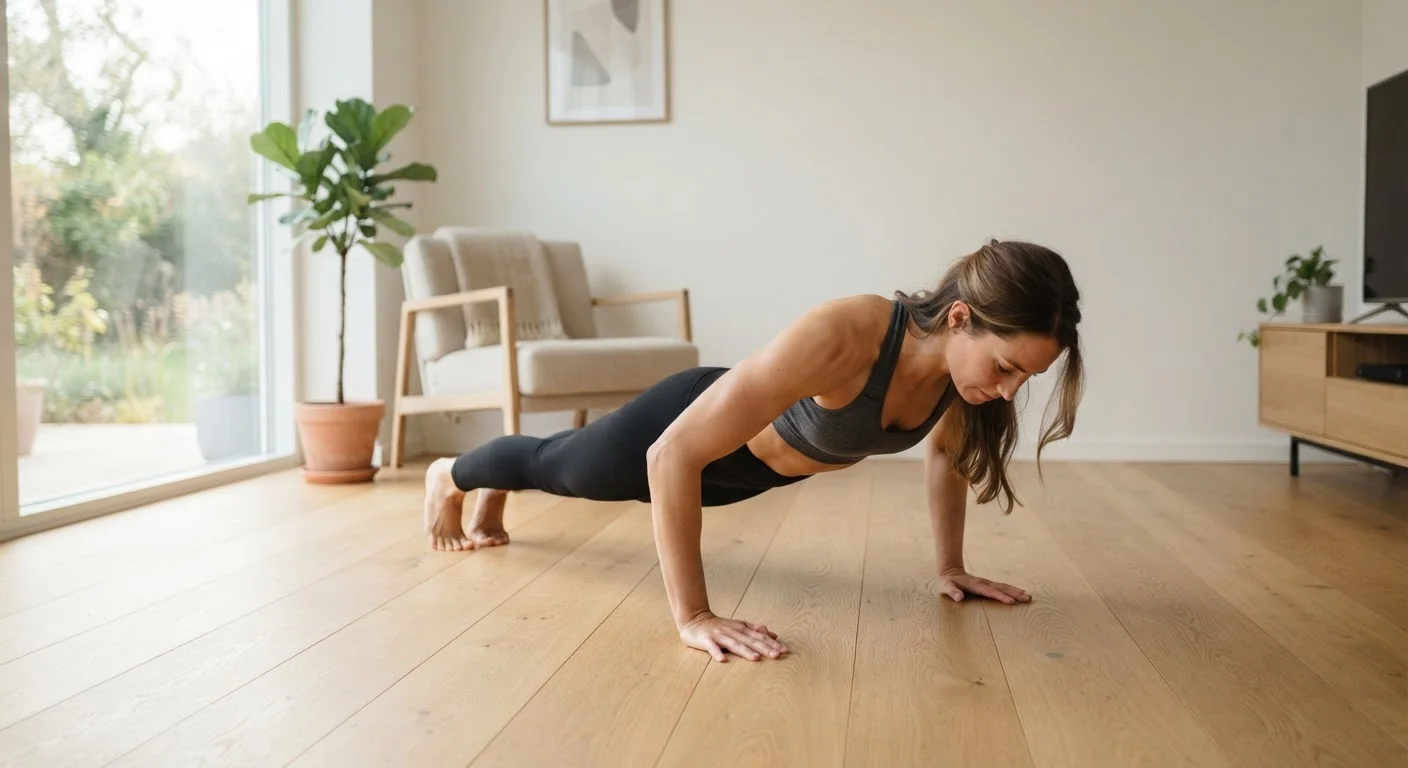
Photo: InsightsVault.com | Interesting Daily Reads editorial
Key Takeaways
- Bodyweight training builds real strength by using your own mass as resistance against gravity.
- Progressive overload - the key driver of fitness gains - is achievable without any equipment.
- Research supports bodyweight exercise as effective for muscular strength, endurance, and cardiovascular health.
- It eliminates gym costs and removes barriers like commute time, schedules, and crowded facilities.
- Beginners and experienced exercisers alike can scale bodyweight movements to match their level.
- Always consult a healthcare professional before starting a new exercise program if you have health concerns.
How Bodyweight Training Actually Works
Strength and fitness adaptations happen when muscles are challenged beyond their current capacity - a principle called progressive overload. Most people associate this with adding more weight to a barbell, but resistance is resistance. Your muscles respond to the force they must generate, not the source of that force.
In bodyweight training, you manipulate overload differently: by changing the angle of a movement (elevating feet in a push-up increases difficulty), adjusting leverage (moving from two-leg to single-leg squats), slowing the tempo of each rep, reducing rest time, or adding explosive variations like jump squats. These changes continuously challenge the neuromuscular system and drive adaptation.
Research published in exercise physiology literature consistently shows that resistance training without external weights produces statistically significant improvements in muscular strength and endurance - particularly for people who are new to structured exercise or returning after a break. The mechanisms are the same as weighted training: micro-tears in muscle fibers, protein synthesis during recovery, and gradual increases in neural efficiency.
Track Progress Without a Scale or Machine
What the Evidence Says About Its Effectiveness
Bodyweight training is not a watered-down alternative - it's a well-studied, legitimate modality. A review of resistance training research supports that multi-joint bodyweight movements (such as push-ups, pull-ups, and squats) recruit large amounts of muscle mass and produce comparable cardiovascular and strength benefits to machine-based routines when volume and intensity are matched.
Push-ups, one of the most studied bodyweight exercises, have been shown to activate the pectoralis major, triceps, and anterior deltoids at levels comparable to bench press variations at similar relative intensities. Squats and lunges engage the quadriceps, hamstrings, and glutes effectively without additional load for most beginner-to-intermediate exercisers.
“The best exercise program is one that you will actually do consistently. Accessibility and sustainability matter as much as the program design itself.”
— American College of Sports Medicine, Leading professional organization for exercise science and sports medicine
For cardiovascular health, higher-intensity bodyweight circuits - combining movements with minimal rest - have been shown to elevate heart rate into aerobic training zones and improve VO₂ max (a measure of cardiovascular fitness) in sedentary populations. This matters because cardiovascular disease remains the leading cause of death in the US, and accessible exercise options lower the barrier to meeting physical activity guidelines.
Why It Makes Financial Sense
The average US gym membership costs between $40 and $70 per month, with many facilities charging initiation fees on top. Over a year, that's a meaningful line item in a household budget - and that figure doesn't include commute costs, workout gear marketed as essential, or fees for classes and personal training.
Bodyweight training eliminates those recurring costs entirely. A small, clear floor space is the only infrastructure required. This isn't just a short-term convenience - it removes a structural barrier that causes many people to quit exercising: the friction of getting to a gym, the sunk-cost pressure of a paid membership, and the intimidation factor of a commercial fitness environment.
$500-$800+
Typical annual US gym membership cost
Based on average monthly membership fees ranging from $40-$70, plus common initiation fees reported by consumer fitness surveys.
73%
US adults not meeting strength training guidelines
According to CDC physical activity data, most American adults do not meet the recommended muscle-strengthening activity of two or more days per week.
$0
Equipment cost to start bodyweight training
A flat floor surface and enough space to lie down is the only infrastructure required for a full-body bodyweight routine.
For readers building a sustainable habit on a tight budget, the accessibility of bodyweight training is itself a health benefit. Research consistently links exercise consistency - not exercise type - with the strongest long-term health outcomes. Removing barriers to showing up is a measurable advantage. See our full overview of low-cost fitness options for context on how bodyweight training fits into a broader affordable fitness strategy.
Scaling for Any Fitness Level
One common misconception is that bodyweight training is only for beginners or only for advanced athletes - in reality, it scales across the full spectrum. Every foundational movement has easier and harder variations.
- Push-ups: Start from a wall or incline surface; progress to standard, then decline, then single-arm variations.
- Squats: Begin with assisted squats holding a doorframe; progress to standard, pause, jump, or single-leg (pistol) squats.
- Core work: Move from knee planks to full planks to hollow body holds to hanging leg raises.
This built-in scalability makes bodyweight training unusually inclusive. People returning from injury (with a clinician's guidance), older adults building functional strength, and seasoned athletes using it for active recovery can all find an appropriate entry point. For a structured approach to putting these movements together week by week, see how to build a weekly no-equipment exercise routine.
If you're starting from scratch and want foundational principles before diving into specific movements, our guide for complete beginners walks through goal-setting and first steps without any spending required.
This article is for general informational purposes only and does not constitute medical advice. Consult a qualified healthcare professional before beginning any new exercise program, particularly if you have an existing health condition, injury, or other medical concerns.
Frequently Asked Questions
The content provided on our blog site traverses numerous categories, offering readers valuable and practical information. Readers can use the editorial team’s research and data to gain more insights into their topics of interest. However, they are requested not to treat the articles as conclusive. The website team cannot be held responsible for differences in data or inaccuracies found across other platforms. Please also note that the site might also miss out on various schemes and offers available that the readers may find more beneficial than the ones we cover.