
Reducing Cooling Costs Without Cranking the Air Conditioner

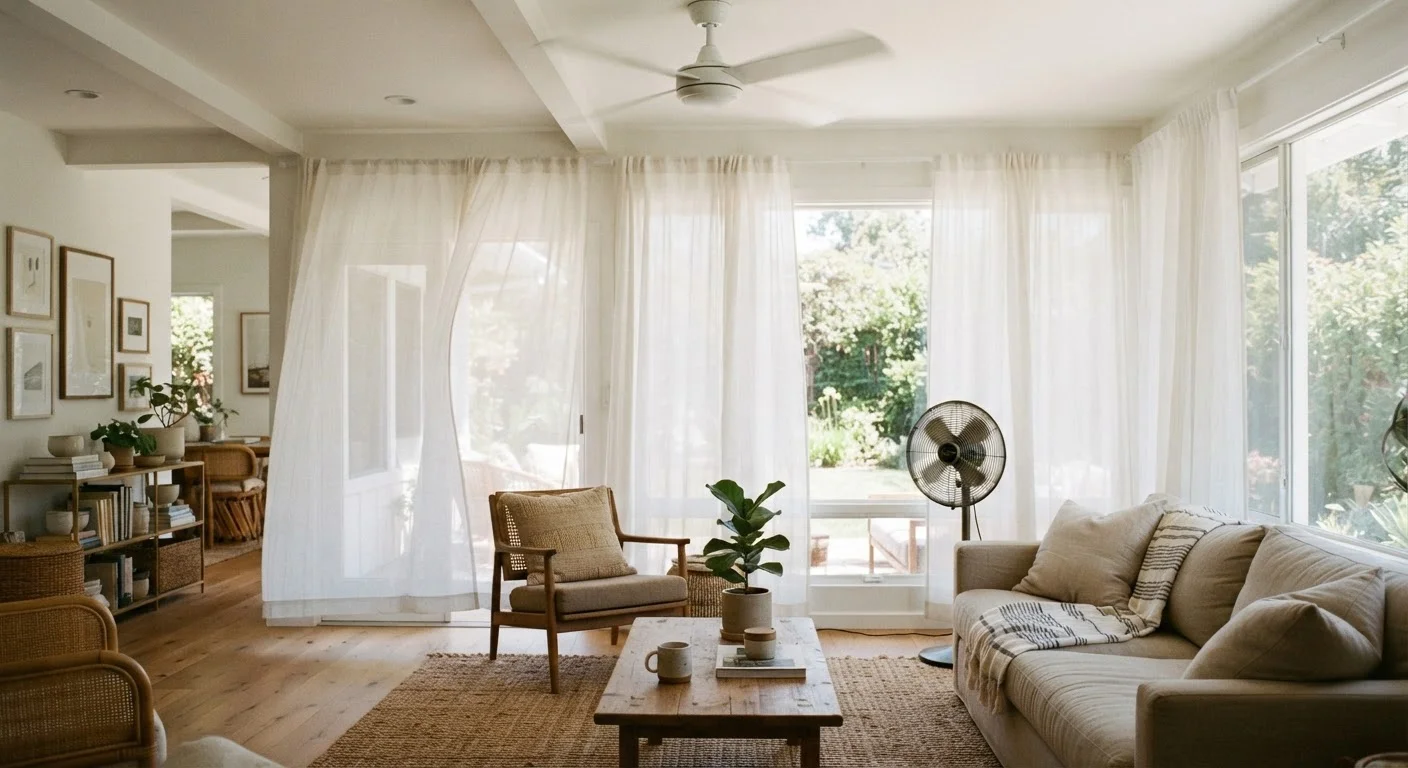
Photo: InsightsVault.com | Interesting Daily Reads editorial
Key Takeaways
- Blocking direct sunlight before it enters is more effective than cooling air after it heats up.
- Strategic cross-ventilation at night can flush accumulated heat without any energy cost.
- Ceiling fans allow you to raise your thermostat by several degrees without noticeable discomfort.
- Heat-generating appliances used during peak hours add meaningfully to indoor temperature.
- Air sealing and attic conditions affect how hard your AC has to work all season.
Why Your Home Gets So Hot - and Where to Intervene
Before adjusting any setting or buying any equipment, it helps to understand where summer heat actually comes from. Solar gain - sunlight passing through windows and heating interior surfaces - is the dominant driver in most homes. A single unshaded south- or west-facing window can add more heat load than an exterior wall. A secondary source is internal heat: cooking, laundry, lighting, and electronics all generate heat that your AC must overcome.
That framing matters because it points you toward the highest-leverage interventions: stop heat from entering rather than working harder to remove it after it arrives. The steps below work on that principle, in rough order of cost and effort. See also our complete year-round energy savings roadmap for context on how summer strategies fit into your overall utility budget.
What you will need
Step-by-Step: Building a Cooler Home Without the AC Bill
Block solar gain before 10 a.m.
Close blinds, shades, or curtains on east-facing windows in the morning and west-facing windows by midday. Exterior solutions - awnings, exterior shutters, or shade cloth - are more effective than interior ones because they stop heat before it crosses the glass. Reflective or blackout interior cellular shades are the next-best option and cost relatively little to install.
Run ceiling fans correctly - and only when rooms are occupied
Set ceiling fans to run counterclockwise (when viewed from below) in summer. This pushes air straight down, creating a wind-chill effect that makes a room feel 3-4°F cooler without changing the actual temperature. Raise your thermostat setting to match - every degree higher can reduce AC energy use by roughly 3%. Turn fans off when you leave the room: fans cool people, not spaces.
Flush accumulated heat with night ventilation
In climates where outdoor temperatures drop noticeably after sunset, opening windows on opposite sides of the house creates cross-ventilation that can purge stored heat efficiently. Place a box fan in a bedroom window facing outward to exhaust warm interior air, and open a window on the opposite side of the house to draw cooler air in. Do this after 9 p.m. and close everything before outdoor temperatures begin climbing again in the morning.
Shift heat-generating tasks to early morning or evening
Ovens, dryers, dishwashers, and even desktop computers generate significant heat. Running them during the hottest part of the day - typically 2-6 p.m. - adds to the heat your AC must remove. Move laundry to before 8 a.m. or after 8 p.m., use the microwave or outdoor grill instead of the oven, and run the dishwasher on the air-dry setting late at night. For room-by-room guidance on where appliance heat accumulates, see energy-efficient practices for every room.
Optimize your thermostat schedule
If your home has a programmable or smart thermostat, set it to allow temperatures to rise by 4-6°F when the house is unoccupied during the day, then begin pre-cooling about 30 minutes before you return. Pre-cooling during off-peak electricity hours (often mid-morning) rather than during peak afternoon demand can reduce both energy use and cost in time-of-use rate areas. Avoid setting the thermostat dramatically lower when you get home - the AC does not cool faster; it just runs longer and colder than intended.
Small Habits Compound Over a Season
Bigger-Picture Improvements Worth Knowing About
The steps above address immediate, low-cost tactics. Two structural factors have an outsized effect on long-term cooling costs and are worth understanding even if you tackle them separately.
Attic heat loading: An under-insulated or poorly ventilated attic can reach temperatures of 140°F or higher on summer afternoons, radiating heat through your ceiling into living spaces below. Addressing this can reduce cooling loads considerably, though the right solution depends on your roof type and climate. Our article on roof ventilation and attic insulation trade-offs lays out the options and their limitations honestly.
Air sealing: Gaps around electrical outlets, plumbing penetrations, and attic hatches allow hot, humid outdoor air to infiltrate continuously. Sealing these with caulk or foam takes a few hours and reduces the burden on your cooling system throughout the season. For a broader checklist of affordable efficiency upgrades, see low-cost ways to improve your home's energy efficiency.
Together, these measures and the daily habits in the steps above can meaningfully reduce how often - and how hard - your air conditioner needs to run. The goal is not to eliminate AC but to make it a last resort rather than a constant necessity.
The content provided on our blog site traverses numerous categories, offering readers valuable and practical information. Readers can use the editorial team’s research and data to gain more insights into their topics of interest. However, they are requested not to treat the articles as conclusive. The website team cannot be held responsible for differences in data or inaccuracies found across other platforms. Please also note that the site might also miss out on various schemes and offers available that the readers may find more beneficial than the ones we cover.