
What a Home Energy Audit Actually Involves

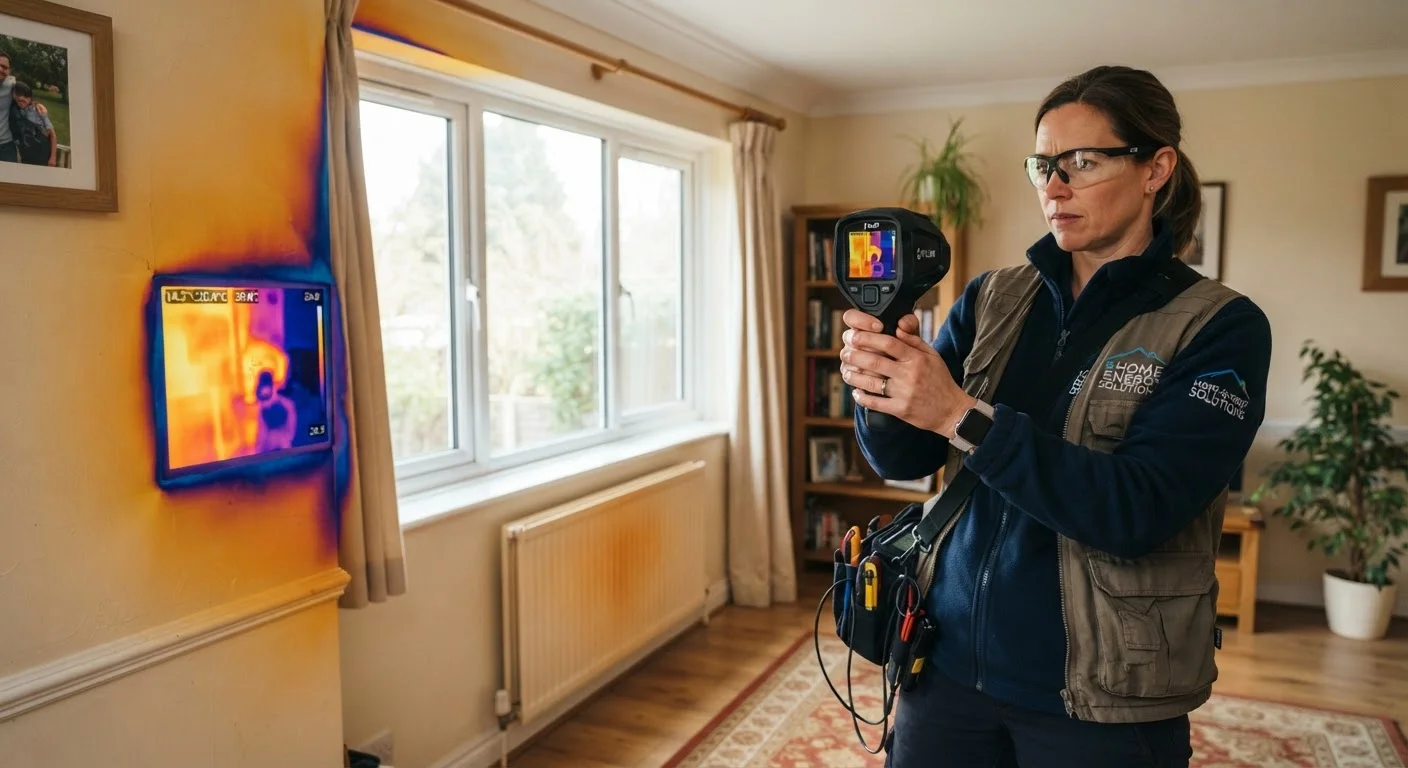
Photo: InsightsVault.com | Interesting Daily Reads editorial
Key Takeaways
- A professional audit identifies specific locations where your home loses conditioned air and wastes energy.
- Auditors use diagnostic tools like blower door tests and thermal cameras - not just visual inspection.
- The audit report ranks improvements by cost-effectiveness, so you know where to spend first.
- Utility companies in many states offer free or subsidized audits to residential customers.
- DIY audits can catch obvious issues but cannot replace the diagnostic accuracy of professional equipment.
What Auditors Actually Look At
If you're new to the concept, start with our introduction to home energy efficiency before diving into what an audit covers.
An energy auditor examines your home as an interconnected system rather than a collection of separate problems. The inspection typically covers:
- Building envelope: Walls, attic, basement, and crawl space insulation levels; gaps and cracks where conditioned air escapes
- HVAC equipment: Age, condition, filter status, and duct integrity of your heating and cooling systems
- Windows and doors: Weatherstripping condition, frame gaps, and glazing type
- Water heating: Tank age, insulation jacket, and pipe insulation on hot water lines
- Appliances and lighting: Major appliances and lighting types that contribute to baseload electricity consumption
Before the physical walkthrough, most auditors review 12 months of your utility bills. This establishes a baseline and flags usage patterns - for example, a spike in winter gas consumption that points toward heating system inefficiency.
The Diagnostic Tools Auditors Use
The difference between a professional audit and a homeowner walkthrough comes down to equipment. Two tools drive most of the diagnostic value:
Blower Door Test
A large fan is temporarily mounted in an exterior doorframe and depressurizes the home to a standard pressure difference. This forces air through every gap and crack simultaneously, making leaks detectable. The auditor measures the total air leakage rate in cubic feet per minute - a number that directly correlates with heating and cooling loss. During the test, a smoke pencil or anemometer can pinpoint exactly where leaks are concentrated.
Infrared Thermal Camera
Thermal imaging detects temperature differences across surfaces. Cold spots in walls reveal missing insulation; warm spots in ceilings during winter indicate heat escaping upward. The camera makes invisible problems visible without cutting into walls.
25-40%
Typical home heating/cooling energy lost to air leaks
According to the U.S. Department of Energy, air leakage accounts for a substantial share of heating and cooling loss in most existing homes.
~$150-$400
Typical cost of a professional energy audit
Costs vary by region and audit depth; utility-sponsored programs often reduce or eliminate this expense for eligible customers.
Together, these tools let the auditor quantify problems rather than estimate them - which makes the resulting recommendations far more actionable than a visual inspection alone.
How to Read Your Audit Report
After the on-site work, you receive a written report. A quality report does three things: it describes each problem found, estimates the energy and dollar impact, and ranks improvements by payback period or cost-effectiveness.
Common findings include:
- Attic air sealing opportunities (often the single highest-return fix in older homes)
- Insufficient attic insulation depth
- Duct leakage in unconditioned spaces like garages or attics
- Bypasses around recessed lighting or plumbing chases
Use the priority ranking in the report - not the item that sounds most dramatic - to decide where to act first. Air sealing, for instance, routinely outperforms window replacement on a dollar-per-dollar basis despite being far less visible.
Act on Sequencing, Not Just the List
To track whether improvements actually move the needle, learn to decode your utility bill before and after any work is done.
Getting an Audit Without Paying Full Price
Many US utility companies offer free or subsidized residential energy audits as part of demand-reduction programs - contact your gas or electric provider directly to ask what's available in your area. State energy offices and some municipalities also run programs that reduce or eliminate the upfront cost.
If you pay for an audit independently, the report becomes useful documentation when applying for federal energy efficiency tax credits or utility rebates on qualifying upgrades. Keep a copy of the report alongside contractor invoices for this purpose.
Once you have your audit results in hand, a year-round energy savings roadmap can help you schedule improvements strategically across seasons rather than tackling everything at once.
Frequently Asked Questions
The content provided on our blog site traverses numerous categories, offering readers valuable and practical information. Readers can use the editorial team’s research and data to gain more insights into their topics of interest. However, they are requested not to treat the articles as conclusive. The website team cannot be held responsible for differences in data or inaccuracies found across other platforms. Please also note that the site might also miss out on various schemes and offers available that the readers may find more beneficial than the ones we cover.