
In-House Vet Dispensing vs. External Pharmacy for Pet Prescriptions

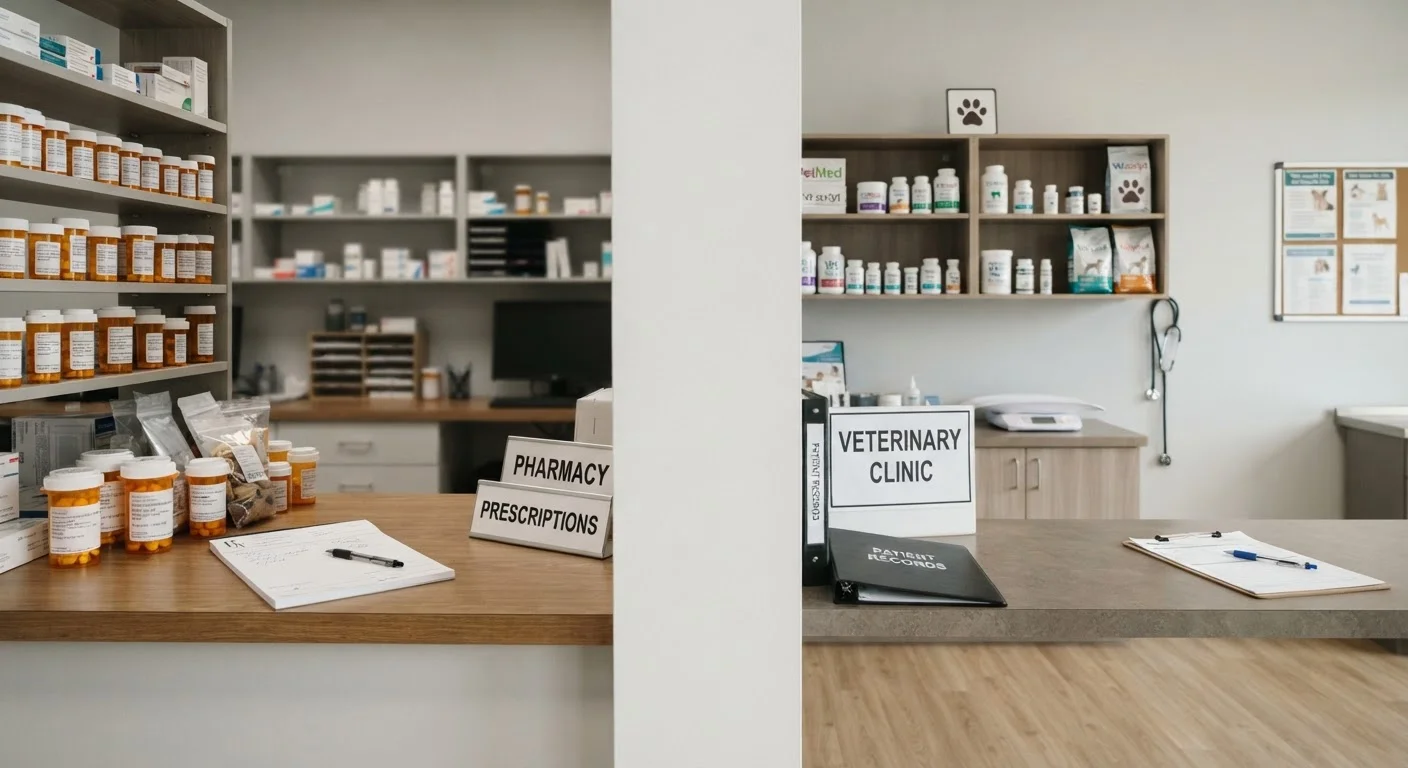
Photo: InsightsVault.com | Interesting Daily Reads editorial
Key Takeaways
- In-house vet dispensing is often more expensive than filling the same prescription at an outside pharmacy.
- By law in most US states, vets must provide a written prescription upon request - you are not required to buy medications from your clinic.
- External pharmacies, including NABP-accredited online pharmacies, frequently offer meaningful savings on maintenance medications.
- Some medications require compounding or have special handling needs that may make the vet clinic the more practical option.
- Comparing prices before your visit can help you make an informed decision at the point of prescribing.
Why the Dispensing Decision Matters
When a veterinarian prescribes medication for your pet, you typically face an immediate choice: fill it right there at the clinic, or take a written prescription to an outside pharmacy. Many pet owners default to in-house dispensing without realizing the price difference can be substantial - sometimes two to three times more for the same drug at the same dosage.
The markup exists because clinics operate on thin margins and use medication sales to help offset overhead. That's an understandable business reality, but it doesn't mean pet owners are obligated to absorb it. Most US states give veterinarians a legal obligation to write an outpatient prescription upon request, and they cannot legally refuse to do so just because you plan to fill it elsewhere. Knowing that changes the dynamic considerably.
For context on how vet billing practices more broadly can affect your costs, see common upsells and charges to question at the vet.
In-House Dispensing: When It Works in Your Favor
Convenience is the primary argument for filling prescriptions at your vet clinic. If your pet just received a diagnosis and needs to start treatment immediately - say, a course of antibiotics after a dental procedure or a short-run anti-inflammatory - walking out with the medication in hand removes a logistical step. For one-time treatments lasting seven to fourteen days, the price difference may not justify the extra errand.
In-house dispensing also makes sense when a medication requires specific compounding (custom concentration, flavored formulation, or an unusual delivery form) and your clinic has an existing relationship with a trusted compounding pharmacy that handles the preparation. In those cases, the clinic often manages the process directly, which can simplify things for the pet owner.
| In-House Vet Dispensing | External Retail Pharmacy | NABP-Accredited Online Pharmacy | |
|---|---|---|---|
| Typical cost | Often highest markup | Competitive, especially for generics | Often lowest for maintenance drugs |
| Convenience | Immediate, no extra errand | Requires trip to pharmacy | Delivered to door, takes days |
| Speed of access | Fastest - same visit | Same or next day | Several days for shipping |
| Suitable for compounded meds | Yes, clinic manages process | Limited availability | Some specialize in compounding |
| Safety verification | Clinic-stocked, licensed | Licensed state pharmacy | Check for Vet-VIPPS accreditation |
| Best use case | Short-course or urgent meds | Human-equivalent generics | Long-term maintenance drugs |
Finally, for exotic pets or less common species, some medications simply aren't stocked at retail pharmacies, making clinic dispensing the only practical option.
External Pharmacies: The Case for Savings
The financial case for using an outside pharmacy is strongest for maintenance medications - drugs your pet will take for months or years. Common examples include thyroid medication (such as methimazole for cats), phenobarbital for seizure control, oclacitinib for allergies, and joint supplements or NSAIDs for chronic pain. These ongoing costs add up quickly, and the savings from an external pharmacy can be meaningful on an annual basis.
Retail chain pharmacies are one option worth checking. Many large pharmacy chains carry human-equivalent drugs that are FDA-approved for animal use and can fill a veterinary prescription at competitive prices. Some even have generic programs that cover certain pet-applicable medications at low flat fees per month.
NABP-accredited online pharmacies (the National Association of Boards of Pharmacy runs a Vet-VIPPS program specifically for veterinary pharmacies) are another avenue. The accreditation signals that a pharmacy meets legitimate licensing and safety standards - a meaningful filter given that unaccredited online sources carry real risks of counterfeit or improperly stored medications.
Check the Vet-VIPPS List Before Ordering Online
For a practical look at when generic formulations can cut costs further, see generic vs. brand-name pet medications.
Practical Steps Before You Fill
A few straightforward habits can help you make the most cost-effective choice each time:
- Ask for a written prescription at every visit where medication is prescribed. You are not obligated to use it, but having it gives you the option to compare prices.
- Check prices before your appointment if you know a refill is coming. Many retail pharmacies have online price tools. You can also call your clinic ahead to ask their dispensing price for a specific medication and dosage.
- Verify pharmacy accreditation before ordering online. Look for the Vet-VIPPS seal on any online veterinary pharmacy you consider.
- Factor in shipping time for online orders. If your pet needs medication urgently, local retail pharmacies or the clinic itself will be faster.
- Discuss manufacturer restrictions with your vet. Some flea, tick, and heartworm preventives are only sold through licensed veterinary channels due to manufacturer agreements, limiting your outside-pharmacy options.
Additional low-cost care options - including community clinics and assistance programs - are covered in this overview of affordable veterinary care resources.
This article is for general informational purposes only and does not constitute veterinary or financial advice. Always consult a licensed veterinarian regarding your pet's specific health needs and treatment plan.
The content provided on our blog site traverses numerous categories, offering readers valuable and practical information. Readers can use the editorial team’s research and data to gain more insights into their topics of interest. However, they are requested not to treat the articles as conclusive. The website team cannot be held responsible for differences in data or inaccuracies found across other platforms. Please also note that the site might also miss out on various schemes and offers available that the readers may find more beneficial than the ones we cover.