
Pet Insurance vs. a Dedicated Savings Fund: Which Approach Works Better?

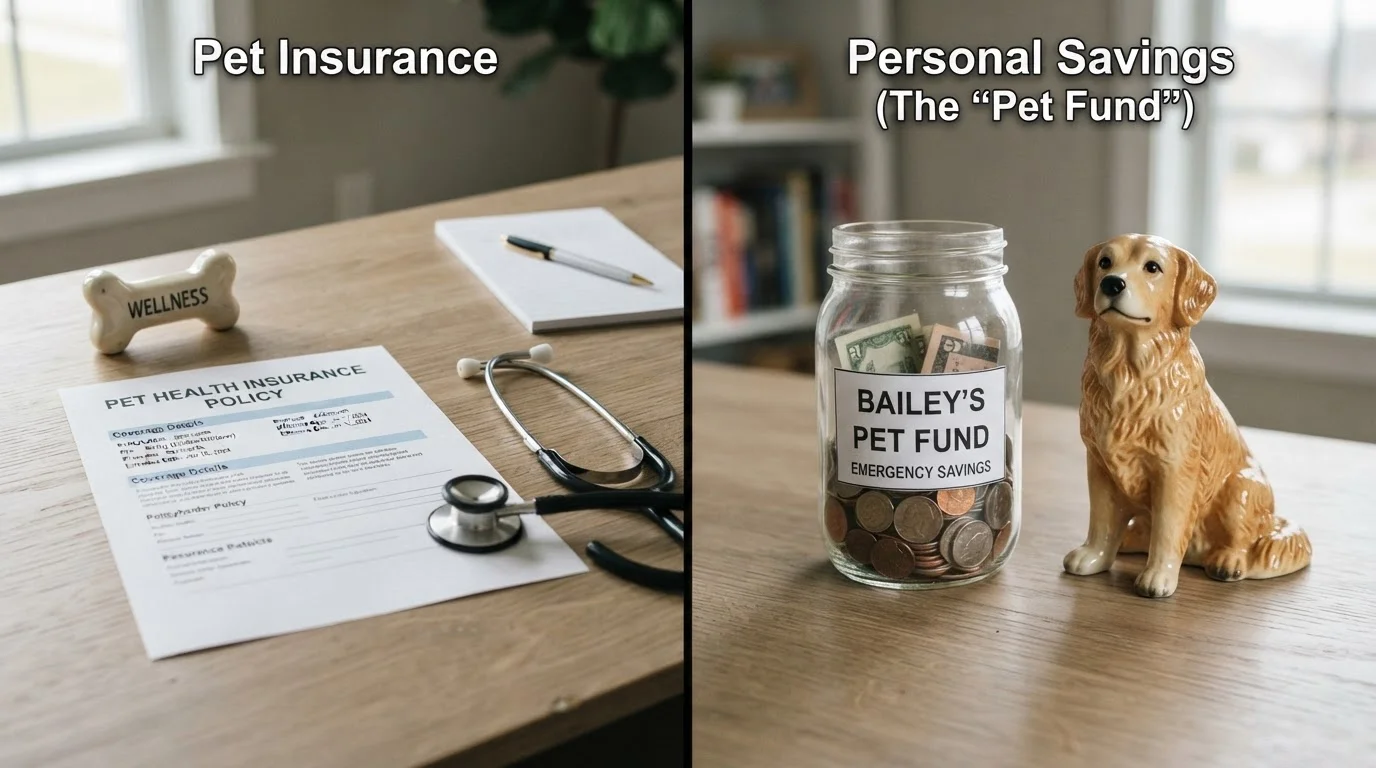
Photo: InsightsVault.com | Interesting Daily Reads editorial
Key Takeaways
- Pet insurance transfers financial risk to an insurer but requires monthly premiums, deductibles, and acceptance of coverage exclusions.
- A dedicated savings fund keeps money in your control but may not be large enough when an expensive emergency strikes early.
- Breed, age, and your pet's health history meaningfully affect which approach offers better financial value.
- Many pet owners benefit from a hybrid model: a small insurance policy paired with a modest savings fund.
- Routine and preventive care costs are rarely well-covered by insurance - factor those into any plan you build.
How Each Approach Actually Works
Before comparing outcomes, it helps to be clear on the mechanics. Pet insurance works like most indemnity insurance: you pay a monthly or annual premium, and in exchange the insurer covers a defined percentage of eligible vet costs after you meet your deductible. Policies vary significantly in what they exclude - hereditary conditions, dental disease, and anything deemed pre-existing at enrollment are common carve-outs. For a deeper look at policy structures, see how pet insurance and self-funded savings each work.
A dedicated pet savings fund, by contrast, is simply a separate savings account - ideally high-yield - where you deposit a fixed amount each month to cover future vet costs. You own every dollar, it earns interest rather than disappearing into premiums, and there are no coverage disputes. The trade-off: the fund must be large enough to actually absorb a real emergency, and building that cushion takes time. If your pet needs a $5,000 surgery in month three, the math can be brutal.
| Criterion | Pet Insurance | Dedicated Savings Fund |
|---|---|---|
| Monthly cost | Fixed premium ($30-$100+) | You set the deposit amount |
| Coverage for large emergencies | Strong from day one (post-deductible) | Depends on fund balance built |
| Routine care coverage | Limited or add-on only | Full flexibility |
| Pre-existing condition handling | Typically excluded | No restrictions |
| Money returned if unused | No - premiums are spent | Yes - balance remains yours |
| Early-year catastrophic risk | Covered (after deductible) | High if fund is still small |
| Administrative complexity | Claims, paperwork, reimbursement | None |
| Best scenario for value | Major illness or injury occurs | Pet stays healthy long-term |
The Core Financial Trade-Off
The honest comparison comes down to risk timing. Insurance is most valuable if a large expense happens early or happens at all within your policy period. Savings funds win financially if your pet stays relatively healthy and you accumulate years of unspent premiums. Neither outcome is guaranteed.
$1,500-$5,000
Typical emergency vet visit cost range
According to veterinary industry surveys, common emergencies such as foreign body ingestion or orthopedic injury routinely fall in this range at general practices, with specialist care often higher.
~$500-$700
Average annual dog insurance premium (accident & illness)
The North American Pet Health Insurance Association (NAPHIA) has reported average annual premiums in this range for dogs, though costs vary substantially by breed, age, and location.
40%+
Share of pet owners without any financial safety net for vet costs
Multiple consumer surveys suggest a significant share of US pet owners could not comfortably cover an unexpected $1,000+ vet bill without borrowing or payment plans.
Premium costs vary widely based on species, breed, age, and location, but accident-and-illness plans for dogs commonly run $40-$80 per month; cats typically run lower. Annual out-of-pocket maximums, co-insurance rates (usually 70-90% reimbursement), and deductible structures all shape the true cost. When evaluating, calculate your realistic worst-case scenario - what would a cruciate ligament repair or cancer treatment cost at a clinic near you? - then ask whether your savings fund could absorb it within the first 12 to 24 months of saving.
For guidance on structuring your monthly contributions, saving a fixed amount vs. saving a percentage of income lays out the real trade-offs between both approaches.
Factors That Shift the Decision
Pet age and breed: Insuring a puppy or kitten before any conditions develop locks in eligibility. Certain breeds - French Bulldogs, Persian cats, German Shepherds - carry documented predispositions to expensive conditions. For these animals, insurance is worth serious consideration. Mixed breeds and younger pets with no health history can be better candidates for a savings-first strategy.
Your current financial cushion: If you already maintain a solid emergency fund, redirecting a portion toward a pet-specific savings bucket is a low-friction extension of habits you've already built. If your broader emergency savings are thin, insurance provides a floor that self-funding can't immediately replicate.
Your risk tolerance: Some people sleep better knowing a policy exists. Others find monthly premiums psychologically frustrating, especially in healthy years. Neither response is irrational - financial decisions involve behavior, not just math.
Routine versus emergency costs: Insurance rarely pencils out for predictable, routine expenses. Annual wellness visits, flea prevention, and dental cleanings are costs you can plan for. Reserving insurance for genuine emergencies - and self-funding routine care - often produces better value than comprehensive plans. See stretching your pet care budget without cutting corners on health for practical ideas on managing those predictable costs efficiently.
What 'Pre-Existing Condition' Means in Practice
Building a Plan That Reflects Your Situation
There's no universally correct answer - but there is a practical framework. Start by estimating your pet's likely annual costs using realistic local vet pricing. If you haven't done this before, getting started with pet health budgeting provides a structured approach for mapping out routine, preventive, and emergency cost scenarios.
From there, identify your financial exposure gap: the difference between what you could absorb today from savings and the upper range of a realistic emergency. If that gap is large - say, $4,000 or more - insurance likely provides meaningful protection. If it's modest, a disciplined savings schedule may close it within a year or two and make premiums unnecessary.
A hybrid approach is worth considering: a basic accident-only or accident-and-illness policy with a high deductible (which lowers premiums substantially) combined with a modest savings account for routine care and smaller bills. This narrows catastrophic risk while keeping monthly costs reasonable. Also be cautious of overspending traps at the vet clinic - knowing which add-on services to question helps any budget strategy work better.
This article is for general informational purposes only and is not financial or veterinary advice. For decisions about insurance coverage or your pet's health needs, consult a licensed insurance professional and a qualified veterinarian.
The content provided on our blog site traverses numerous categories, offering readers valuable and practical information. Readers can use the editorial team’s research and data to gain more insights into their topics of interest. However, they are requested not to treat the articles as conclusive. The website team cannot be held responsible for differences in data or inaccuracies found across other platforms. Please also note that the site might also miss out on various schemes and offers available that the readers may find more beneficial than the ones we cover.