
Community Clinics, Mobile Vans, and Spay-Neuter Events: A Field Guide

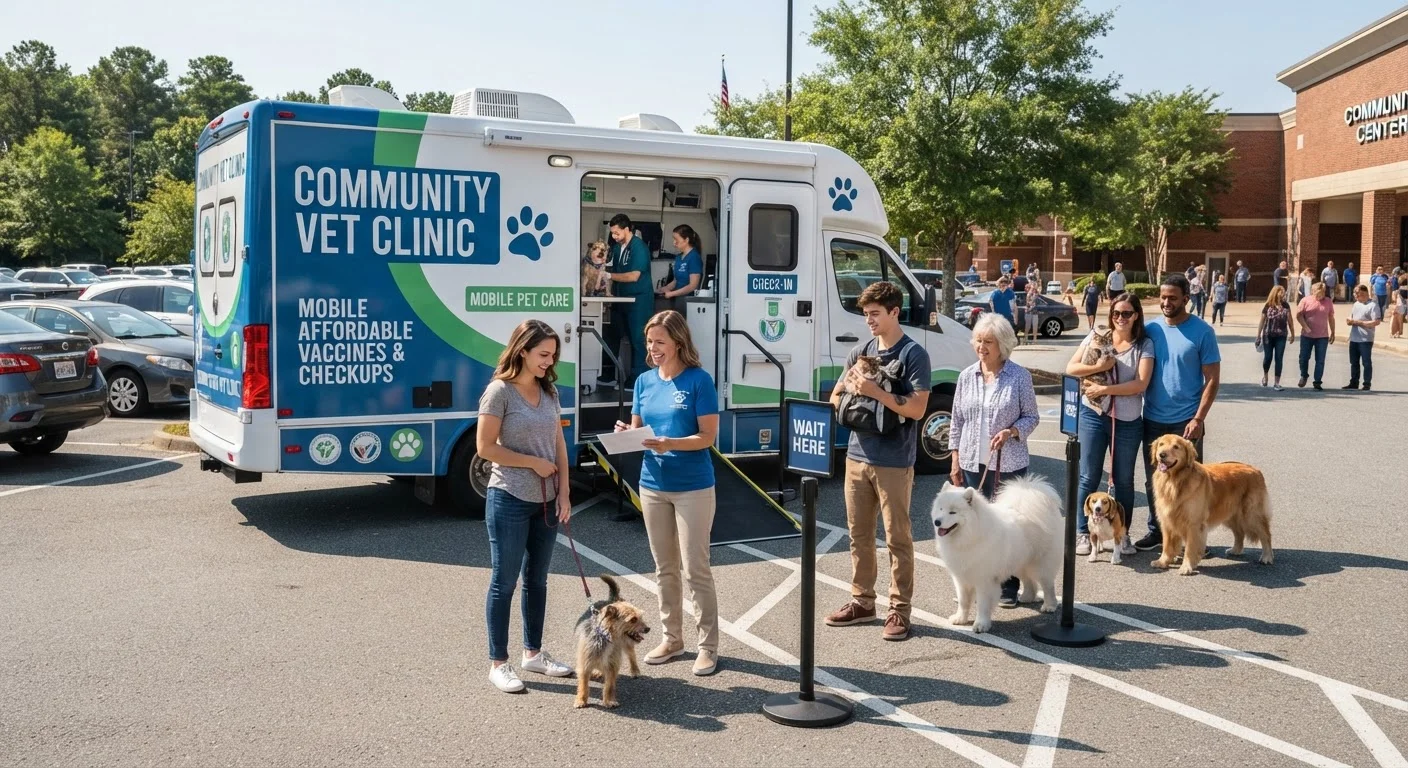
Photo: InsightsVault.com | Interesting Daily Reads editorial
The Three Main Types of Veterinary Outreach Programs
Low-cost and free veterinary services don't come from a single source - they're delivered through several distinct program types, each with different scopes, funding models, and service limits. Knowing which type you're looking for helps you search more efficiently and set realistic expectations before you show up.
| Common Services Offered | Vaccines, microchipping, spay/neuter, parasite prevention |
| Typical Cost Range | Free to $50 depending on program and income (Varies widely by region and program) |
| Primary Funding Sources | Government grants, private foundations, shelter budgets |
| Eligibility Documentation | Often SNAP card, Medicaid, or proof of income (Requirements vary by program) |
| Where to Search | County animal services, ASPCA finder, local shelters |
| Service Limitations | Generally preventive and wellness only; no emergency care |
Fixed Community Clinics
These are brick-and-mortar facilities, typically operated by nonprofits, humane societies, or municipal animal services departments. They maintain regular hours and offer a consistent menu of services - usually vaccinations, parasite prevention, microchipping, and sometimes wellness exams. Costs are kept low through grant funding, donor support, and sliding-scale fee structures. Because they're permanent, they're more likely to accept appointments and maintain medical records.
Mobile Veterinary Vans
Mobile units travel on set routes or pop up at scheduled locations - parking lots, community centers, libraries, or public housing complexes. Services are typically limited to high-volume, low-complexity care: vaccines, flea/tick prevention, and rabies certificates. Some mobile programs are affiliated with larger nonprofits or shelters; others are run by municipal animal control agencies. Check local shelter websites and county animal services pages for route schedules. See what services these programs typically offer for a breakdown by service category.
Spay-Neuter Events and Vaccine Clinics
These are time-limited events - often held on weekends - focused on a single service category. High-volume spay-neuter events may process dozens of animals in a single day, keeping per-animal costs low through efficient throughput. Vaccine clinics similarly concentrate resources on immunizations only. Many are organized by rescue groups, shelters, or regional coalitions and advertised through local Facebook groups, Nextdoor, shelter newsletters, and county websites.
How These Programs Are Funded - and Why It Matters
Understanding funding sources tells you a lot about eligibility rules and service continuity. Most programs draw from one or more of the following:
- Government grants: Federal programs like the USDA's Rural Development grants and state animal control funds sometimes support spay-neuter initiatives, particularly in rural or underserved areas.
- Private foundations: Organizations such as PetSmart Charities and the Petco Love Foundation (formerly PETCO Foundation) distribute grants to local nonprofits running veterinary outreach programs. These are common funding sources but do not imply any commercial endorsement.
- Shelter and humane society budgets: Many programs are line items within larger shelter operating budgets, funded through adoption fees and donations.
- Sliding-scale fees: Some programs charge on a means-tested basis, requiring proof of income (such as a benefits card or tax document). Others charge nominal flat fees to offset supply costs.
Bring Documentation Before You Go
Income-restricted programs often prioritize households receiving public assistance - SNAP, Medicaid, or housing vouchers are commonly accepted as proof of eligibility. Always call ahead to confirm what documentation you'll need, since requirements vary by program and can change seasonally.
For a broader look at how nonprofit clinics and assistance funds are structured, see how community vet clinics and nonprofits work.
How to Locate Programs in Your Area
There is no single national directory that captures every program - availability is highly local and changes frequently. The most reliable search strategies:
- Start with your county animal services or humane society website. Most maintain event calendars or resource pages for low-cost care.
- Search the ASPCA's online resource finder (search: "ASPCA spay neuter database") and PetSmart Charities' program locator - both aggregate participating clinics by zip code.
- Contact local shelters directly. Even shelters that don't run their own programs often maintain referral lists of area resources.
- Check community boards. Nextdoor, local Facebook groups, and neighborhood listservs frequently carry announcements for one-time events that don't appear on national databases.
- Ask your state veterinary medical association. Some state associations maintain lists of nonprofit and low-cost clinics operating in the state.
For a systematic way to audit everything available in your community, this community pet support checklist walks through the process step by step. You can also explore lesser-known free vet care programs that many owners overlook entirely.
This article provides general informational guidance only and is not a substitute for veterinary advice. Always consult a licensed veterinarian for your pet's specific health needs.
The content provided on our blog site traverses numerous categories, offering readers valuable and practical information. Readers can use the editorial team’s research and data to gain more insights into their topics of interest. However, they are requested not to treat the articles as conclusive. The website team cannot be held responsible for differences in data or inaccuracies found across other platforms. Please also note that the site might also miss out on various schemes and offers available that the readers may find more beneficial than the ones we cover.