
Online vs. In-Person Pet Assistance: Which Routes Actually Deliver Help

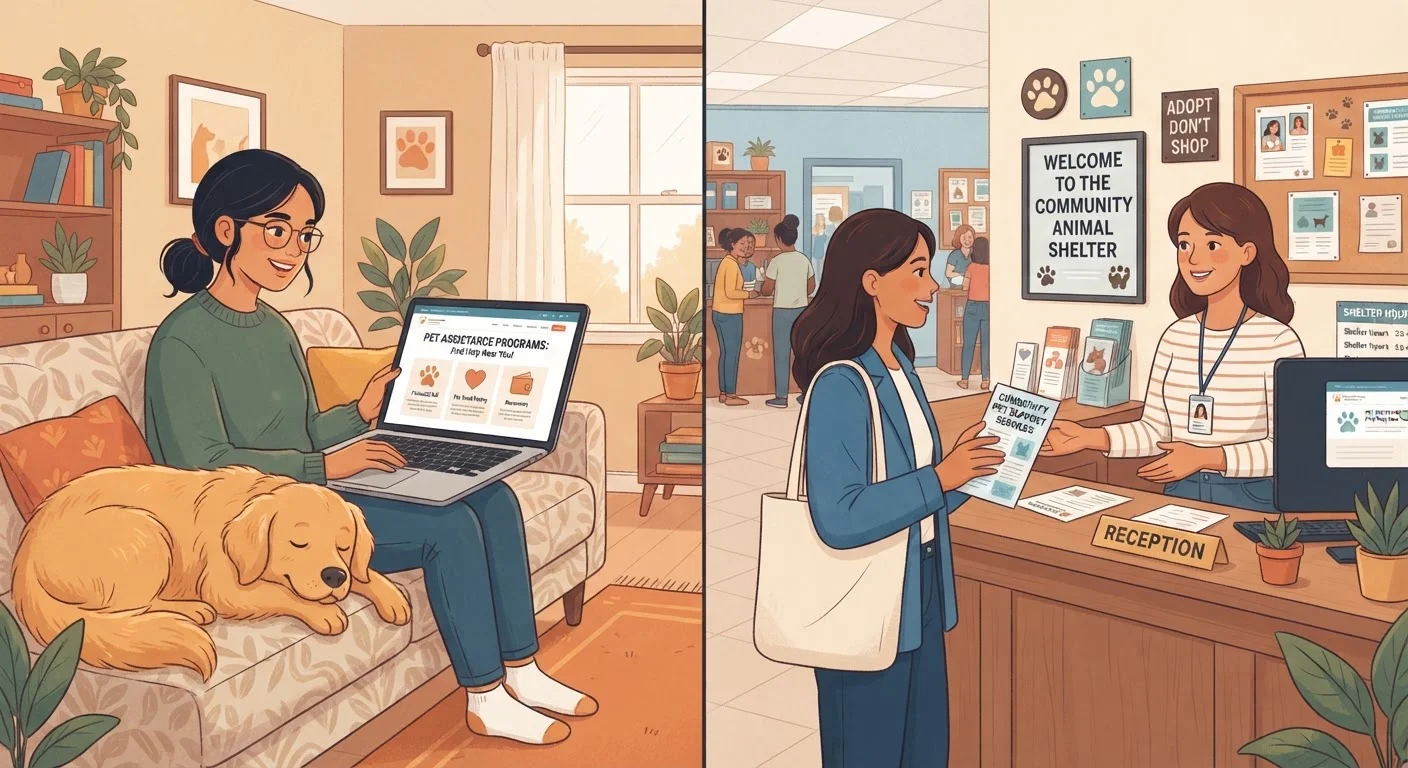
Photo: InsightsVault.com | Interesting Daily Reads editorial
Key Takeaways
- Online platforms offer broad reach and 24/7 access, but not all programs accept digital applications.
- In-person visits unlock services that are rarely advertised online, including same-day food assistance.
- Many of the most valuable local programs go unfunded for outreach, making word-of-mouth or 211 calls essential.
- Telehealth options can reduce non-emergency vet costs but cannot replace hands-on physical exams.
- Using both channels together is usually more effective than relying on one alone.
What Each Channel Actually Covers
Online pet assistance spans a wide range: national nonprofit application portals, pet food bank locators, crowdfunding platforms, and virtual vet consultation services. These tools are accessible around the clock and don't require transportation - a real advantage for owners in rural ZIP codes or those without reliable transit.
In-person routes include animal shelter assistance programs, humane society pantries, community veterinary clinics, and faith-based pet supply drives. These often operate outside digital visibility entirely. A local rescue that distributes flea prevention monthly may have no website, no social media presence, and no listing on any national directory - you find it by calling 211 or walking in.
The distinction matters because assuming one channel covers everything leads owners to miss resources they're fully eligible for. Common myths about who qualifies keep many people from exploring either route thoroughly.
Where Online Assistance Has a Real Edge
National programs - such as those administered by large animal welfare organizations - typically accept applications through web forms, making geography less of a barrier. Owners can research eligibility requirements, gather documents, and apply without taking time off work.
Telehealth platforms let owners describe symptoms, share photos or video, and receive triage guidance from licensed veterinarians at a fraction of the cost of an office visit. For non-emergency concerns - minor skin irritation, dietary questions, behavioral issues - this is often a cost-effective first step. However, it cannot replace a physical exam for anything that requires palpation, diagnostic imaging, or lab work.
| Online Assistance | In-Person Assistance | |
|---|---|---|
| Accessibility | 24/7, no travel required | Limited to operating hours and location |
| Same-day material aid | Rarely available | Common at walk-in pantries and clinics |
| Unlisted local programs | Difficult to surface | Frequently discovered through staff |
| Vet care options | Telehealth for non-urgent issues | Physical exams, diagnostics, hands-on care |
| Application process | Web forms, often asynchronous | In-person intake, sometimes immediate |
| Rural suitability | Strong for research and telehealth | Limited by infrastructure gaps |
Online directories also aggregate local resources in ways that would take hours to replicate manually. Tools like the ASPCA's pet food bank search and regional humane society maps are practical starting points before making phone calls or driving anywhere.
Where In-Person Outreach Consistently Wins
Same-day assistance is almost exclusively in-person. Pet food pantries affiliated with human food banks, low-cost vaccine clinics run by mobile units, and emergency boarding for domestic violence survivors - these services require physical presence and often have no waitlist because they operate on a walk-in basis.
Staff and volunteers at local shelters and nonprofit rescue organizations frequently know about resources that aren't publicly listed anywhere. A five-minute conversation at a shelter front desk can surface three programs that a two-hour web search never would. This informal knowledge network is genuinely valuable and has no digital equivalent.
Ask Staff Directly About Unlisted Programs
In-person visits also allow staff to assess your situation and connect you directly - making a warm referral to another agency rather than handing you a generic list. That kind of navigation support is difficult to replicate through a web form.
Practical Strategy: Combining Both Effectively
Start online to build context - identify what programs exist nationally and regionally, check eligibility criteria, and note which organizations operate near you. Then follow up by phone or in person to confirm current availability and ask about unlisted programs. The 211 helpline is an underused bridge: it connects callers to human navigators who often know community pet resources that don't surface in standard searches.
For ongoing support needs - recurring food assistance, low-cost preventive care - build relationships in person. Pantries that know you are more likely to flag new resources when they arise. For acute, non-emergency health questions, telehealth is a reasonable cost-control tool as a first step before committing to a full office visit.
Use the community pet support audit checklist to systematically work through both channels without duplicating effort. For broader everyday savings, the low-cost pet care hub covers food, supplies, and preventive health options worth reviewing alongside any assistance program search.
This article is for general informational purposes only and does not constitute financial, veterinary, or legal advice. Program availability and eligibility vary by location and organization. Consult a licensed veterinarian for health concerns specific to your pet.
The content provided on our blog site traverses numerous categories, offering readers valuable and practical information. Readers can use the editorial team’s research and data to gain more insights into their topics of interest. However, they are requested not to treat the articles as conclusive. The website team cannot be held responsible for differences in data or inaccuracies found across other platforms. Please also note that the site might also miss out on various schemes and offers available that the readers may find more beneficial than the ones we cover.