
Getting Started with Grocery Couponing: A Practical Introduction

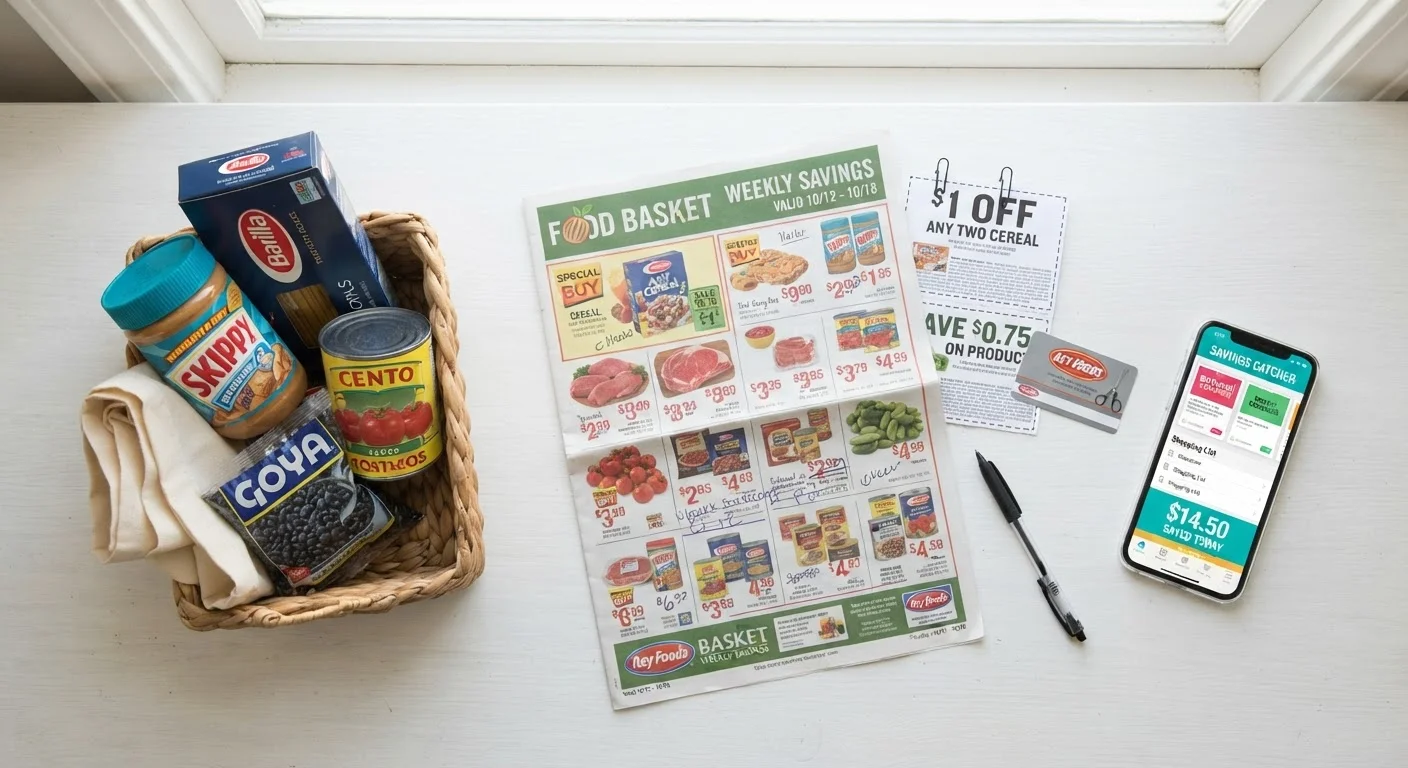
Photo: InsightsVault.com | Interesting Daily Reads editorial
Key Takeaways
- Grocery coupons come from three distinct sources: manufacturers, stores, and digital platforms - each with different rules.
- Combining a manufacturer coupon with a store coupon on the same item is called stacking and can multiply your savings.
- Digital coupons clipped to a loyalty card are now one of the most consistent ways to save without clipping paper.
- Buying items you wouldn't normally use just because they're discounted is one of the most common ways couponing costs more, not less.
- A 10-15 minute weekly pre-shop routine is enough for most beginners to capture meaningful savings.
The Three Types of Grocery Coupons
Grocery coupons fall into three categories, and understanding each one prevents confusion at the register. Most beginners treat all coupons as interchangeable - they're not.
Manufacturer coupon
A discount issued by the company that makes a product, valid at any participating retailer rather than tied to a specific store.
Store coupon
A discount issued directly by a retailer, valid only at that chain's locations or website.
Digital coupon
An electronic discount that you activate - usually by clicking 'clip' in an app or on a retailer's website - and that applies automatically when you scan your loyalty account at checkout.
Coupon stacking
Using more than one type of coupon on a single item in the same transaction, such as combining a manufacturer coupon with a store coupon, to increase total savings.
Loyalty card
A store-issued card or app account that links your purchases to your account, unlocking member pricing and digital coupon discounts.
Sunday insert
A booklet of manufacturer coupons distributed inside Sunday print newspapers, traditionally one of the primary sources of paper grocery coupons.
Manufacturer coupons are issued by the brand itself. They're usually valid at any store that accepts them, and the retailer redeems them by submitting them back to the manufacturer for reimbursement. You'll find these in Sunday newspaper inserts, on manufacturer websites, and through coupon aggregator sites.
Store coupons come directly from the retailer. They're only valid at that specific chain and are typically distributed via weekly ads, the store's app, or its loyalty program mailer.
Digital coupons aren't a separate tier so much as a delivery method - but they work differently enough to warrant their own mental category. You activate them by clicking 'clip' in a store app or on its website, and the discount applies automatically when your loyalty account is scanned at checkout. No paper required. For more on how these discounts are structured from the retailer's side, see where coupons actually come from.
Where to Find Coupons Before You Shop
Knowing where to look saves more time than any individual deal. The most reliable sources for grocery coupons in the US are:
- Store apps and websites: Your primary grocery chain almost certainly has a digital coupon section accessible by logging into your loyalty account. These are updated weekly and often tied to sale cycles.
- Manufacturer websites and email lists: Many food brands offer printable or digital coupons when you sign up for their newsletters or create an account on their site.
- Sunday newspaper inserts: These remain a consistent source of manufacturer coupons, typically from two main coupon publishers. Even if you don't subscribe to a paper, some libraries and community boards make these available.
- Coupon aggregator sites: Several established sites compile printable manufacturer coupons in one place. Stick to well-known platforms to avoid counterfeit coupons, which can cause problems at checkout and may be refused by retailers.
For a broader look at discount-finding approaches beyond groceries, the complete guide to finding and using coupons throughout the year covers seasonal patterns and additional sourcing strategies.
Coupon Stacking: How to Combine Discounts
Stacking is where couponing moves from modest to meaningful. At its simplest, stacking means applying both a manufacturer coupon and a store coupon to the same item - since each is issued by a different entity, many retailers allow both to apply in one transaction.
A typical stacking scenario looks like this: a store's weekly ad offers $1.00 off a specific pasta brand (store coupon), and you also have a manufacturer coupon for $0.75 off the same item. Applied together, you're saving $1.75 on a single product. On a $3.49 item, that's roughly 50% off without any sale price being involved.
Some stores add a third layer: loyalty member pricing that's already lower than the shelf price, on top of which both coupons apply. When a stacking opportunity aligns with a genuine sale price, the savings can be substantial.
Match Coupons to Your Existing List First
Not every store permits stacking. Retailers set their own coupon policies and some explicitly limit one coupon per item regardless of type. Checking the policy before your trip avoids disappointment at the register.
Avoiding Common Beginner Mistakes
Discounts Don't Justify Unneeded Purchases
Beyond impulse buying, beginners frequently run into a few other predictable problems:
- Expired coupons: A surprising number of people show up with coupons that lapsed days earlier. Build a habit of checking dates when you clip.
- Mismatched products: Manufacturer coupons are often size- or variety-specific. A coupon for a 32 oz. product won't apply to the 16 oz. version. Read the fine print before shopping.
- Ignoring unit price: A couponed item isn't always cheaper per unit than the store brand without a coupon. Compare unit prices - usually listed on the shelf tag - before deciding.
- Over-relying on one source: Coupon availability changes weekly. Using only one source (just the store app, or just newspaper inserts) means missing deals regularly available elsewhere.
These aren't obscure pitfalls - they're the most common reasons new couponers feel like the process isn't working. Fixing them is mostly a matter of slowing down during the prep step.
Store Coupon Policies Vary Significantly
Building a Simple Couponing Routine
The goal isn't to become a full-time deal hunter. A sustainable routine for most shoppers takes 10-15 minutes per week and focuses on three steps:
- Write your list first. Decide what you need before looking at any coupons. This keeps the list need-driven rather than deal-driven.
- Cross-reference with available coupons. Open your store's app, scan your usual coupon sources, and clip anything that matches items already on your list. Clip digitally where possible - it's faster and eliminates paper management.
- Check the weekly store ad. If an item on your list happens to be on sale this week, that's when a matching coupon has the most impact. Note any stacking opportunities.
As you get comfortable, you can expand into tracking sale cycles (many grocery items rotate on predictable 6-8 week cycles) or exploring how couponing strategies shift across different shopping categories. But the foundational routine above delivers real, consistent savings without demanding significant time. For a wider view of where grocery savings fit into your overall budget, see our complete guide to cutting everyday costs.
Frequently Asked Questions
The content provided on our blog site traverses numerous categories, offering readers valuable and practical information. Readers can use the editorial team’s research and data to gain more insights into their topics of interest. However, they are requested not to treat the articles as conclusive. The website team cannot be held responsible for differences in data or inaccuracies found across other platforms. Please also note that the site might also miss out on various schemes and offers available that the readers may find more beneficial than the ones we cover.