
The Complete Guide to Finding and Using Coupons Throughout the Year

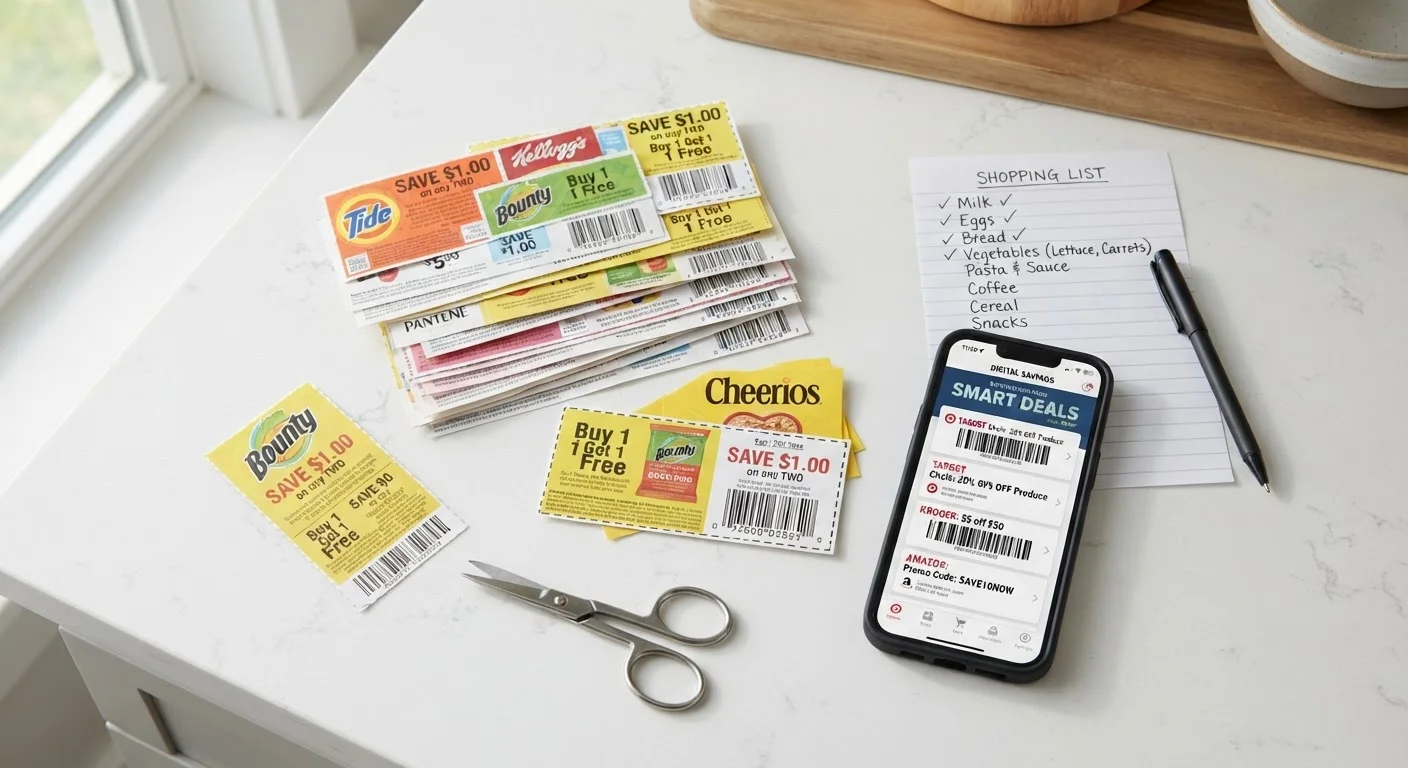
Photo: InsightsVault.com | Interesting Daily Reads editorial
Key Takeaways
- Retailer loyalty apps and manufacturer websites are among the most reliable sources for valid coupon codes.
- Stacking a store sale with a manufacturer coupon and a cashback offer is legal at most retailers when done correctly.
- Seasonal sale cycles are predictable - knowing them helps you time purchases for maximum discount overlap.
- Couponing tactics differ significantly between groceries, travel, and services; one-size strategies underperform.
- Buying items you wouldn't otherwise purchase eliminates any real savings a coupon provides.
Where to Find Reliable Coupons
The most consistent coupon sources fall into three categories: retailer-direct, manufacturer-direct, and aggregator platforms. Each has a different reliability profile.
Retailer loyalty programs are the most dependable starting point. Grocery chains, pharmacy retailers, and big-box stores routinely load digital coupons into their apps that are clipped with a single tap. These don't expire unannounced and are guaranteed valid at checkout - no ambiguity about exclusions that aggregator sites sometimes miss.
Manufacturer websites and email lists are underused. Consumer packaged goods companies regularly send high-value coupons to subscribers for products across household cleaning, personal care, and pantry staples. Because these come directly from the brand, redemption is straightforward.
Aggregator coupon sites - browser extensions that auto-apply codes at checkout, deal-sharing communities, and coupon database sites - cast a wider net but require more skepticism. Codes on these platforms are crowd-sourced and often outdated. Use them as a secondary check, not a primary source.
For a deeper look at the mechanics behind why and how coupons get issued in the first place, see how retailers decide what to offer.
Before clipping loyalty app coupons in bulk, scan your pantry first. Clipping a coupon for something you already have in excess just creates pressure to buy it again before it expires.
Set a recurring calendar reminder two weeks before major sale events (Memorial Day, Labor Day, Black Friday) to compile your purchase list and search for stackable coupons in advance.
Stacking Discounts Without Violating Store Policy
Coupon stacking - combining multiple discount types on a single purchase - is the highest-leverage strategy available to a consumer. Done correctly, it's entirely permitted. Done carelessly, it leads to declined transactions or voided accounts.
The standard stacking sequence that most major retailers allow:
- Store sale price - the baseline markdown already applied to the shelf tag.
- Manufacturer coupon - issued by the brand, redeemable at any participating retailer.
- Store coupon - issued by the retailer itself, applied on top of manufacturer coupons at most stores.
- Cashback app or portal - a rebate submitted after purchase, which doesn't interact with the point-of-sale at all.
The key rule: one manufacturer coupon per item, one store coupon per item. Attempting to use two manufacturer coupons on a single item is against policy almost universally and constitutes misredemption.
Always read the fine print. Exclusions on store coupons - particularly for clearance items, gift cards, or certain brand categories - are common and will cause mid-transaction failures if ignored.
Cashback App Terms Vary Significantly
Working With Seasonal Sale Cycles
Retailers follow predictable markdown calendars driven by inventory turnover, fiscal quarter ends, and holiday proximity. Understanding these cycles lets you time purchases to coincide with the deepest discount windows, then layer coupons on top.
A few durable patterns across US retail:
- January: Post-holiday clearance on electronics, home goods, and winter apparel.
- May: Memorial Day weekend drives deep discounts on mattresses, appliances, and outdoor furniture.
- August-September: Back-to-school promotions extend beyond supplies to clothing and technology.
- November: Black Friday and Cyber Monday compress major annual lows across almost every category.
The most effective approach is to identify your planned purchases at least 4-6 weeks out and check whether they fall near a predictable sale window. A 20% sale paired with a 10% store coupon and a cashback rebate produces a meaningfully different outcome than applying that coupon at full price.
~$3B
Annual digital coupon redemptions in US retail
According to Statista, digital coupon redemption in the US has grown consistently as grocery and retail apps expanded loyalty program features.
6-8 weeks
Typical lead time before seasonal price lows
Consumer research consistently shows that major sale-category items hit their lowest annual prices during predictable promotional windows tied to retail inventory cycles.
3-4x
Savings multiplier from layered discount stacking
Combining a store sale, manufacturer coupon, and cashback rebate can produce savings multiples versus using any single discount mechanism alone, based on retailer coupon policy analysis.
Category-Specific Coupon Strategies
Couponing is not a uniform skill. The tactics that produce strong results in groceries often don't translate to travel, services, or apparel. Our guide to couponing across categories covers this in depth, but here are the core distinctions:
- Groceries
- Manufacturer coupons stack with store loyalty pricing. Timing purchases around weekly ad cycles and combining digital clips with cashback apps is the standard playbook. See our practical introduction to grocery couponing for a full walkthrough.
- Travel
- Discount codes exist but are narrow - often restricted to specific routes, hotel tiers, or booking windows. Cashback portals through travel booking sites frequently outperform promo codes. Flexibility on travel dates typically delivers larger savings than any coupon.
- Services (home, auto, personal)
- Service-based discounts are often issued as first-time customer offers or seasonal promotions. Asking directly at the point of service - or checking the provider's own site before booking - captures deals that aggregator sites rarely list.
For a broader view of where each category delivers the most value, the guide to smarter shopping decisions across every channel is a useful companion resource.
Common Mistakes That Erase Your Savings
The mechanics of couponing are straightforward. The behavioral traps are where real savings get lost.
Buying what you wouldn't otherwise buy
A 40% discount on a product you don't need is a 60% expenditure, not a saving. The discipline of couponing is applying discounts only to purchases already on your list.
Ignoring unit price math
A coupon for $1 off a larger package may or may not beat the per-unit cost of the store-brand smaller size. Always compare cost per ounce or unit, not sticker price after discount.
Chasing codes instead of planning purchases
Browsing coupon sites without a specific purchase in mind leads to impulse buys dressed up as savings. Effective couponers plan the purchase first, then search for discounts - not the other way around.
Missing expiration windows
Digital coupons in loyalty apps clip quickly but expire in fixed windows - often 1-2 weeks. Clip only what you'll use before the date, or batch your shopping trip around the clip.
Building these habits is part of developing a consistent savings practice. The Smart Buying Tips hub covers the broader discipline of avoiding overspending traps across your entire shopping routine.
The content provided on our blog site traverses numerous categories, offering readers valuable and practical information. Readers can use the editorial team’s research and data to gain more insights into their topics of interest. However, they are requested not to treat the articles as conclusive. The website team cannot be held responsible for differences in data or inaccuracies found across other platforms. Please also note that the site might also miss out on various schemes and offers available that the readers may find more beneficial than the ones we cover.