
Categories Where In-Store and Online Pricing Differs Most Dramatically

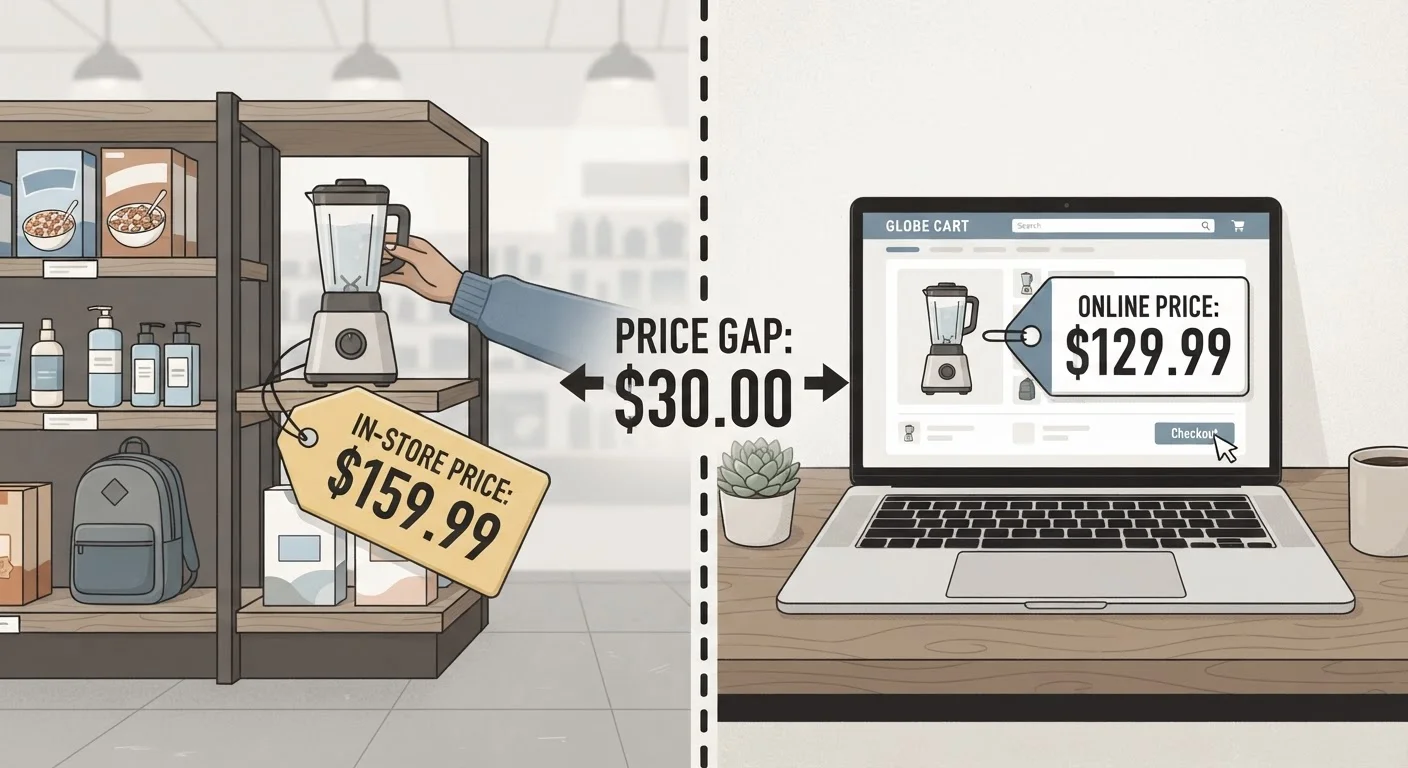
Photo: InsightsVault.com | Interesting Daily Reads editorial
Key Takeaways
- Electronics, mattresses, and eyewear typically show the largest price gaps between channels.
- In-store prices can beat online for groceries, furniture, and some prescription items.
- Dynamic online pricing means the same product's cost can shift hourly depending on demand.
- Shipping fees and bundled warranties often close the gap between channels more than shoppers expect.
- Knowing which channel favors which category helps you make smarter decisions before you buy.
Why Channel Matters More for Some Products Than Others
The idea that online always undercuts in-store - or vice versa - is too simple to be useful. Price differences between channels follow identifiable patterns tied to retailer cost structures, competition intensity, and how certain products are sold. Some categories see gaps of 20% or more depending on where you buy. Others are nearly identical across channels.
Understanding those patterns is more valuable than checking prices on a case-by-case basis. For a fuller breakdown of what drives these differences structurally, see what actually changes the price you pay. The list below focuses on the categories where the disparity tends to be widest - and what that means for where you should shop.
Consumer Electronics
Electronics consistently show some of the largest channel price gaps. Online retailers face more direct competition and lower overhead, which pushes prices down - particularly on televisions, laptops, and audio equipment. In-store electronics prices often carry a premium tied to floor display costs, sales staff, and the option to handle items before buying.
That said, in-store purchases sometimes include installation services, extended warranty bundles, or trade-in credit that aren't factored into the sticker price comparison. When comparing, look at the total cost of ownership, not just the shelf tag. Dynamic pricing and surge fees can also make online electronics prices volatile in ways in-store prices aren't.
Online electronics prices are driven down by competition, but bundled services can shift the real-cost comparison.
Mattresses and Bedding
Few categories illustrate channel pricing distortion more vividly than mattresses. Traditional in-store mattresses are often marked up significantly from wholesale cost, with room for negotiation built into the retail structure. Direct-to-consumer online brands bypassed that model entirely, creating a persistent gap between channel prices for comparable products.
The catch: it's genuinely difficult to compare mattresses across channels because model names are frequently changed by retailers to prevent direct price matching. You may be comparing products that look similar but differ in materials or construction.
Mattress model names are often retailer-exclusive, making apples-to-apples price comparisons harder than they appear.
Eyewear and Contact Lenses
Prescription eyewear carries some of the highest markups in retail, and the in-store versus online gap reflects that. Online eyewear sellers - who operate without the overhead of optical shops - can offer frames and lenses at a fraction of traditional in-store prices, sometimes 50-70% lower for basic prescriptions and standard materials.
Contact lenses show a similar pattern, though less extreme. The trade-off involves the fitting expertise, adjustments, and the immediate availability that in-store opticians provide. For straightforward prescriptions with stable measurements, online tends to offer significantly lower costs.
For stable, straightforward prescriptions, online eyewear pricing can be dramatically lower than in-store equivalents.
Groceries and Perishables
Grocery pricing flips the usual dynamic. In-store grocery prices are generally lower than online equivalents once delivery fees, service charges, and tips are factored in. Retailers also use loss leaders - staple items priced at or below cost - to draw foot traffic, a strategy that doesn't translate to online ordering.
In-store also gives you direct access to unit pricing on shelf labels, which is one of the most effective tools for value comparison. Unit pricing is frequently omitted or harder to navigate on grocery delivery platforms.
In-store grocery prices tend to beat online equivalents once you account for delivery fees and service charges.
Furniture and Large Home Goods
Furniture pricing is complicated by both channel and format. In-store furniture retailers frequently discount floor models and run cyclical sales, while online furniture pricing can appear lower but often excludes delivery and assembly - which can add hundreds of dollars to the final cost for large items.
The gap also varies by segment. Mass-market flat-pack furniture tends to be similarly priced across channels, while mid-range upholstered furniture often shows wider variation. Some categories genuinely go smoother in person, and furniture - where feel, finish, and scale matter - is a strong example.
Furniture's online price advantage often disappears once delivery and assembly fees are added to the total.
Clothing and Apparel
Apparel pricing varies significantly by brand and season, but the channel gap tends to be moderate compared to electronics or eyewear. Online clothing often offers a wider selection at competitive prices, but in-store shopping has one practical advantage: you know whether something fits before you buy, eliminating return shipping costs and delays.
Outlet and clearance pricing in physical stores can undercut online prices for the same items, particularly at the end of a season. Seasonal pricing cycles for apparel are well-established and worth understanding before making significant wardrobe purchases.
End-of-season in-store clearance often beats online pricing for the same apparel items.
How to Use This Information Without Overthinking It
Applying channel awareness doesn't require checking every price in two places before every purchase. A more practical approach: identify which category a purchase falls into, use the patterns above as a default starting point, and verify the final number - including shipping, taxes, and any bundled services - before committing.
Add Total Cost, Not Just Sticker Price
Price-matching policies can also close gaps when you find a better price in one channel while standing in the other. Many major retailers have formal policies for this. See how price-match policies work for a practical guide on when and how to use them. And if you want to explore how to use both channels together intentionally, blending online and in-store shopping lays out a workable strategy.
This article is for general informational purposes only. Prices, policies, and channel availability vary by retailer and region. Always verify current pricing before making a purchase decision.
The content provided on our blog site traverses numerous categories, offering readers valuable and practical information. Readers can use the editorial team’s research and data to gain more insights into their topics of interest. However, they are requested not to treat the articles as conclusive. The website team cannot be held responsible for differences in data or inaccuracies found across other platforms. Please also note that the site might also miss out on various schemes and offers available that the readers may find more beneficial than the ones we cover.