
Price-Matching Policies Explained: Using the Store Against the Internet

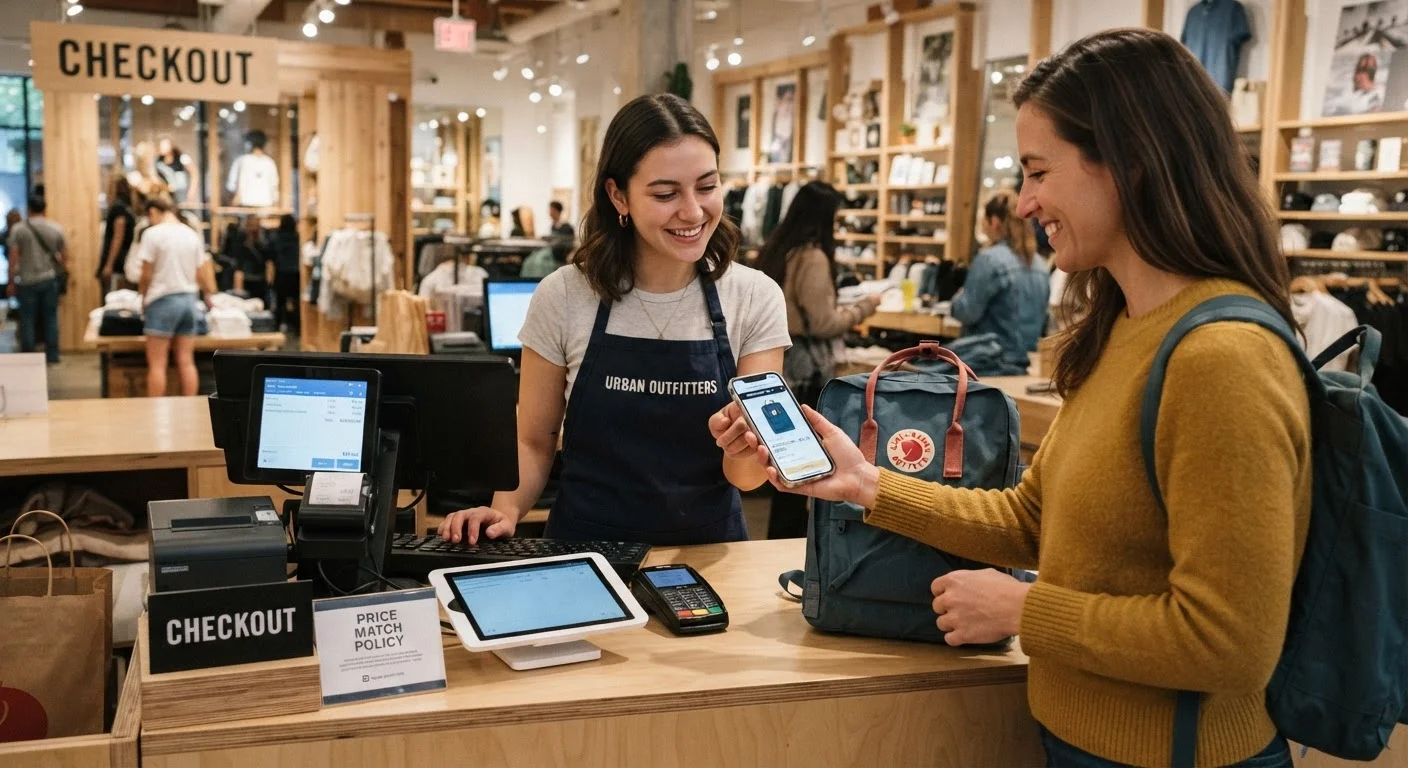
Photo: InsightsVault.com | Interesting Daily Reads editorial
Key Takeaways
- Many major retailers will match competitor prices - including online prices - if you ask correctly.
- Price-match policies vary significantly by retailer; knowing the rules before you shop prevents wasted trips.
- You typically need documented proof of the lower price at the time of purchase.
- Exclusions like marketplace sellers, flash sales, and out-of-stock items often disqualify requests.
- Combining price-matching with store loyalty perks can yield savings neither channel offers alone.
How Price-Match Policies Actually Work
Price matching is a retail practice where a store agrees to sell you an item at a lower price that a competitor is currently advertising. The underlying logic is straightforward: retailers would rather reduce their margin on one sale than lose the transaction entirely. For shoppers, it means the physical store and the internet are not always competing channels - they can be used in combination.
Most large-format retailers in the US have some form of price-match guarantee, though the mechanics differ considerably. Some match only a fixed list of named competitors; others match any verifiable price, including their own website if it differs from their in-store price. Understanding this distinction matters, because online and in-store prices can differ for the same item at the same chain.
It's also worth knowing that price matching is separate from price adjustments. A price match happens at the point of purchase against a competitor. A price adjustment is a retroactive credit when the same store drops its own price after you've already bought. Both are worth understanding, but the steps to access them differ.
Check Your Own Retailer's Website First
What Disqualifies Most Price-Match Requests
The most common reason a price-match request fails is an exclusion buried in the fine print. Understanding these upfront saves frustration:
- Marketplace or third-party sellers: Prices from individual sellers on large retail platforms almost universally do not qualify. The item must be sold and fulfilled directly by the retailer being cited.
- Limited-time or doorbusters: Flash sales, one-day deals, and Black Friday-style promotions are routinely excluded because they represent intentional loss-leaders rather than standard pricing.
- Membership-gated prices: If the competitor's lower price requires a paid membership to access, most stores will not match it.
- Bundle or open-box pricing: A lower price that only exists as part of a bundle, or as a refurbished/open-box unit, does not qualify for a match on a new, standalone item.
- Out-of-stock items: The competitor generally must have the item in stock and available for purchase at that price at the time of your request.
For more context on why the same product can carry very different prices across channels, see our piece on categories where price gaps are widest.
Retailer's official price-match policy page
Confirms which competitors and price sources qualify before you make the trip.
Smartphone or tablet
Used to pull up and display the live competitor price at the register as proof.
Screenshot or printout of the competitor price
Serves as a backup if the live page fails to load in-store or prices shift mid-visit.
Retailer loyalty or rewards account
Lets you stack any available member pricing or point-earning on top of a matched price.
When Price Matching Delivers the Most Value
Price matching is most useful in a specific scenario: you've found a meaningfully lower price online but prefer the in-store experience - either for immediate pickup, easier returns, or hands-on inspection before buying. Electronics, appliances, and home goods are categories where this dynamic appears frequently, and where even a small percentage difference can represent real dollar savings.
It also pays to think about timing. Prices on many product categories follow predictable cycles, and a lower online price you find today may reflect a broader markdown that brick-and-mortar stores haven't yet applied. Our overview of seasonal pricing patterns explains how those cycles work across common product types.
Finally, consider the full picture of what each channel offers. A price-matched in-store purchase can sometimes be combined with store loyalty rewards, manufacturer rebates, or credit card category bonuses that wouldn't apply to the same online transaction. Neither channel is uniformly cheaper - which is exactly why learning to use both strategically, as explored in blending online and in-store shopping, tends to produce better outcomes than committing to one exclusively.
The content provided on our blog site traverses numerous categories, offering readers valuable and practical information. Readers can use the editorial team’s research and data to gain more insights into their topics of interest. However, they are requested not to treat the articles as conclusive. The website team cannot be held responsible for differences in data or inaccuracies found across other platforms. Please also note that the site might also miss out on various schemes and offers available that the readers may find more beneficial than the ones we cover.