
When the Store Shelf Actually Beats the Website

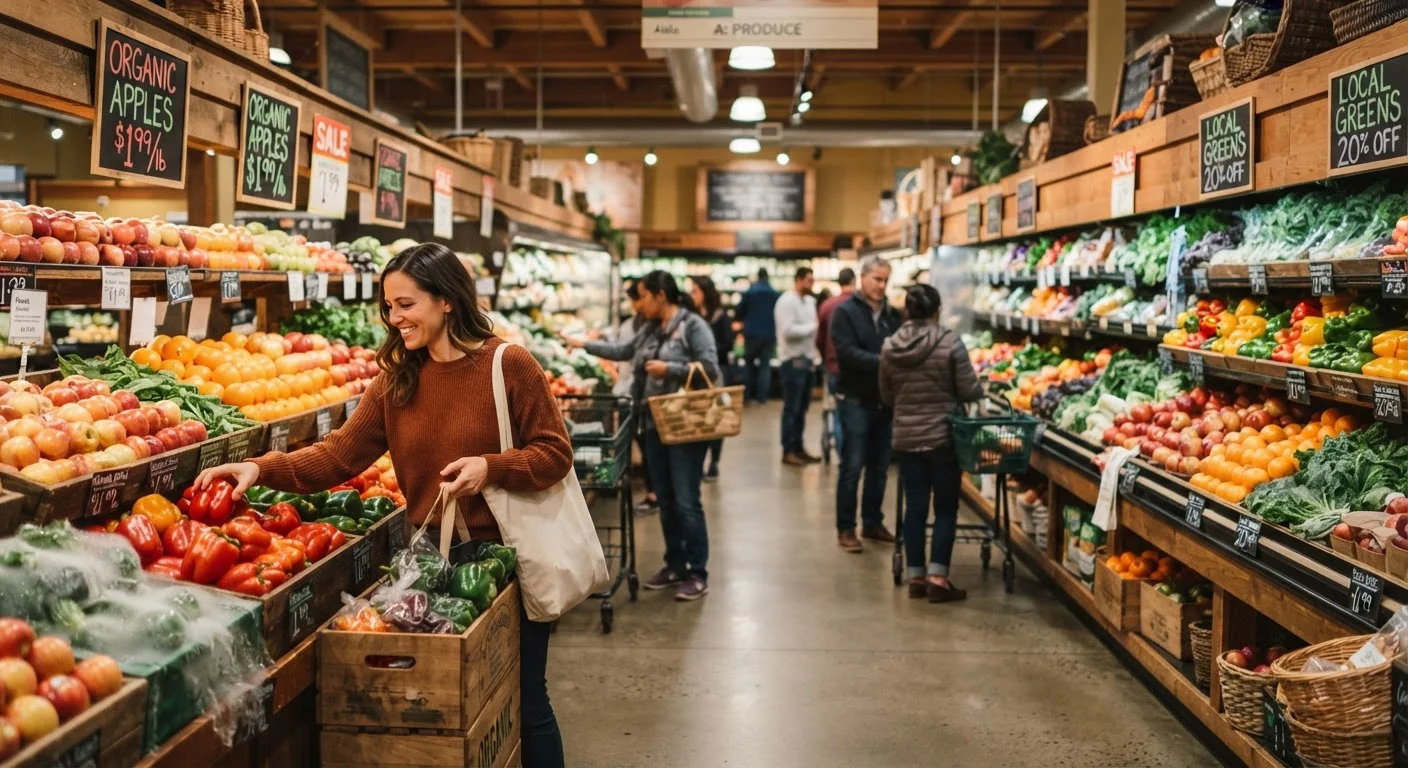
Photo: InsightsVault.com | Interesting Daily Reads editorial
Key Takeaways
- Grocery stores frequently offer unadvertised in-store markdowns not reflected on retail websites.
- Eyeglasses and hearing aids cost significantly less at warehouse clubs and in-person optical chains than online.
- Furniture and mattresses are categories where negotiating in-store can produce meaningful price reductions.
- Return friction and shipping costs can flip the apparent online price advantage for many product types.
- Some categories reward a hybrid approach - research online, then buy in person.
Why Online Isn't Always the Cheaper Choice
The default assumption for many shoppers is that online prices beat in-store prices - almost automatically. In practice, that's not consistently true. Shipping fees, third-party seller markups, restocking fees, and the inability to inspect a product before buying can all erode the apparent savings. For certain product categories, brick-and-mortar stores offer lower net costs, smoother transactions, or both.
This article isn't about nostalgia for physical retail. It's about identifying specific situations where walking into a store - or calling ahead to one - is the smarter financial move. What actually changes the price you pay covers the broader mechanics of channel pricing, but here we focus on the categories where the in-store advantage is most consistent.
Groceries with unadvertised in-store markdowns
Grocery store pricing is more dynamic in person than most shoppers realize. Markdowns on perishables - meat approaching its sell-by date, produce that didn't move fast enough, bakery items at end of day - typically happen on the floor, not on a website or app. These discounts aren't advertised in advance because they're reactive to inventory conditions. A shopper physically scanning the meat case at the right time can find 30-50% reductions that no algorithm will surface. Store-specific loyalty card prices also sometimes differ from what's displayed online, particularly at regional grocery chains.
In-store markdowns on perishables happen on the floor - not on any website or app.
Eyeglasses and contact lenses at optical chains or warehouse clubs
Prescription eyewear is a category where in-person purchasing at warehouse membership clubs frequently undercuts online pricing once you account for the full transaction. The exam, frames, and lenses bundled at a warehouse optical department often total less than purchasing each component separately online, particularly for progressive lenses that require precise fitting measurements. Beyond price, fitting adjustments - nose pad bends, temple adjustments - are included at no extra cost in store and would require a mailed return cycle online. For contacts, warehouse clubs routinely carry lower per-box prices than major optical e-commerce sites, with the added option of returning opened boxes if a prescription changes.
Bundled in-store optical exams and lens packages often undercut the sum of online components.
Furniture and mattresses with negotiable floor pricing
Furniture and mattress retail is one of the few remaining consumer categories where price negotiation is genuinely common and expected. In-store staff at independent furniture retailers and many mid-size chains have discretion to discount floor models, match competitor prices, or throw in delivery at no charge. Online prices for the same pieces are typically fixed. Additionally, floor models - which are often discounted 20-40% below list price - exist only in physical stores. Buying a floor-model mattress, sofa, or dining set requires inspecting it in person, which is both the practical reason to go in-store and the reason the discount exists.
Floor-model discounts of 20-40% exist only in physical stores - you can't buy them online.
Large appliances where delivery and installation matter
For refrigerators, washing machines, and dishwashers, the sticker price is rarely the total cost of purchase. Delivery, haul-away of the old unit, installation, and extended service plans all factor in. In-store appliance departments frequently bundle these services into a negotiated package, particularly during slower sales periods. Online appliance purchases often charge separately for each service, and third-party fulfillment can create gaps in responsibility when something goes wrong during delivery. Shopping in person also allows you to confirm exact dimensions and door-swing clearances against a product you can physically measure - a step that prevents costly returns.
Bundled delivery, installation, and haul-away negotiated in-store often offset any online price edge.
Clearance and seasonal goods at physical locations
End-of-season clearance on clothing, holiday décor, lawn and garden equipment, and sporting goods consistently runs deeper at physical stores than online. Retailers need to move physical inventory off the floor to make room for incoming seasonal stock; that pressure doesn't exist in a warehouse fulfillment center the same way. Clearance racks in-store also allow shoppers to find items by inspection - checking for defects, verifying sizing - before committing, which reduces the return risk that can make online clearance purchases more complicated. Prices on clearance items are also sometimes reduced further at the register beyond what's marked on the tag, particularly in the final days of a clearance cycle.
Physical clearance racks face real inventory pressure that drives deeper cuts than online sales.
Prescription medications at independent pharmacies
Generic drug pricing varies considerably between pharmacy chains, warehouse clubs, and independent pharmacies - and in-person pricing with a discount card (such as those available through several nonprofit and pharmacy benefit programs) can be lower than online mail-order pricing for the same 30-day supply. Mail-order pharmacies have a cost advantage on 90-day supplies of maintenance medications, but for one-time prescriptions or acute-care drugs, the in-store option at a competitively priced independent pharmacy can be the more economical choice. It's worth calling ahead and asking for the cash price alongside any applicable discount program before assuming the online option is cheaper.
Calling ahead for the cash price at an independent pharmacy can reveal lower costs than mail-order.
How to Use This Information Practically
Knowing which categories favor in-store shopping doesn't require abandoning online research - it just changes the final step. For furniture, mattresses, and appliances, use online listings to establish a price benchmark, then walk into the store equipped with that number. For groceries and optical products, the advantage is already structural: the in-store price is often the better price by default.
Use Online Prices as Your In-Store Benchmark
The broader principle is channel flexibility. Shoppers who treat online and in-store as complementary tools - rather than competing options - tend to spend less overall. For a structured approach to combining both, see our guide on blending online and in-store shopping. And if you want a category-by-category breakdown of where price gaps are largest, categories where pricing differs most dramatically is worth reading alongside this piece.
This article is for general informational purposes only and does not constitute financial or purchasing advice. Prices and policies vary by retailer and region; verify current terms directly with any store before making a purchase decision.
The content provided on our blog site traverses numerous categories, offering readers valuable and practical information. Readers can use the editorial team’s research and data to gain more insights into their topics of interest. However, they are requested not to treat the articles as conclusive. The website team cannot be held responsible for differences in data or inaccuracies found across other platforms. Please also note that the site might also miss out on various schemes and offers available that the readers may find more beneficial than the ones we cover.