
Emergency Fund vs. Sinking Fund: Understanding the Difference

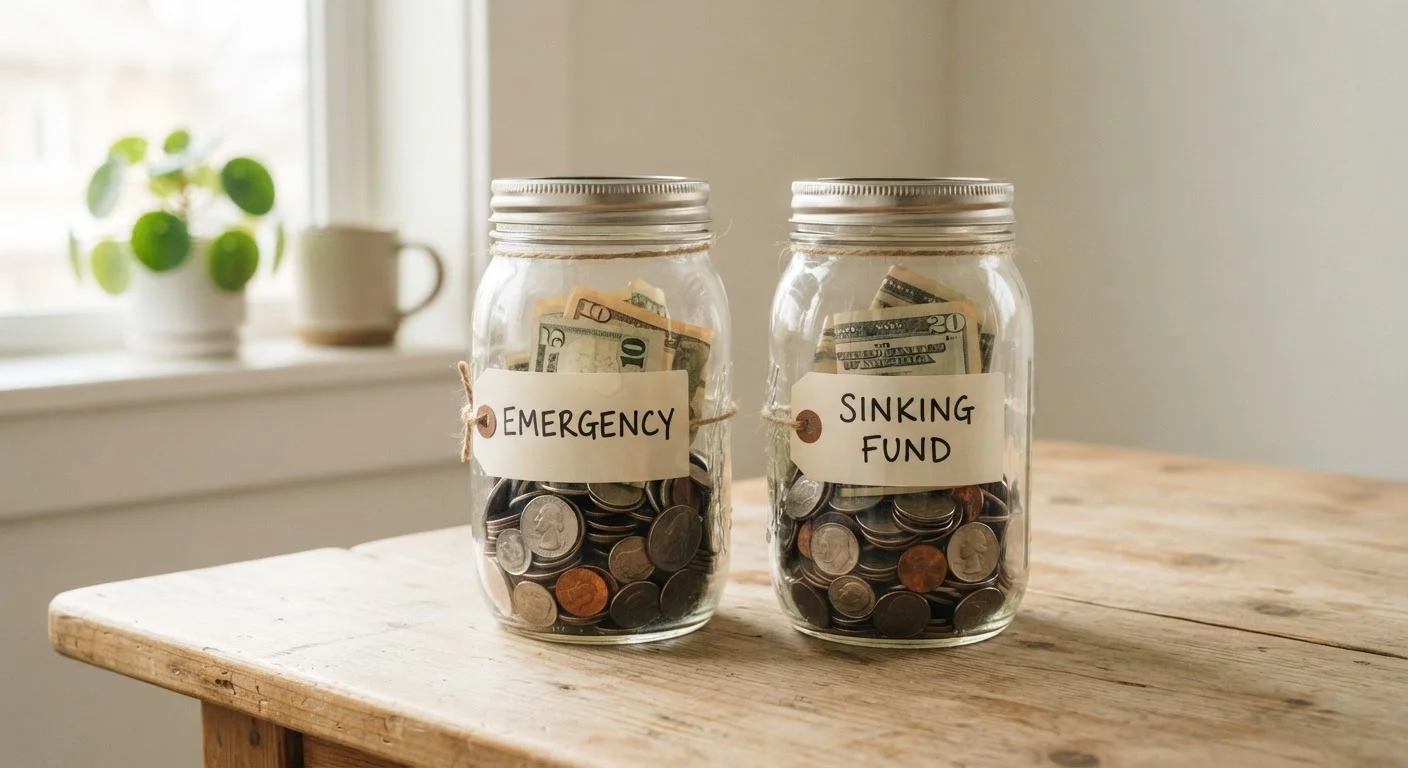
Photo: InsightsVault.com | Interesting Daily Reads editorial
Key Takeaways
- An emergency fund covers unexpected, unplanned financial crises like job loss or a medical emergency.
- A sinking fund is saved toward a known, anticipated expense with a specific target and timeline.
- Both funds serve your financial stability but should be kept separate and funded differently.
- Most households benefit from building both simultaneously, even in small amounts.
- Where you keep each fund matters - accessibility and growth potential are both considerations.
What Each Fund Is Actually For
These two saving strategies are often lumped together - but they solve very different problems. Understanding the distinction up front makes budgeting clearer and your money more purposeful.
An emergency fund is a financial buffer for true, unplanned disruptions: a sudden job loss, an unexpected medical bill, a major car repair you couldn't have anticipated. It's money you hope never to need, held in reserve specifically for financial shocks. For a deeper look at how this differs from general savings, see what an emergency fund actually is.
A sinking fund, on the other hand, is intentional saving toward a cost you know is coming. Annual car registration, holiday gifts, a planned home repair, a vacation - these aren't surprises. A sinking fund breaks that future lump sum into manageable monthly contributions so the expense doesn't feel like a hit when it arrives. Learn more in our guide to sinking funds for predictable irregular expenses.
| Emergency Fund | Sinking Fund | |
|---|---|---|
| Purpose | Cover unexpected financial crises | Save for known, planned expenses |
| Predictability | Unknown - you can't anticipate when | Known - you set the date and amount |
| Typical target | 3-6 months of essential expenses | Specific dollar amount per goal |
| Contribution style | Build to target, then maintain | Fixed monthly amount until goal date |
| When you access it | Only during a genuine emergency | When the planned expense arrives |
| Number of funds | Usually one fund | Can run multiple simultaneously |
| Account priority | High liquidity, easy access | Liquid to moderate; timeline dependent |
How Each Fund Is Built and Used
The way you fund and access each account reflects its purpose.
For your emergency fund, the goal is reaching a target balance - commonly three to six months of essential living expenses - and then leaving it alone. Contributions can slow once you hit your target. You draw from it only when a genuine, unplanned emergency arises, and then you work to replenish it afterward. Because you want this money accessible quickly in a crisis, it should sit in a liquid account. Keeping emergency savings separate from everyday accounts is strongly advisable - mixing them with spending money is a common and costly mistake.
Sinking funds work on a timeline. You identify the expense, estimate the cost, then divide by the number of months until you need it. For example, if you expect to spend $1,200 on holiday travel in 10 months, you set aside $120 per month. You may run several sinking funds at once - one for car maintenance, another for a planned medical procedure, another for annual insurance premiums. When the expense arrives, you spend from that fund with no stress and no debt.
Label Your Accounts With Purpose
Should You Fund Both at the Same Time?
Yes - for most households, the answer is to work on both simultaneously, even if the amounts are modest at first. Waiting until your emergency fund is fully stocked before starting any sinking funds means you'll still be blindsided by the predictable expenses in the meantime, which could push you to raid your emergency savings anyway.
A practical approach: set a minimum monthly contribution to your emergency fund to keep building it steadily, and allocate smaller amounts to one or two sinking funds for expenses you know are coming within the next 12 months. As your budget allows, increase both. This dual-track method is a core principle of the saving fundamentals framework for building lasting financial resilience.
If your income is irregular or your financial footing is still shaky, consider prioritizing the emergency fund first until you have at least one month of essential expenses saved. From there, gradually add sinking fund categories. This connects naturally to the habits covered in budgeting basics - knowing where your money goes each month makes it far easier to carve out both types of savings.
Where to Keep Each Fund
The right account for each fund depends on what that fund needs to do.
Your emergency fund should be liquid - meaning you can access it quickly without penalty. A dedicated savings account works well. Some savers choose a high-yield savings account over a standard savings account to earn a bit more interest while keeping access. The key is that you can reach it fast if needed, and that it isn't commingled with your checking or day-to-day spending.
Sinking funds benefit from some separation too, but flexibility on structure. Some people use separate labeled savings accounts for each goal. Others track them as earmarked buckets within a single savings account using a spreadsheet. Either approach works - the method matters less than the discipline of treating each category as distinct. For expenses with a longer horizon, a higher-yield account can help your contributions grow slightly while you wait. For near-term expenses - within one to three months - ease of access matters more than rate of return.
Whichever approach you use, keeping these funds visually and mentally separate from your spending money reinforces their purpose and reduces the temptation to dip into them for non-intended reasons. See our piece on sinking funds as a budgeting tool for practical setup guidance within a tight monthly budget.
This article is for general informational and educational purposes only and does not constitute personalised financial advice. Consult a qualified financial professional for guidance tailored to your individual circumstances.
The content provided on our blog site traverses numerous categories, offering readers valuable and practical information. Readers can use the editorial team’s research and data to gain more insights into their topics of interest. However, they are requested not to treat the articles as conclusive. The website team cannot be held responsible for differences in data or inaccuracies found across other platforms. Please also note that the site might also miss out on various schemes and offers available that the readers may find more beneficial than the ones we cover.