
Dynamic Currency Conversion: The Hidden Fee Travellers Keep Paying

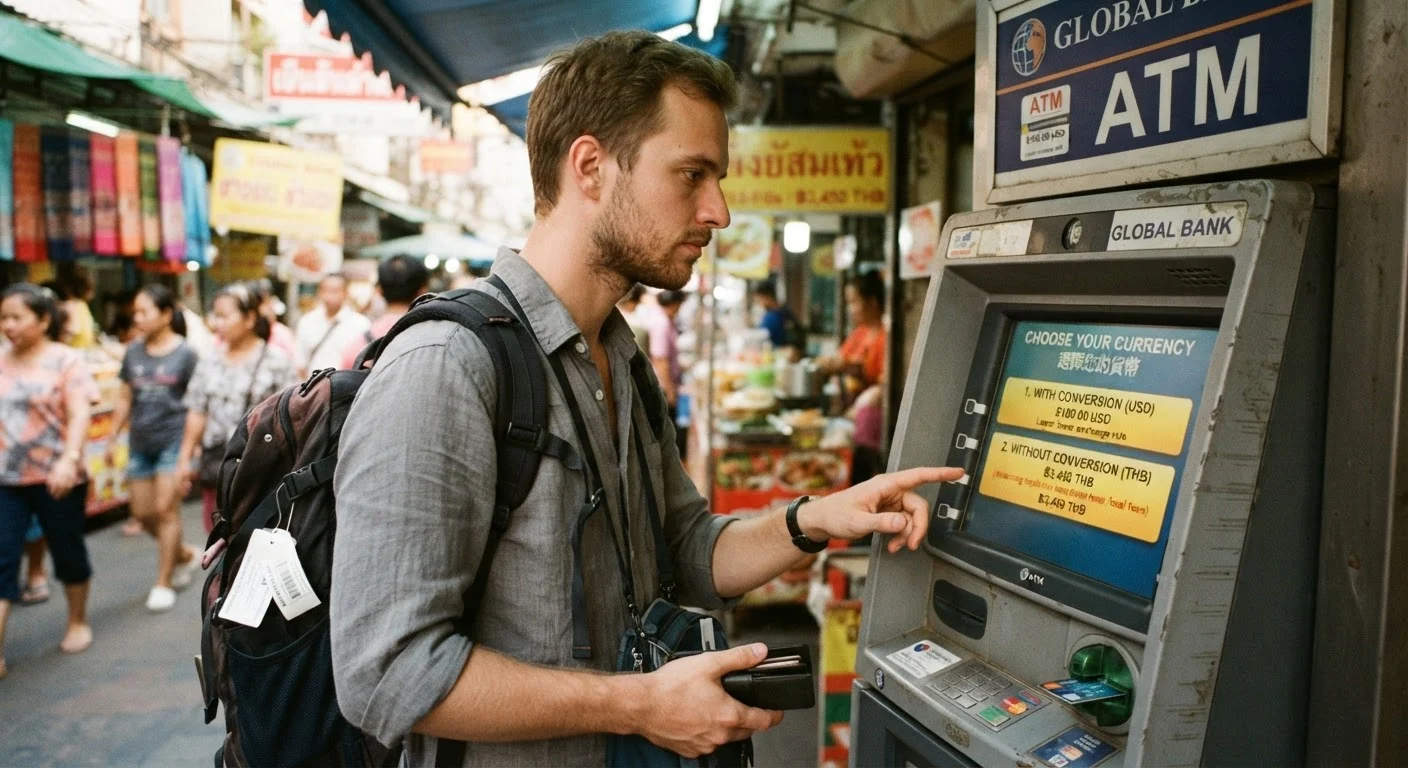
Photo: InsightsVault.com | Interesting Daily Reads editorial
Key Takeaways
- DCC lets merchants charge you in your home currency - but at an exchange rate they control, not your bank's rate.
- The markup on DCC exchange rates typically ranges from 3% to 12% above interbank rates, according to consumer finance research.
- Declining DCC and paying in local currency almost always results in a better rate.
- DCC is common at ATMs, hotel checkouts, restaurants, and tourist-area shops worldwide.
- Your card issuer's foreign transaction fee and a DCC markup can both apply to the same purchase.
How Dynamic Currency Conversion Actually Works
When you use a foreign card terminal or ATM abroad, you may see a prompt asking whether you'd like to be charged in your home currency - say, US dollars - rather than the local one. This is dynamic currency conversion in action.
The mechanics are straightforward. A payment processor partners with the merchant to offer real-time currency conversion at the point of sale. The processor sets the exchange rate, which includes a margin above the mid-market (interbank) rate. That margin is where the fee lives - and it's rarely disclosed clearly. You're shown a dollar amount that feels familiar, but the rate behind it is padded in the processor's favor.
Your card issuer's own conversion process, by contrast, typically applies a rate much closer to the interbank benchmark. Even if your card charges a foreign transaction fee of 1-3%, combining that with a local-currency payment is usually cheaper than accepting DCC.
DCC Is Optional - You Have the Right to Decline
Where You'll Encounter It
DCC is most common in tourist-heavy destinations and at businesses that process a high volume of foreign cards. Expect to see it at:
- ATMs - particularly independent ATMs in airports, hotels, and tourist areas rather than bank-operated machines
- Hotels - especially at checkout when settling a bill run up in local currency
- Restaurants and shops - any terminal that detects a foreign card may trigger the DCC prompt
- Rental car counters - where DCC is sometimes pre-selected on the paperwork
The offer can also appear during online checkout on foreign-based websites, so it isn't limited to in-person transactions. For a broader picture of managing money across borders, see our guide on spending money abroad, which covers ATM fees, card surcharges, and when to use cash instead.
3-12%
Typical DCC markup above interbank rate
Consumer finance analyses of DCC transactions consistently find markups in this range, varying by payment processor and merchant.
~$35
Extra cost on a $500 transaction at 7% DCC markup
Illustrates how DCC costs accumulate quickly on hotel bills, car rentals, or multi-day expenditures.
The Cost in Real Terms
The margin embedded in a DCC rate typically runs between 3% and 12% above the interbank rate, though the exact figure varies by processor and merchant. On a $500 hotel bill, a 7% DCC markup adds $35 - money that flows to the payment processor and merchant, not to you.
What makes this easy to miss is the framing. Being shown a familiar currency figure - $487.32 rather than €452.00 - feels reassuring. But that apparent certainty comes at a price, and the price isn't displayed on the same screen.
Hidden fees at checkout aren't unique to travel. The same psychological mechanism - familiarity reducing scrutiny - appears in domestic online shopping. Our piece on hidden costs in your cart covers how similar dynamics play out when you're shopping online at home.
How to Protect Yourself
The single most effective action is to always select local currency at any foreign terminal or ATM. Here's how to make that a consistent habit:
- Watch the default. Some terminals pre-select the home-currency option. Scroll past it or tap 'other currencies' to find local currency.
- Check ATM screens carefully. The home-currency option is often worded to sound helpful - 'guaranteed rate' or 'no surprises.' These phrases signal DCC, not a benefit.
- Ask at hotels before checkout. Confirm that your folio will be charged in local currency, not converted at the desk.
- Review online checkouts. On foreign websites, look for a currency toggle and switch to local before confirming.
Being sharp about on-the-ground spending is part of a wider approach to travel economics. The same attention to detail that helps you avoid DCC also applies to common flight cost habits that quietly inflate what you pay before you even board.
This article is for general informational purposes only. Exchange rate margins and fee structures vary by card issuer, processor, and country. Always verify current terms with your card provider before traveling.
Frequently Asked Questions
The content provided on our blog site traverses numerous categories, offering readers valuable and practical information. Readers can use the editorial team’s research and data to gain more insights into their topics of interest. However, they are requested not to treat the articles as conclusive. The website team cannot be held responsible for differences in data or inaccuracies found across other platforms. Please also note that the site might also miss out on various schemes and offers available that the readers may find more beneficial than the ones we cover.