
The Hidden Costs in Your Cart: Shipping, Returns, and Online Fee Traps

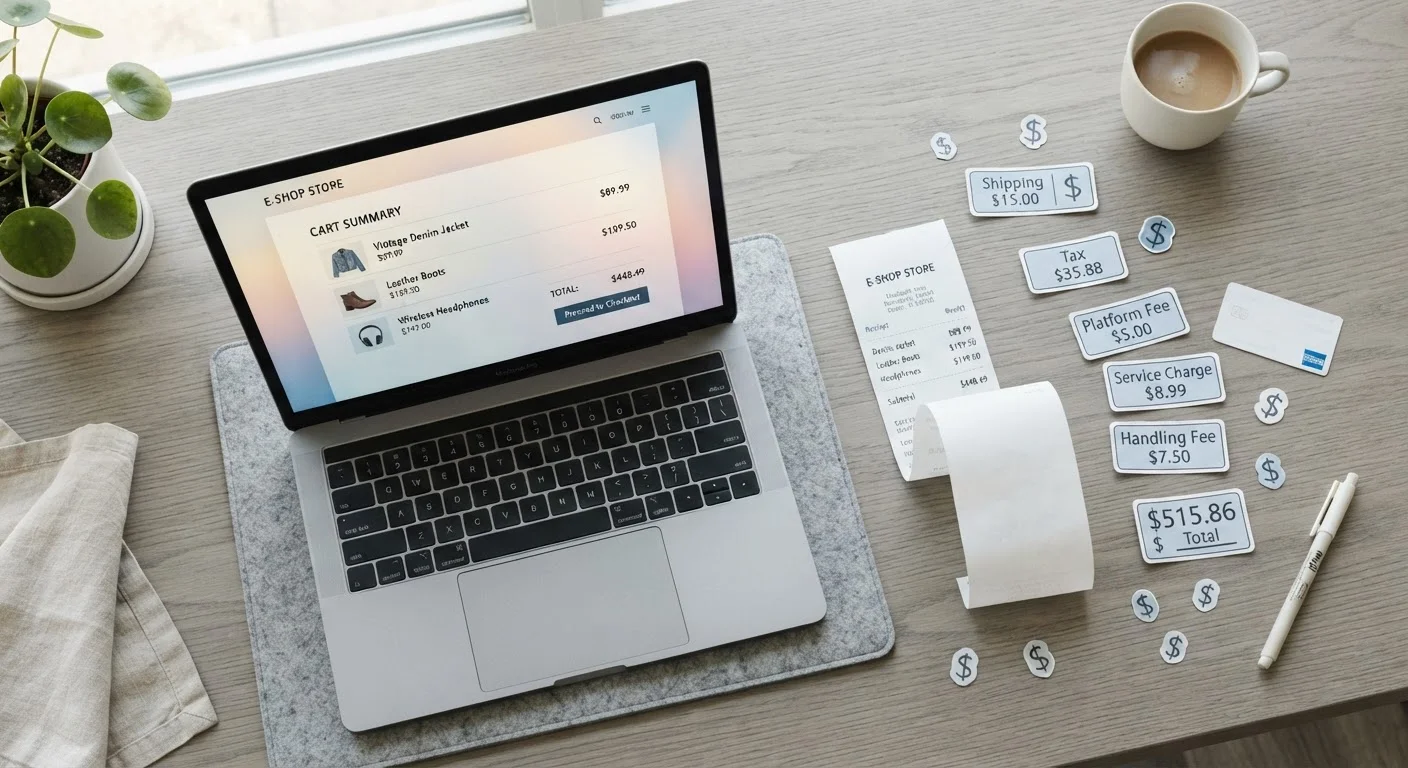
Photo: InsightsVault.com | Interesting Daily Reads editorial
Key Takeaways
- "Free shipping" thresholds often push shoppers to spend more than they intended.
- Return fees, including restocking charges and return postage, can eliminate any savings on a deal.
- Handling fees and service surcharges are common add-ons that appear only at checkout.
- Comparing the final cart total - not just the item price - is the only reliable way to judge value.
- In-store shopping eliminates several of these fee categories entirely, making it competitive for certain purchases.
Why the Sticker Price Is Just the Opening Bid
Online retail is built around the listed price - the number that shows up in search results, comparison tabs, and ads. But that figure rarely reflects what you'll actually pay. By the time a typical order reaches the payment screen, a mix of shipping costs, handling surcharges, and optional upsells has quietly padded the total.
This isn't incidental. Fee structures in e-commerce are often designed so that costs appear incrementally, making each addition feel minor even as the cumulative effect is significant. Understanding where these charges come from is the first step to shopping with an accurate number in mind. For a broader framework on calculating real purchase value, see Reading the True Cost of a Purchase.
47%
Shoppers who abandon carts due to unexpected fees
According to the Baymard Institute's large-scale checkout usability research, extra costs such as shipping and fees are the leading cause of cart abandonment in the US.
20-30%
Average online return rate across retail categories
The National Retail Federation has consistently reported that online purchases are returned at roughly two to three times the rate of in-store purchases.
15-25%
Typical restocking fee range for electronics returns
Restocking fees in this range are commonly disclosed in the fine print of returns policies for consumer electronics and appliances sold by major online retailers.
The "Free Shipping" Threshold Trap
Free shipping offers are among the most effective levers retailers use to increase average order value. A threshold - spend $35, $50, or $75 to qualify - encourages shoppers to add items they weren't planning to buy. The irony is that this extra spending often costs more than a flat shipping fee would have.
Even when thresholds are met honestly, free outbound shipping is sometimes paired with paid return shipping. A shopper who buys a $40 item, returns it, and pays $8 in return postage has effectively paid a 20% fee on a purchase that didn't work out. Restocking fees compound this: some categories charge 15-25% of the item price on top of return shipping.
Check the Returns Policy Before You Buy
For a closer look at how shipping and dynamic pricing flip the math on seemingly good deals, see Why Your Online 'Deal' Sometimes Costs More Than the Store Price.
Handling Fees, Service Charges, and Other Checkout Surprises
Beyond shipping, a range of secondary fees can appear only at the final checkout step. Handling or packaging fees are charged separately from shipping on some platforms, particularly marketplace sellers. Service fees are common on event ticketing and certain retail aggregator sites. Some third-party sellers on large marketplaces set their own fee structures, which may differ substantially from the platform's standard terms.
Pre-checked boxes are another mechanism worth watching. A protection plan, gift wrap service, or trial membership added by default requires the shopper to actively uncheck it - and many don't notice until after purchase. These opt-out offers are particularly common during high-volume shopping periods.
When In-Store Shopping Eliminates the Fee Problem
For certain categories of purchase, walking into a physical store sidesteps the entire hidden-fee equation. There's no shipping cost, no return postage if the item doesn't fit or function as expected, and no restocking fee at most general retailers. For heavy or bulky items - furniture, appliances, large tools - the delivery surcharges on online orders can be substantial and are sometimes listed separately from the main shipping estimate.
In-store shopping also allows for immediate physical inspection, which reduces the likelihood of a return in the first place. A garment tried on before purchase, or a piece of furniture assessed for scale and finish, is less likely to come back. Online vs In-Store Shopping: What Actually Changes the Price You Pay breaks down these cost differences by category in more detail.
How to Calculate Your Real Cart Total Before Committing
The most reliable practice is to treat the checkout screen - not the product page - as the true price reveal. Proceed through checkout to the final summary before entering payment details. This surfaces all fees without completing the transaction.
From there, factor in the likely return scenario. If there's meaningful uncertainty about fit, compatibility, or quality, add the potential return cost to your mental math. Compare that adjusted total against the in-store price, including any cost of getting to the store. Things People Get Wrong About Online Shopping Savings covers several common assumptions that don't hold up under this kind of scrutiny.
Finally, watch for subscription upsells. Annual membership programs tied to shipping benefits can make sense for frequent shoppers but become a hidden cost for infrequent ones - and they carry their own spending-behavior risks. See Subscription Creep: Why Your Bills Keep Growing Without You Noticing for how these charges accumulate over time.
Frequently Asked Questions
The content provided on our blog site traverses numerous categories, offering readers valuable and practical information. Readers can use the editorial team’s research and data to gain more insights into their topics of interest. However, they are requested not to treat the articles as conclusive. The website team cannot be held responsible for differences in data or inaccuracies found across other platforms. Please also note that the site might also miss out on various schemes and offers available that the readers may find more beneficial than the ones we cover.