
Things People Get Wrong About Online Shopping Savings

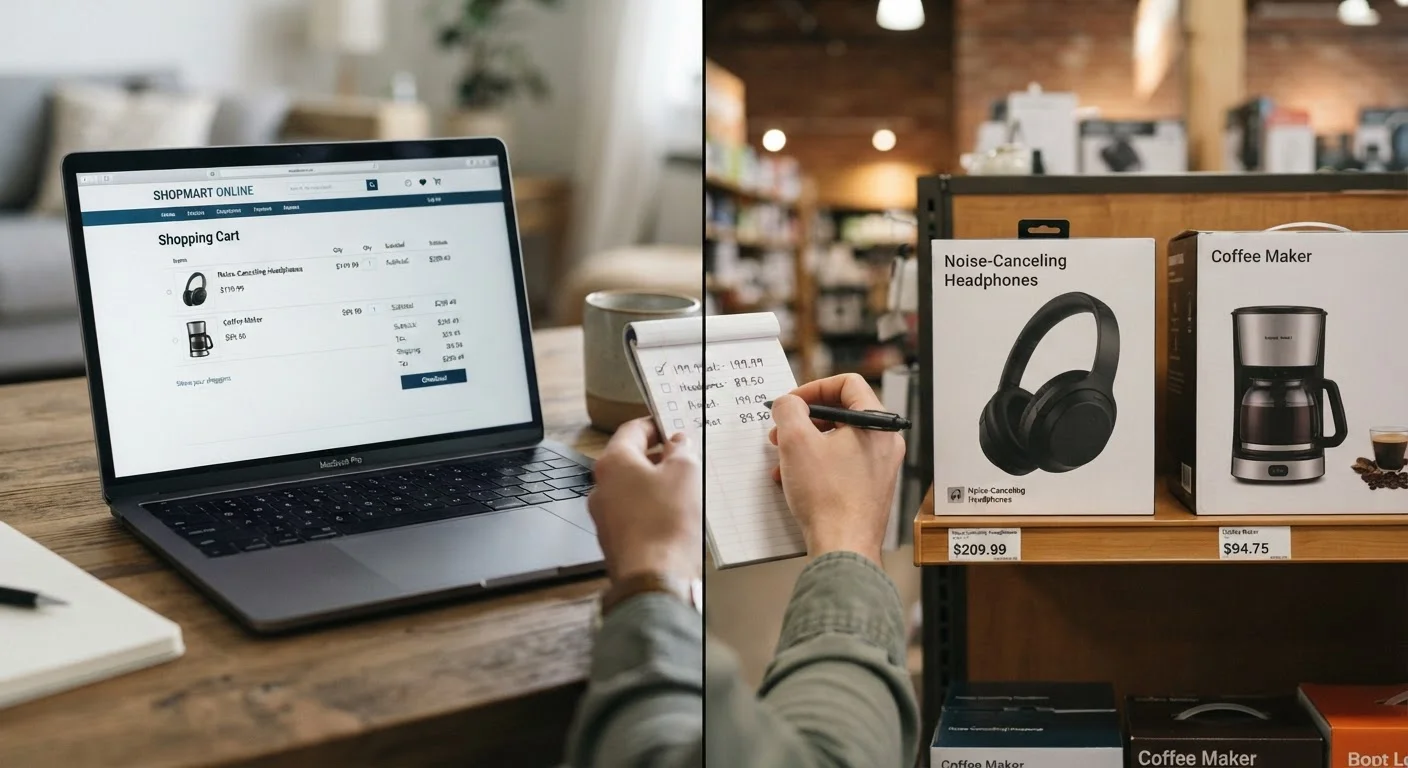
Photo: InsightsVault.com | Interesting Daily Reads editorial
Key Takeaways
- Online prices are not automatically lower than in-store prices after fees and shipping.
- Dynamic pricing means the same item can cost different amounts to different shoppers at different times.
- Return shipping costs can erase savings on purchases that don't work out.
- Promo codes and "sale" badges online don't always reflect genuine discounts.
- In-store shopping can beat online prices for certain categories, especially groceries and furniture.
Why Online Shopping Assumptions Can Cost You
Most shoppers assume clicking "buy" online is almost always the smarter financial move. The reality is more complicated. Online retail has genuine advantages - convenience, selection, and occasional price breaks - but it also comes with structural quirks that can quietly inflate what you pay. Understanding where the myths diverge from reality helps you shop with your eyes open.
For a broader look at how channel choice affects your final cost, see what actually changes the price you pay when comparing online and in-store options.
Myth
Online prices are always lower than what you'd pay in a physical store.
Fact
Online prices are often competitive but not universally cheaper, especially once shipping and fees are included.
Brick-and-mortar stores frequently price-match online competitors and run in-store-only promotions. For categories like groceries, hardware, and furniture, in-store prices - particularly at warehouse clubs or regional chains - can undercut web listings once you factor in delivery charges. The "online is cheaper" assumption holds inconsistently across product categories.
Myth
The price you see online is the price everyone else sees too.
Fact
Many retailers use dynamic pricing, meaning the price you see may differ based on your location, browsing history, or device.
Dynamic pricing is a documented practice in e-commerce. Algorithms can adjust prices in real time based on demand, competitor pricing, your geographic region, and even whether you're shopping on a mobile device versus a desktop. This means two shoppers looking at the same product simultaneously may see different prices. Clearing your browser cookies or using a private browsing window before purchase is one way to reduce the influence of personalized pricing signals - though it doesn't eliminate the practice entirely.
Myth
Free returns mean there's no financial risk in buying online.
Fact
"Free returns" policies often carry conditions, restocking fees, or limited windows that can leave you absorbing costs.
Retailers define "free returns" differently. Some require you to pay return shipping and then receive a refund minus a handling fee. Others offer free returns only for store credit, not to your original payment method. Return windows as short as 14-30 days are common, and high-value items like electronics frequently carry restocking charges of 10-15% regardless of condition. Always read the return policy before purchasing, not after something doesn't work out.
Myth
A promo code at checkout always means you're getting a real discount.
Fact
Many promo codes reflect discounts already built into the listed price, or they offer minimal savings on inflated reference prices.
It's a common tactic to display a higher "original" price alongside a "sale" price that is, in practice, the retailer's standard price. Promo codes found through third-party coupon sites frequently apply to that already-adjusted price, or they don't work at all. Price-tracking browser tools that log historical price data can help verify whether a discount reflects a genuine reduction from the item's typical selling price.
Myth
Buying big-ticket items online is always riskier than buying in-store.
Fact
Large purchases online can be straightforward when you understand what protections and policies apply.
Credit card purchase protections, manufacturer warranties, and retailer return policies extend to online purchases the same way they apply in-store. The real risk with big-ticket online purchases is not the channel itself, but insufficient research before buying - particularly around return policies for large items like appliances or furniture, which often carry delivery and disposal fees. Buying a big-ticket item online for the first time requires understanding a few specific considerations that differ from everyday purchases.
The Hidden Costs That Flip the Math
Even when a listed price is lower online, total cost can be a different story. Shipping fees, membership requirements to unlock free delivery, and restocking charges on returns all add up. A $15 savings on a product can vanish quickly when a return costs $8 in postage and the retailer deducts a restocking fee.
Don't Forget to Calculate Total Cost
Price comparison should always factor in the full transaction: listed price, taxes, shipping, and the likely cost of a return if the item doesn't meet expectations. The hidden costs in your online cart are one of the most overlooked parts of the digital shopping equation.
It's also worth checking whether in-store alternatives actually undercut the web price. Some purchases genuinely cost less in person, particularly for categories like groceries, large furniture, and eyewear.
~35%
Online purchases returned by shoppers
Industry estimates from the National Retail Federation have placed online return rates around 30-35%, significantly higher than in-store return rates, reflecting the fit and expectation gap in e-commerce.
Up to 15%
Typical restocking fee on electronics returns
Many major electronics retailers apply restocking fees of 10-15% on opened items returned online, a cost that can eliminate perceived savings on mid-range purchases.
Shopping Smarter Across Both Channels
The most cost-effective shoppers don't default to one channel - they match the purchase type to the channel that delivers real value for that specific item. Electronics with easy apples-to-apples specifications often reward patient online comparison shopping. Clothing, where fit uncertainty leads to returns, can be cheaper to buy in-store the first time.
Promotional pricing deserves particular skepticism. "Sale" doesn't always mean savings - a point equally true online and off. Similarly, coupon codes found at checkout are frequently pre-applied discounts or codes that fail to validate. For a reality check on deal mechanics, common coupon myths walks through the most persistent misconceptions. When you're ready to make a confident, value-driven purchase decision, the Smart Buying Tips hub is a practical starting point.
This article is for general informational purposes only. Prices, fees, and retailer policies vary and can change; always verify totals at checkout before completing a purchase.
The content provided on our blog site traverses numerous categories, offering readers valuable and practical information. Readers can use the editorial team’s research and data to gain more insights into their topics of interest. However, they are requested not to treat the articles as conclusive. The website team cannot be held responsible for differences in data or inaccuracies found across other platforms. Please also note that the site might also miss out on various schemes and offers available that the readers may find more beneficial than the ones we cover.