
Common Coupon Myths That Cost Shoppers Real Money

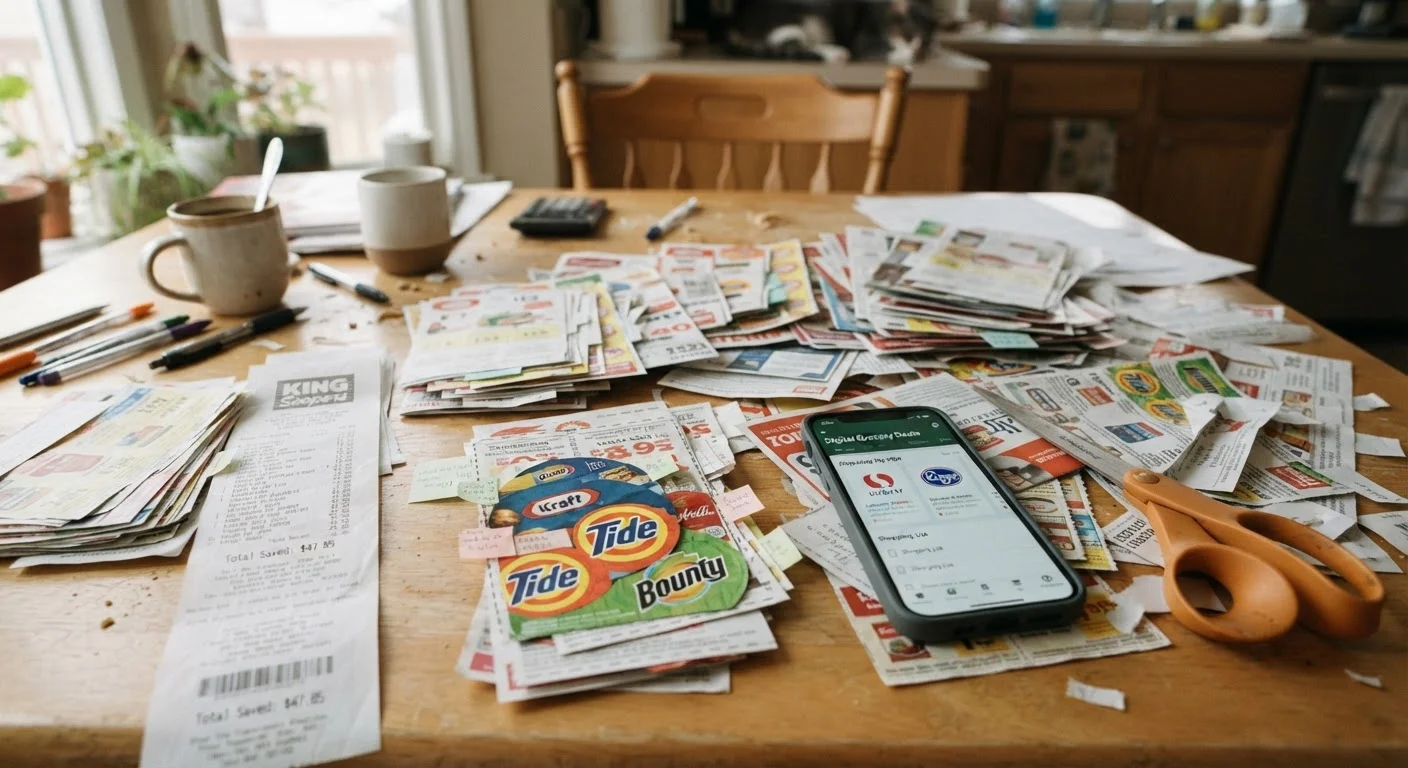
Photo: InsightsVault.com | Interesting Daily Reads editorial
Key Takeaways
- Coupons can push you toward buying things you wouldn't otherwise need, erasing any savings.
- Loyalty program prices are not uniform - many retailers personalize offers based on purchase history.
- Stacking coupons is often allowed but governed by strict per-store rules that vary widely.
- A coupon applied to an inflated base price may deliver less savings than it appears.
- Digital and paper coupons have different acceptance rules; neither format works everywhere.
Why Coupon Myths Are Expensive
Coupons are one of the most accessible tools in a budget-conscious shopper's kit - but several persistent beliefs about how they work lead people to spend more than they intend to. These aren't harmless misconceptions. Acting on them can push you toward unnecessary purchases, cause checkout frustration, or create a false sense of savings while your actual spend climbs.
The myths below aren't fringe ideas. They reflect how most people were introduced to couponing - and how retailers have, in some cases, structured promotions to take advantage of those assumptions. Correcting them doesn't make couponing less useful. It makes it work the way it's supposed to.
Myth
Any coupon saves you money - that's the whole point.
Fact
A coupon only saves money if you would have bought that item at the non-discounted price anyway.
The math breaks down the moment a coupon changes your buying behavior. Purchasing a $6 item with a $1 coupon because the coupon exists - rather than buying your usual $3 alternative - costs you $2 more, not $1 less. Retailers and manufacturers understand this dynamic well. To see how promotional decisions are structured from the retailer's side, understanding where coupons actually come from is worth reading before your next shopping trip.
Myth
Loyalty card prices are the same deal for every member.
Fact
Many loyalty programs use purchase-history data to personalize offers, meaning two members may see different prices or promotions for identical items.
Personalized pricing - sometimes called dynamic or targeted pricing - is increasingly common in retail loyalty programs. A shopper who frequently buys a particular product category may receive smaller discounts on it than an occasional buyer, because the retailer's data suggests they'll purchase regardless. This is distinct from tiered reward levels based on spending thresholds. It means the member-only price you see is not necessarily the floor, and another shopper may be getting a better deal on the same shelf.
Myth
You can always stack coupons to multiply your savings.
Fact
Stacking is only permitted under specific store policies, and many retailers explicitly prohibit combining certain coupon types.
Coupon stacking - applying multiple discounts to a single item or transaction - is a legitimate strategy where allowed, but the rules governing it vary significantly by retailer. Common restrictions include: one manufacturer coupon per item, no combining of two manufacturer coupons, and promo codes that override rather than add to existing sale prices. Coupon stacking explained breaks down which combinations tend to work and the policy patterns worth knowing before you get to the register.
Myth
A bigger percentage off always means a better deal.
Fact
The percentage discount is only meaningful relative to a fair market price - inflated reference prices make large percentages misleading.
A "40% off" coupon applied to an item priced 50% above its typical market rate still leaves you paying more than you'd spend elsewhere. This practice - sometimes called price anchoring - involves setting a high reference price so that the discounted price appears to be exceptional value. Comparing the post-coupon price to prices at other stores, or to what you paid previously, is the only reliable check. Why 'sale' doesn't always mean savings covers the mechanics of promotional pricing in more detail.
Myth
If a coupon code exists online, it will work at checkout.
Fact
Many circulating promo codes are expired, restricted to specific accounts, or have quietly been deactivated by the retailer.
Third-party coupon aggregator sites often index codes without verifying expiration dates or usage restrictions. A code issued for a specific user segment - first-time customers, email subscribers - may generate an error when entered by someone outside that group. Codes can also be deactivated mid-promotion without public notice. Why that coupon didn't work walks through the most common failure points and how to troubleshoot them before abandoning a cart.
Myth
Paper coupons are obsolete - digital is always easier and more available.
Fact
Paper coupons remain valid at many retailers, sometimes carry higher face values, and are accepted in contexts where digital formats are not supported.
Digital coupons dominate in urban markets and online retail, but paper coupons distributed through newspapers, product packaging, and mail continue to circulate - and in some grocery categories, paper inserts offer deeper discounts than their digital equivalents. Seniors and shoppers in areas with limited smartphone access also rely disproportionately on paper. The formats have different acceptance infrastructure: a store's point-of-sale system may support one but not the other. Digital coupons vs. paper coupons compares where each format holds practical advantages.
Putting Coupon Knowledge Into Practice
Knowing what coupons can't do is as important as knowing how to find them. A few habits separate shoppers who consistently save from those who think they're saving but aren't:
- Track your baseline prices. A simple price log - even a notes app - lets you recognize when a couponed price is genuinely below normal or just back to normal after a markup.
- Read the fine print on every offer. Expiration dates, minimum purchase requirements, eligible SKU lists, and one-per-transaction limits are the places where assumed savings disappear.
- Treat timing as part of the strategy. The same coupon applied during a clearance cycle may compound into real savings; applied against a freshly raised price, it does little. Discount timing explains how retail sale cycles affect coupon value.
- Match your strategy to the category. Grocery couponing tactics don't transfer cleanly to travel bookings or service providers. Couponing across categories covers how to adapt your approach.
Coupons Are a Tool, Not a Guarantee
Shopping online introduces its own set of assumptions worth examining - what people get wrong about online shopping savings is a useful companion read for anyone who does most of their buying through a browser.
Loyalty Apps May Share Your Data
The content provided on our blog site traverses numerous categories, offering readers valuable and practical information. Readers can use the editorial team’s research and data to gain more insights into their topics of interest. However, they are requested not to treat the articles as conclusive. The website team cannot be held responsible for differences in data or inaccuracies found across other platforms. Please also note that the site might also miss out on various schemes and offers available that the readers may find more beneficial than the ones we cover.