
Discount Timing: Why the Same Coupon Is Worth More on Some Days Than Others

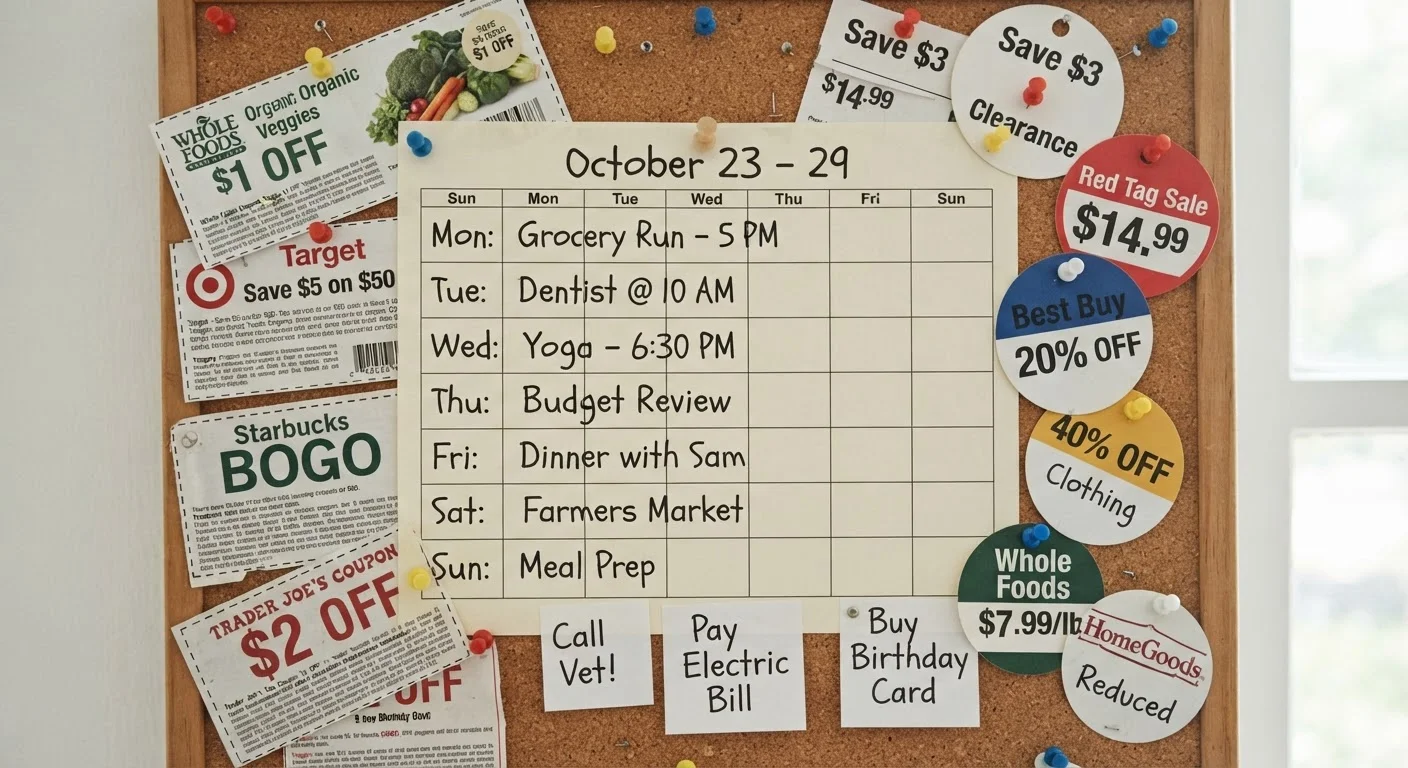
Photo: InsightsVault.com | Interesting Daily Reads editorial
Key Takeaways
- Most retailers run predictable weekly ad cycles - aligning coupons with those cycles increases their effective value.
- Clearance markdowns follow a recurring schedule at many stores; pairing coupons with final markdown days compounds savings.
- End-of-month and end-of-quarter periods often bring more aggressive store promotions, creating better stacking opportunities.
- Some stores allow coupon stacking only on specific days or with specific loyalty pricing - timing unlocks that combination.
- Grocery and big-box stores reset sale pricing mid-week, not on weekends, which affects when a coupon stretches furthest.
The Coupon Doesn't Change - But the Price It's Applied To Does
A 20% off coupon looks identical whether you use it today or next Thursday. What's not identical is the base price it gets applied to. Retailers adjust prices constantly - through weekly ad cycles, clearance rotations, and promotional overlaps - and that underlying price movement is what determines the real-dollar value of your discount.
Understanding how coupons are issued and why is the first step. The second is understanding when to deploy them. A percentage-off coupon applied to an already-marked-down clearance item delivers a larger absolute saving than the same coupon on full-priced merchandise. The math is simple; the trick is knowing when both conditions line up.
This isn't about gaming the system - it's about reading publicly available patterns that retailers themselves establish and repeat on predictable schedules.
Weekly Ad Cycles and the Mid-Week Reset
Most grocery chains and big-box retailers operate on a Wednesday-to-Tuesday or Thursday-to-Wednesday sale cycle. New ad pricing activates mid-week, not on weekends. That matters because weekend shopping - when foot traffic peaks - often catches prices at their regular rather than promotional rate.
Shopping early in the ad cycle, typically Wednesday or Thursday, means sale items are in stock and the week's best prices are active. Applying a coupon on day one of a new ad cycle rather than the last day of an expiring one gives you full access to that week's promotional floor price.
It's also worth checking whether your store honors the previous week's ad prices during the transition window. Some do, for one or two days, which occasionally allows you to overlap a coupon across two consecutive promotional periods - effectively extending your window without any gamesmanship.
Clearance Schedules: The Hidden Markdown Calendar
Clearance isn't a single event. Most retailers apply clearance markdowns in stages - an initial reduction, a second cut, and a final markdown before items are pulled or donated. Each stage follows a rough weekly or biweekly schedule that tends to be consistent within a given store.
A coupon applied on final-markdown day at a clothing or home goods retailer can produce a compounding effect: a 30% off coupon on an item already at 60% below original retail yields a combined discount most shoppers don't plan for. Conversely, the same coupon applied on the first clearance day captures far less absolute savings.
“Retail pricing is not static - it's a continuous negotiation between the store's margin targets and the consumer's willingness to pay. Shoppers who understand that rhythm make structurally better decisions than those who treat every price tag as fixed.”
— Consumer pricing researcher, retail industry commentary, Retail pricing analyst and consumer behavior researcher
The key is spending a few weeks observing when your regular stores apply their second and final markdowns. This is free information - just look at clearance tags and note the date stamps where provided. Many retailers print the markdown date directly on the sticker.
For broader guidance on how discount logic differs by shopping category, see how coupon strategies shift across groceries, travel, and services.
End-of-Month and End-of-Quarter Timing
Retailers - particularly those with monthly sales targets - often push more aggressive promotions in the final days of a month or fiscal quarter. Department stores, furniture retailers, and auto-related service chains commonly exhibit this pattern. Stacking a coupon during a period when store-level promotions are already more generous increases the likelihood that the coupon applies on top of an already-reduced price.
This doesn't mean waiting until the last day of every month to shop. It means being aware that a coupon with a flexible expiry window often delivers better results when timed to coincide with these promotional peaks rather than used immediately upon receipt.
A related consideration: loyalty programme pricing sometimes activates additional discounts that interact with coupon eligibility differently depending on the promotion period. Understanding the trade-offs between loyalty discounts and one-time coupons helps you decide which lever to pull and when.
Also worth noting: not every "sale" is a genuine price reduction. For a clear-eyed look at promotional pricing tactics, the article why 'sale' doesn't always mean savings is a useful companion read.
Stacking Restrictions and Day-Specific Policies
Some retailers allow coupon stacking - combining a store coupon with a manufacturer coupon - only under specific conditions, and those conditions sometimes include day-of-week restrictions or loyalty pricing requirements. A store that runs a "double coupon" promotion on Tuesdays effectively doubles the face value of qualifying coupons on that day only.
Similarly, stores with app-based loyalty pricing may only activate certain coupon combinations when the loyalty discount is applied first, which itself may require the account to be in an active promotional tier. Reading policy fine print before assuming a coupon will stack on any given day prevents wasted trips and checkout surprises.
For a clearer picture of how different coupon types interact structurally, the breakdown of promo codes vs. manufacturer coupons explains the mechanics behind stacking eligibility.
Timing isn't a minor detail in coupon strategy - it's often the variable that determines whether a discount is marginal or meaningful. The complete guide to finding and using coupons throughout the year covers how these timing principles apply across seasonal cycles as well.
The content provided on our blog site traverses numerous categories, offering readers valuable and practical information. Readers can use the editorial team’s research and data to gain more insights into their topics of interest. However, they are requested not to treat the articles as conclusive. The website team cannot be held responsible for differences in data or inaccuracies found across other platforms. Please also note that the site might also miss out on various schemes and offers available that the readers may find more beneficial than the ones we cover.