
Loyalty Programme Discounts vs. One-Time Coupons: The Trade-Offs Worth Knowing

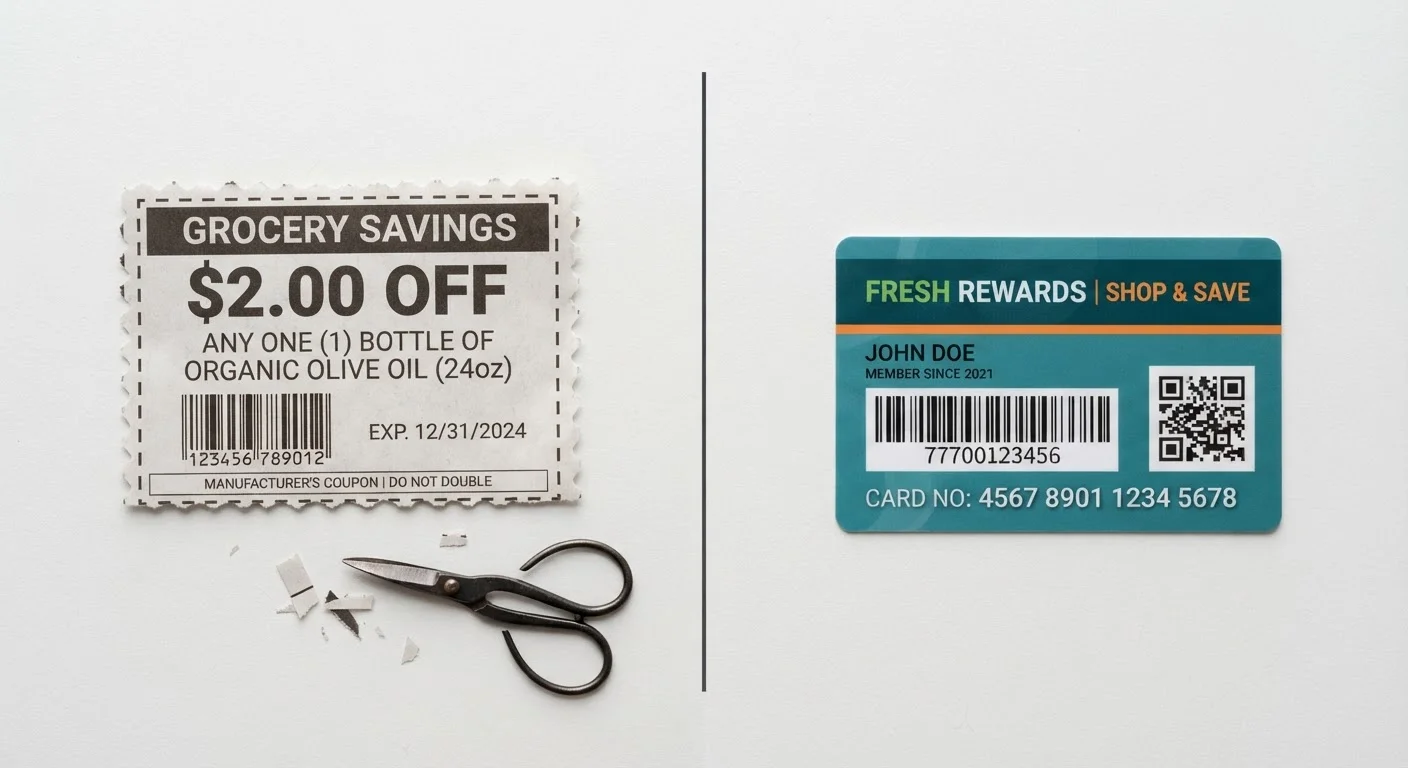
Photo: InsightsVault.com | Interesting Daily Reads editorial
Key Takeaways
- Loyalty programmes deliver consistent savings but require data sharing and sometimes minimum spending.
- One-time coupons offer flexibility with no commitment, but savings can be unpredictable.
- Combining both approaches often produces better results than relying on either alone.
- Loyalty pricing is not always the best price - compare against public sales and coupons.
- Understanding how discounts are structured helps you avoid spending more to save more.
Automatic savings without clipping or searching
Member prices apply at checkout without any extra steps, making it easy to capture savings on routine purchases.
Accumulate points toward future purchases
Points-based programmes let savings compound over time, particularly useful for high-frequency categories like groceries or fuel.
Access to member-only sales and early offers
Many programmes give members advance or exclusive access to markdowns, which can matter in categories with limited stock.
Personalised offers based on purchase history
Targeted discounts on items you actually buy can be more useful than generic coupons that require spending on unfamiliar products.
Requires sharing personal and purchase data
Loyalty programmes are, in part, data-collection tools. Your shopping habits, frequency, and preferences are recorded and used for marketing and analytics.
Can encourage spending beyond your actual needs
Threshold bonuses and point expiration deadlines can subtly pressure shoppers to spend more than planned to avoid 'losing' accrued value.
Member pricing isn't always the lowest available
Loyalty prices are set to appear competitive, but public clearance sales, manufacturer coupons, or competitor prices can sometimes undercut them significantly.
Flexibility is limited to participating retailers
Savings are locked to one brand or chain, which works against you when a better price exists elsewhere.
What You're Actually Signing Up For
Loyalty programmes and one-time coupons both reduce what you pay at checkout - but they operate on fundamentally different logic. Understanding that distinction is the starting point for using them effectively.
A loyalty programme is an ongoing relationship with a retailer: you register, share personal data, and earn discounts or points in exchange for repeat business. A one-time coupon is a transactional tool - a specific discount tied to a specific purchase, with no continued obligation.
To understand why retailers offer either type of discount in the first place, it helps to look at the incentive structures behind them. Our article on how retailers decide what discounts to offer breaks down that logic in detail. The short version: discounts are designed to serve the retailer's goals as much as yours.
Loyalty Programmes and Data Privacy
The Case for Loyalty Programmes
For shoppers with predictable habits - regular grocery runs at the same store, filling up at the same gas station, or buying household staples from one pharmacy - loyalty programmes can deliver meaningful ongoing savings without much active effort.
Automatic savings without clipping or searching
Member prices apply at checkout without any extra steps, making it easy to capture savings on routine purchases.
Accumulate points toward future purchases
Points-based programmes let savings compound over time, particularly useful for high-frequency categories like groceries or fuel.
Access to member-only sales and early offers
Many programmes give members advance or exclusive access to markdowns, which can matter in categories with limited stock.
Personalised offers based on purchase history
Targeted discounts on items you actually buy can be more useful than generic coupons that require spending on unfamiliar products.
Member-only pricing, fuel points, and birthday rewards can add up steadily across a year. Some programmes also layer well with manufacturer coupons or cashback apps - see how that works in our guide on combining cashback apps and coupons.
~70%
US adults in at least one loyalty programme
According to Statista consumer survey data, a large majority of American adults are enrolled in at least one retail loyalty scheme, though active engagement rates are considerably lower.
~half
Loyalty members who rarely redeem rewards
Research from loyalty industry analysts consistently finds that a significant share of enrolled members accumulate points without ever redeeming them, limiting actual savings realized.
The Case for One-Time Coupons
Single-use coupons don't ask anything of you beyond the transaction itself. There's no account to manage, no data to hand over, and no pressure to concentrate your spending at one place to unlock savings.
Requires sharing personal and purchase data
Loyalty programmes are, in part, data-collection tools. Your shopping habits, frequency, and preferences are recorded and used for marketing and analytics.
Can encourage spending beyond your actual needs
Threshold bonuses and point expiration deadlines can subtly pressure shoppers to spend more than planned to avoid 'losing' accrued value.
Member pricing isn't always the lowest available
Loyalty prices are set to appear competitive, but public clearance sales, manufacturer coupons, or competitor prices can sometimes undercut them significantly.
Flexibility is limited to participating retailers
Savings are locked to one brand or chain, which works against you when a better price exists elsewhere.
This flexibility matters more than it might seem. Coupon values can shift depending on when and where you use them - something our article on discount timing and sales cycles explores in practical detail. A coupon applied on a clearance day or stacked with a store sale can outperform a loyalty member price by a meaningful margin.
One-time coupons also work well across categories where you don't have brand loyalty - travel, services, and seasonal purchases. For more on adapting coupon tactics to different shopping contexts, see couponing across categories.
Making the Two Work Together
The most effective strategy for most shoppers isn't choosing one approach - it's being deliberate about when each type of discount applies. A few guiding principles help here:
- Join loyalty programmes only at stores you already frequent. Signing up speculatively rarely pays off, and it does generate data you may prefer not to share.
- Don't assume member pricing is the lowest available price. Check public sale prices and available coupons before assuming your loyalty tier is winning. Common coupon myths like this one genuinely cost shoppers money.
- Stack where allowed. Many loyalty programmes permit manufacturer coupons on top of member pricing - but not all, and terms change. Verify at checkout rather than assuming.
- Track what you're actually saving. Without a baseline, it's easy to feel like you're saving without knowing if you are.
For a broader look at where and how different discount strategies intersect, the Smart Buying Tips hub is a useful starting point.
The content provided on our blog site traverses numerous categories, offering readers valuable and practical information. Readers can use the editorial team’s research and data to gain more insights into their topics of interest. However, they are requested not to treat the articles as conclusive. The website team cannot be held responsible for differences in data or inaccuracies found across other platforms. Please also note that the site might also miss out on various schemes and offers available that the readers may find more beneficial than the ones we cover.