
On-the-Road Savings: A Complete Reference for Budget-Conscious Travellers

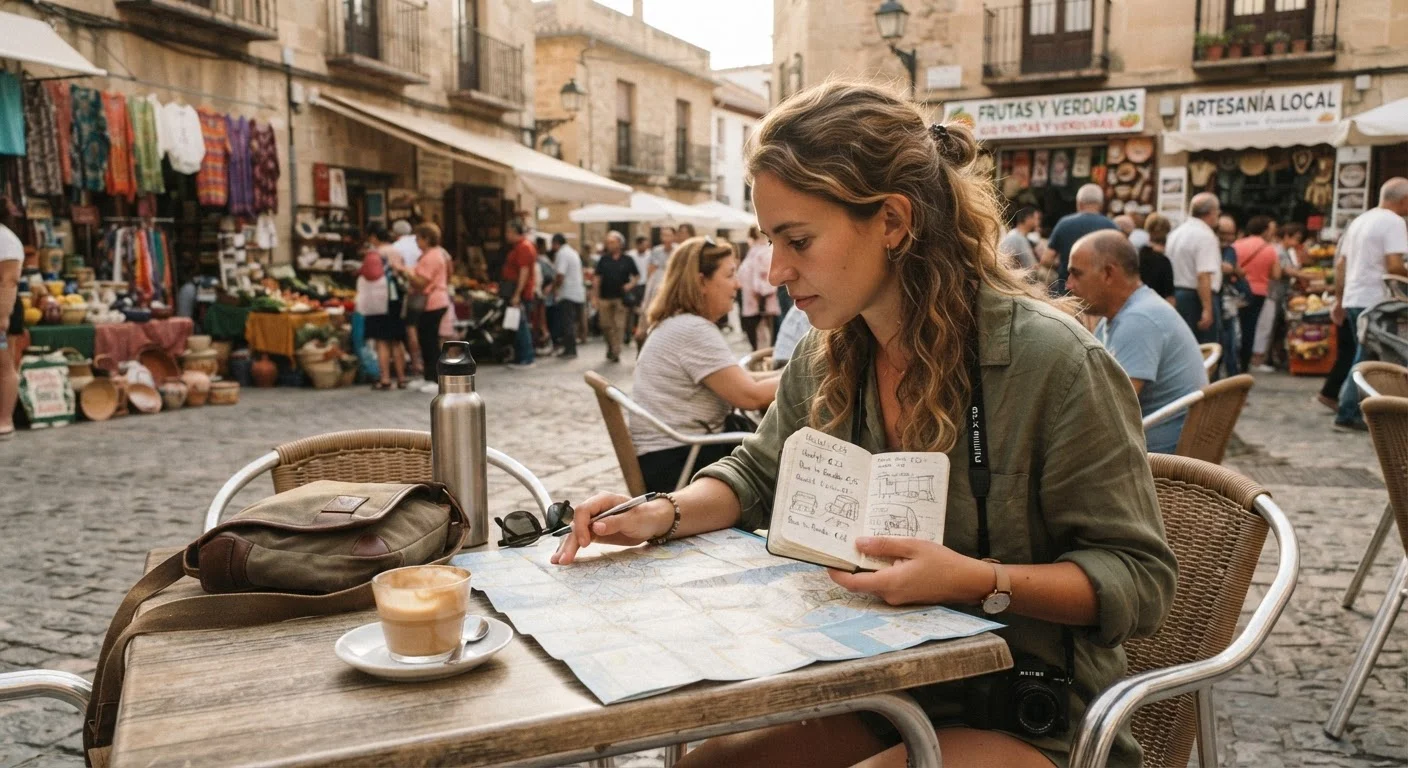
Photo: InsightsVault.com | Interesting Daily Reads editorial
Understanding Where Your Travel Money Actually Goes
Most travelers are surprised to discover that accommodation and flights - the costs they plan most carefully - often account for less than half of total trip spending. The bigger leaks are daily: transport, food, drinks, entry fees, and impulse purchases add up quietly but consistently. Getting a realistic picture of these categories is the first step toward controlling them.
| Biggest daily cost category | Food and drink (typically 30-40% of daily spend) (Based on commonly cited traveler spending breakdowns; varies by destination) |
| Avg. saving: public transit vs. taxi | 50-80% less per journey (destination-dependent) (General comparison; varies significantly by city) |
| Grocery vs. restaurant meal cost | Often 60-70% less for self-prepared meals (Approximate; varies by destination and local market) |
| Walking threshold worth knowing | 20-25 minutes on foot (~1.5 miles) avoids a transport fare (General guidance; depends on terrain, climate, and traveler fitness) |
| Recommended tracking method | Log spending each evening by category (Common practice among experienced budget travelers) |
A useful starting point is to divide your daily budget into three rough buckets: transport (local movement between places), sustenance (food, water, coffee), and activities (entry fees, tours, experiences). Tracking even loosely - a note in your phone each evening - gives you data to adjust mid-trip rather than running out of runway on day five.
For more on reducing everyday costs beyond travel, see our practical guide to cutting everyday costs. Many of the same habits transfer directly to the road.
Local Transport: Moving Around Without Overpaying
Getting around within a destination is one of the most controllable costs travelers overlook at the planning stage. Public transit - metro systems, buses, shared minibuses - is almost always a fraction of the price of taxis or ride-hailing apps, especially for common tourist routes.
A few practical approaches worth knowing:
- Day or multi-day transit passes - many cities sell these at a discount versus per-ride fares. Verify at the transit authority's own kiosks or website rather than through third-party resellers.
- Walking distance calibration - many travelers default to transport for distances they could walk in 20-25 minutes. A downloaded offline map (no data needed) makes this easy to assess on the spot.
- Shared rides and minibuses - in many destinations, shared taxis or fixed-route minibuses serve the same corridors as private taxis at a small fraction of the cost. Locals use them; the routes just require a bit of local knowledge to navigate.
If you're combining transport savings with smart packing, a well-prepared day bag can also reduce the urge to stop and spend during the day.
Food and Drink: The Daily Budget's Biggest Variable
Food spending is where most travelers either save or blow their budget. The gap between eating like a tourist and eating like a local can be substantial - sometimes 60-70% less for similar nutritional value and often better quality.
Daily travel budget
The total amount a traveler plans to spend per day, covering all categories: food, local transport, accommodation (if not pre-paid), activities, and incidentals. Setting one before departure - and tracking against it - is the most reliable way to avoid running short mid-trip.
Street food
Prepared food sold by vendors in public spaces - markets, roadsides, or food stalls. In many destinations, street food is a staple of the local diet and significantly less expensive than sit-down restaurants, while often reflecting authentic regional flavors.
Transit pass
A prepaid card or ticket that gives unlimited or discounted access to a city's public transport network for a set period (e.g., 24 hours, 72 hours, one week). Frequently offered at a lower per-ride cost than purchasing individual tickets.
Impulse spend
An unplanned, in-the-moment purchase - a souvenir, bottled drink, or convenience snack - made without budgeting for it. Individually small amounts can accumulate into a meaningful daily cost across a multi-week trip.
Cash envelope method
A budgeting technique where a set amount of physical cash is designated for a specific category (e.g., daily spending money). Once the cash is gone, no more is spent in that category - creating a tangible, automatic spending cap.
Free-entry days
Designated days or time slots when museums, galleries, or other paid attractions offer free or reduced-price admission. Many publicly funded institutions in Europe, North America, and elsewhere operate these regularly - checking ahead can eliminate significant activity costs.
A consistent strategy that experienced budget travelers use: eat one market or street meal per day, prepare one simple meal from grocery items, and allow one sit-down restaurant meal. This hybrid approach avoids both the monotony of all self-catering and the drain of all restaurant dining.
For a detailed look at finding quality food abroad without overspending, see eating well abroad without draining your budget. And if you're comfortable with basic self-catering, grocery shopping while travelling covers how to navigate unfamiliar supermarkets effectively.
Activity Fees, Free Alternatives, and Managing Impulse Spending
Entry fees for major attractions can consume a significant portion of a daily budget, particularly in popular European or North American cities. The strategy here is selective prioritization - identify one or two paid experiences that are genuinely distinctive, and fill the rest of the day with free or low-cost alternatives.
Most destinations have more free options than travelers realize: public parks, municipal museums on free-entry days, markets, coastal paths, historic neighborhoods, and cultural events. These are often where more authentic, unscripted experiences happen anyway.
~40%
Share of trip budget spent on food and drink
Commonly cited in traveler spending analyses; the exact figure varies by destination, travel style, and duration.
60-80%
Potential savings using public transit over taxis
Approximate comparison based on general urban transit versus private hire costs; varies widely by city and route.
$5-$15
Typical daily impulse spend if unchecked
Small per-transaction amounts - drinks, snacks, tourist tat - accumulate quickly across a multi-week trip.
Impulse purchases - a souvenir, a bottled water, a convenience-store snack - are individually small but cumulatively significant. Carrying a reusable water bottle, snacks from a grocery run, and setting a firm daily cash envelope for discretionary spending are three techniques that reliably reduce impulse leakage without requiring willpower every single moment.
For accommodation, which interacts closely with your daily location and therefore your daily transport costs, the complete guide to budget accommodation covers how to balance price, location, and comfort effectively. Staying centrally - even in a budget property - often eliminates entire transport legs.
This article provides general travel budgeting information for educational purposes. Prices, transit options, and conditions vary widely by destination and change over time. Always verify costs and logistics with official local sources before traveling.
The content provided on our blog site traverses numerous categories, offering readers valuable and practical information. Readers can use the editorial team’s research and data to gain more insights into their topics of interest. However, they are requested not to treat the articles as conclusive. The website team cannot be held responsible for differences in data or inaccuracies found across other platforms. Please also note that the site might also miss out on various schemes and offers available that the readers may find more beneficial than the ones we cover.