
Street Food vs. Sit-Down Restaurants: What Travellers Actually Spend

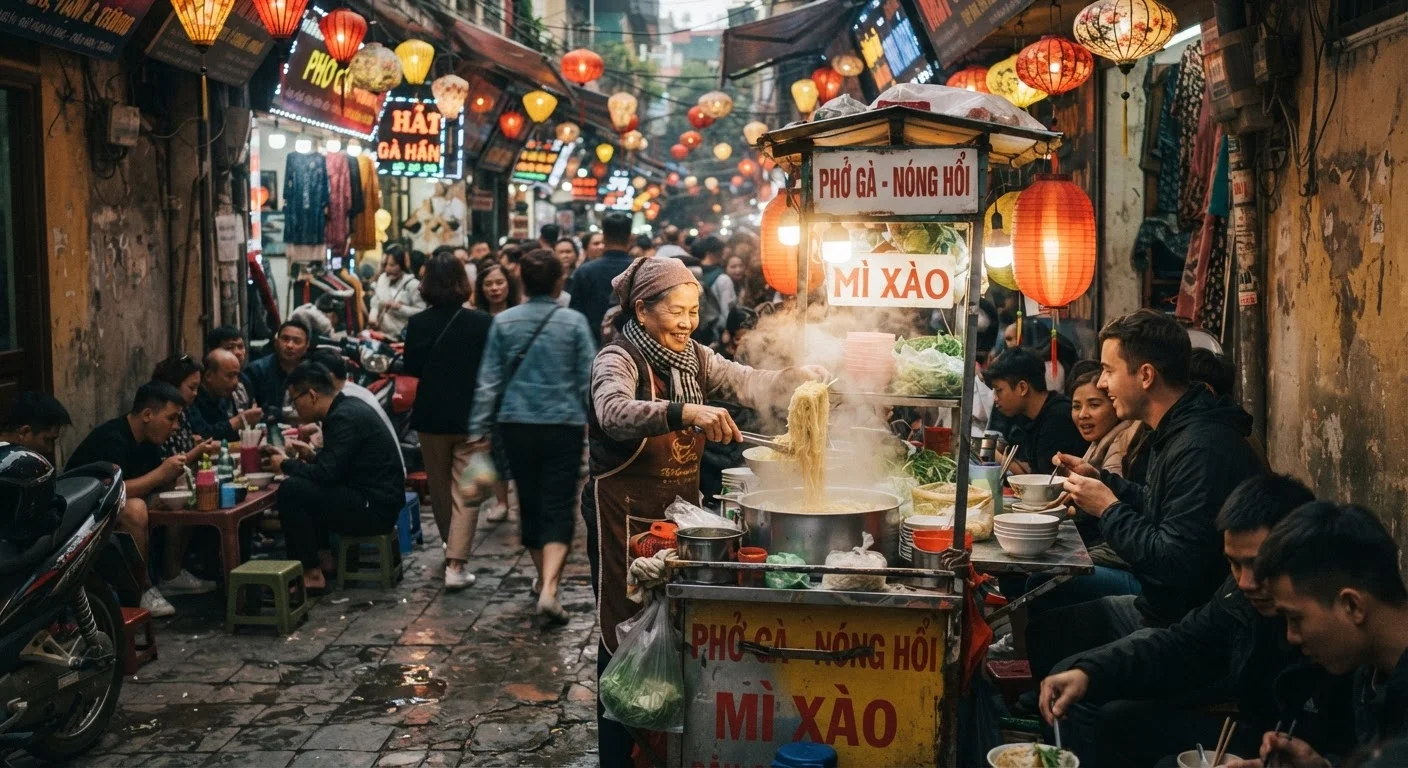
Photo: InsightsVault.com | Interesting Daily Reads editorial
Key Takeaways
- Street food typically costs 40-70% less than sit-down restaurants in the same destination.
- Food safety risks from street food are manageable with simple, practical habits.
- The cost gap between street food and restaurants narrows significantly in Western Europe and North America.
- Sit-down restaurants often provide more reliable options for dietary restrictions and allergies.
- Mixing both approaches tends to produce the best balance of savings and travel experience.
The Real Numbers: What Travelers Are Actually Paying
The cost difference between street food and sit-down restaurants is real, but it's not uniform across every destination. Context matters enormously.
In destinations like Thailand, Vietnam, Mexico, and Morocco, a filling street food meal - think pad thai, banh mi, tacos al pastor, or a bowl of harira - commonly runs between $1 and $4 USD. A comparable sit-down restaurant meal at the same destination typically ranges from $8 to $20 USD, depending on whether the venue caters to locals or tourists. That's a gap of 3x to 5x per meal. Over two weeks eating two meals a day, that difference can compound to $200-$500 in savings.
In Western Europe, the math shifts. Street food options in cities like Paris, Amsterdam, or Lisbon - kebabs, crepes, pastries - are cheaper than restaurants but rarely as dramatically so. Expect to pay $5-$10 for street food versus $15-$30 for a sit-down meal. The savings are real, but proportionally smaller.
| Criterion | Street Food | Sit-Down Restaurant |
|---|---|---|
| Avg. meal cost (Southeast Asia) | $1-$4 USD | $8-$20 USD |
| Avg. meal cost (Western Europe) | $5-$10 USD | $15-$30 USD |
| Dietary restriction flexibility | Limited | Generally higher |
| Authenticity of local cuisine | Often very high | Variable |
| Comfort and seating | Minimal or none | Full seating |
| Speed | Fast | Slower |
| Ingredient transparency | Low | Higher |
For a fuller picture of how food costs fit into the broader travel budget, see our complete on-the-road savings reference.
Food Safety: What the Evidence Actually Suggests
Concern about street food safety is legitimate - but it's often overstated relative to the actual risk, particularly when travelers apply a few consistent habits.
The key variables aren't street-versus-restaurant so much as food turnover, cooking temperature, and water source. A street stall that grills meat to order in front of you and draws crowds of locals is generally lower-risk than a quiet tourist-facing restaurant that may be turning over food slowly.
A Note on Food Safety Abroad
Practical habits that reduce risk at street stalls: look for high foot traffic (locals eating there is a positive signal), choose items cooked fresh to order rather than pre-prepared, avoid raw produce unless you know the water quality is reliable, and carry your own hand sanitizer. These same principles apply to evaluating any food source abroad.
Travelers with compromised immune systems, pregnant travelers, or those with serious food allergies should apply additional caution and lean toward restaurants where ingredient sourcing can be discussed - or supplement with grocery store and market shopping for tighter control.
Where Sit-Down Restaurants Earn Their Cost Premium
Restaurants aren't just a more expensive version of the same thing - they offer genuinely different value in specific situations.
Dietary flexibility is the clearest example. Travelers managing gluten intolerance, nut allergies, vegetarian or vegan diets, or other restrictions often find street food difficult to navigate due to language barriers and limited ingredient transparency. A restaurant with a written menu (or one with English-language options) allows for more confident, specific requests.
Comfort and stamina matter on long trips too. After a demanding travel day, sitting at a table, eating a structured meal, and not standing in a market queue has real recuperative value - especially for travelers covering multiple cities in a short window.
Finally, some sit-down restaurants in local neighborhoods - not tourist strips - are themselves budget-friendly. A lunchtime set menu (called a menú del día in Spain, prix fixe in France, or thali in India) can deliver multiple courses at prices close to street food. See our guide to eating well abroad on a budget for how to find these spots.
The Smart Approach: Mixing Both Strategically
Most experienced budget travelers don't choose one or the other - they rotate based on time of day, destination type, and what they're trying to accomplish.
A common pattern: street food or a market meal at breakfast and lunch (lower stakes, lower cost, faster), with a sit-down meal every second or third evening when the social or restorative value justifies the cost. This approach can keep daily food spending in check while avoiding the fatigue that comes from always optimizing every decision.
3-5x
Typical cost gap vs. restaurants in Southeast Asia
Street food meals in countries like Thailand and Vietnam commonly cost a fraction of equivalent sit-down meals, based on widely reported traveler spending data.
$200-$500
Potential savings over a two-week trip
Estimated based on eating two street food meals daily versus two restaurant meals in a mid-range Southeast Asian destination - savings vary significantly by country and city.
It's also worth questioning the assumption that all street food is cheap and all restaurants are expensive. Tourist-facing street food in high-traffic areas - think vendor carts outside major landmarks - can be overpriced relative to the quality. A local restaurant two blocks off the main square may offer more food for less money. Common travel budget myths include assuming that visible cheapness signals value - location and context matter as much as format.
For travelers focused on cutting daily costs beyond just food, these broader spending reduction strategies apply equally well on the road.
This article provides general travel and financial information for educational purposes. Food safety conditions, prices, and dining options vary by destination and change over time. Always verify current conditions through official sources before traveling.
The content provided on our blog site traverses numerous categories, offering readers valuable and practical information. Readers can use the editorial team’s research and data to gain more insights into their topics of interest. However, they are requested not to treat the articles as conclusive. The website team cannot be held responsible for differences in data or inaccuracies found across other platforms. Please also note that the site might also miss out on various schemes and offers available that the readers may find more beneficial than the ones we cover.