
Car Repair Jobs You Can Safely Do Yourself - and Those You Shouldn't Touch

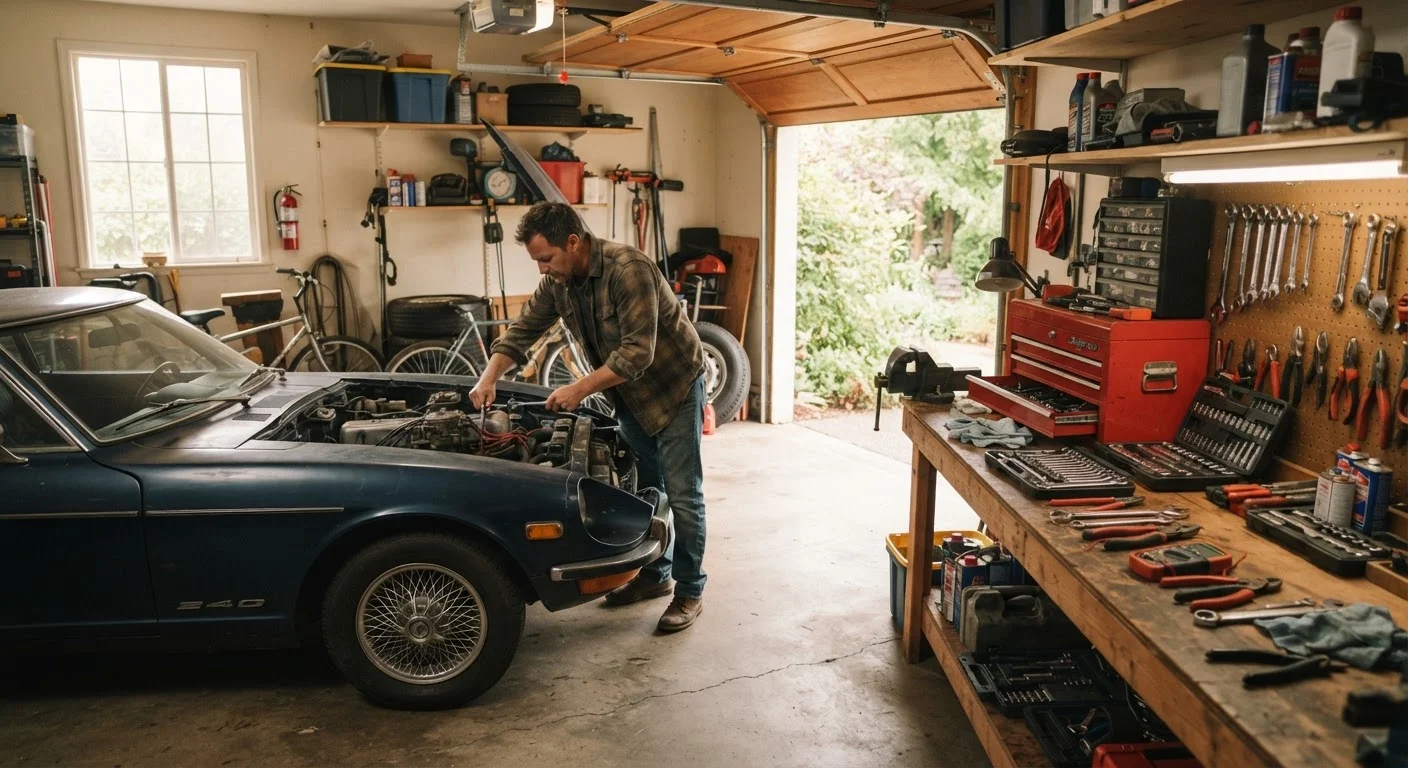
Photo: InsightsVault.com | Interesting Daily Reads editorial
Key Takeaways
- Several routine maintenance tasks are genuinely safe for most car owners to handle at home with basic tools.
- Brake system work, airbag components, and fuel system repairs carry serious injury and safety risks - leave these to qualified mechanics.
- The cost savings from DIY can evaporate quickly if a mistake leads to a larger repair or safety failure.
- Your vehicle's owner manual is the most reliable guide to service intervals and specifications for your specific car.
Why the DIY vs. Professional Question Matters for Your Wallet
Labor is often the largest line item on a repair invoice. According to AAA, US drivers paid an average of $75 to $130 per hour for mechanic labor in recent years, depending on the region and shop type. That gap makes it tempting to handle everything yourself - but the smarter move is being selective.
Some jobs genuinely require nothing more than the right part, a YouTube tutorial, and an hour of your weekend. Others involve systems where an error can cause brake failure, airbag misfires, or electrical shorts - consequences that go well beyond a wasted afternoon. Understanding the boundary between the two is the most cost-effective thing you can do as a car owner.
For a broader view of keeping repair bills manageable over time, see our preventive maintenance guide.
Repairs Most Owners Can Handle Safely
These tasks share a few things in common: the components are accessible without lifting the vehicle on a hoist, the consequences of a minor mistake are usually obvious and correctable, and the tools required are inexpensive and widely available.
- Engine air filter replacement: Typically a single housing with a clip or a few screws. Takes about 10 minutes and can cost $15-$30 in parts versus $40-$60 at a shop.
- Cabin air filter replacement: Usually located behind the glove box. Your owner manual shows the exact location. A $15-$25 filter swap.
- Windshield wiper blades: Snap-on installation; instructions come with the blade. One of the easiest maintenance tasks there is.
- Exterior bulbs (headlights, taillights, turn signals): Many bulbs are reachable from the engine bay or trunk liner. Check your manual - some modern vehicles require bumper removal, which changes the calculation.
- Oil and oil filter change: Requires safely raising and supporting the vehicle, draining hot oil carefully, and correct torque on the drain plug. Entirely manageable with a floor jack, jack stands, and the right filter wrench. Always dispose of used oil properly at a recycling center.
- Battery replacement: Disconnect the negative terminal first, then positive. Reverse when installing the new battery. Note that some vehicles require a relearn procedure after battery replacement - check your manual.
| Task | DIY Feasibility | Typical Part Cost | Typical Shop Labor | Risk If Done Wrong | |
|---|---|---|---|---|---|
| Engine air filter | High | $15-$30 | $20-$40 | Reduced engine performance | |
| Wiper blades | Very High | $10-$30 | $15-$25 | Minimal | |
| Oil and filter change | Moderate | $25-$60 | $40-$100 | Oil leak if drain plug overtorqued | |
| Battery replacement | Moderate | $80-$200 | $30-$80 labor | Electrical issues if done out of sequence | |
| Brake pads and rotors | Low-Moderate | $40-$150 per axle | $150-$300 labor | Brake failure - serious safety risk | |
| Fuel pump replacement | Not recommended | $100-$400 | $200-$500 labor | Fire hazard from fuel system pressure | |
| Airbag components | Do not attempt | Varies widely | $200-$600+ labor | Accidental deployment - injury risk |
The trade-offs of DIY versus professional work apply here the same as in any home repair context - the job has to match your actual skill level, not your optimistic estimate of it.
Jobs That Carry Real Risk - Leave These to a Professional
The following repairs either involve safety-critical systems, require specialized equipment to do correctly, or present a genuine injury hazard if approached without proper training.
Never Work Under a Car Supported Only by a Jack
- Brake pads, rotors, and calipers: While brake pad replacement is sometimes described as a beginner DIY job, errors in reassembly - such as incorrect caliper piston orientation or improper torque on slide pins - can cause brake fade or failure. Rear drum brakes are especially complex. If you haven't done this before, professional inspection is worth the cost.
- Airbag system components (SRS): Supplemental restraint systems retain electrical charge even after the battery is disconnected. Accidental deployment can cause serious injury. Any work near airbag modules, clock springs, or sensors should be performed by a qualified technician.
- Fuel system repairs: Fuel injectors, fuel pumps, and fuel lines involve flammable materials under pressure. A leak near ignition sources is a fire hazard. This category belongs in the shop.
- Transmission service and repair: Beyond a basic fluid drain-and-fill (which is itself model-specific), automatic transmission work requires specialized diagnostic tools and a precise understanding of the unit. Errors are expensive - replacement transmissions can run $1,500-$4,000 or more.
- Hybrid and electric vehicle (EV) high-voltage systems: The battery packs and inverters in hybrid and electric vehicles operate at voltages that can be lethal. Only technicians with specific high-voltage training and equipment should work on these systems.
- Suspension and steering components: Ball joints, tie rods, and wheel bearings affect handling and tire wear. Improper installation can cause loss of vehicle control. A wheel alignment - required after most suspension work - also requires shop equipment.
How to Make the Call on Any Given Job
When you're unsure whether a repair is within your reach, work through these questions:
- Does a mistake affect vehicle safety? If the answer is yes - brakes, steering, tires, lights - lean toward professional help.
- Do you have the right tools? Some jobs require torque wrenches, specialty sockets, or scan tools. Renting or buying equipment for a one-time repair sometimes costs more than labor.
- Is the part accessible without major disassembly? A straightforward filter swap is one thing; a job that requires removing the intake manifold to reach a sensor is another.
- What does your owner manual say? This is an underused resource. It specifies torque values, fluid types, and service intervals for your exact vehicle.
If you decide you need a shop, getting a second opinion is a normal, sensible step - especially for repairs estimated above a few hundred dollars. And if you're choosing between a dealership and an independent shop, our dealer vs. independent mechanic breakdown covers what each option costs and when each makes sense.
This article provides general information for educational purposes only and is not a substitute for advice from a qualified automotive technician. Always follow your vehicle manufacturer's guidelines and consult a licensed mechanic before performing any repair you are unsure about.
The content provided on our blog site traverses numerous categories, offering readers valuable and practical information. Readers can use the editorial team’s research and data to gain more insights into their topics of interest. However, they are requested not to treat the articles as conclusive. The website team cannot be held responsible for differences in data or inaccuracies found across other platforms. Please also note that the site might also miss out on various schemes and offers available that the readers may find more beneficial than the ones we cover.